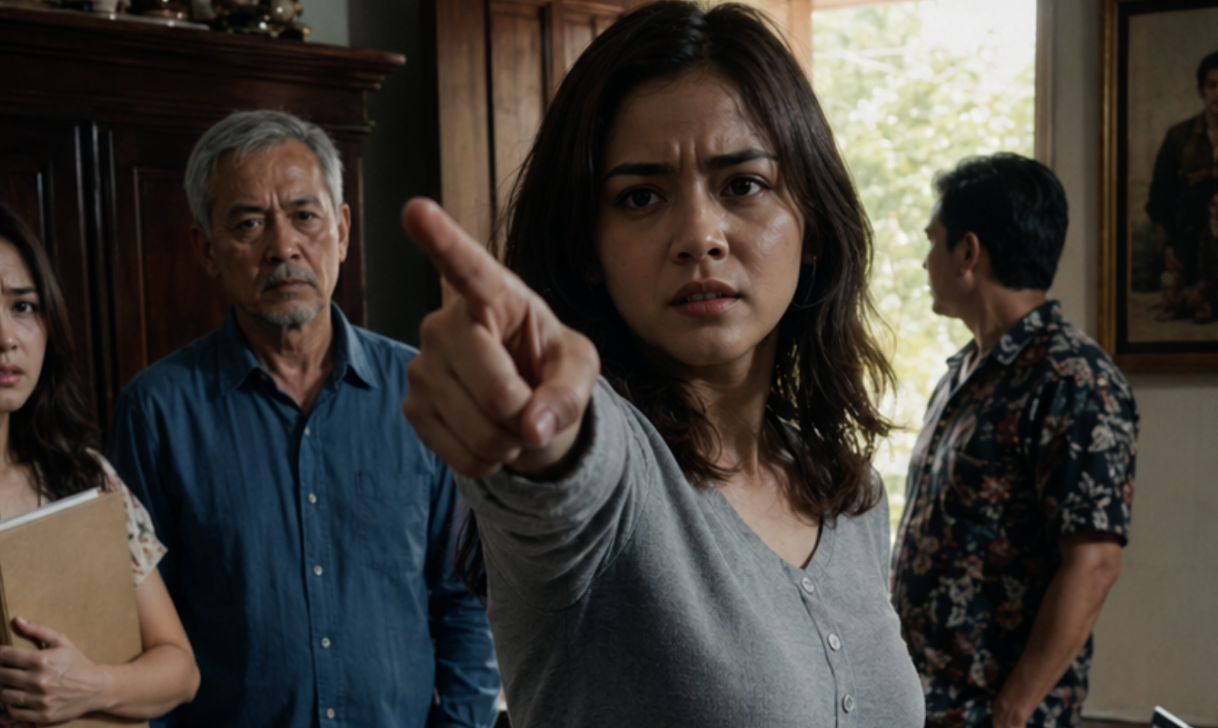
And this is where the cabinet from our wall unit would fit,” Margarita Arkadyevna said dreamily, looking around the living room. “We’d only need to move the armchair. It’s uncomfortable anyway. Or where will you put it, Zhenechka?”
Evgenia blinked. At first, she did not immediately understand that this woman was not some decorator from a TV show, but her mother-in-law. And that “this place” was her apartment. Zhenya’s apartment. The apartment bought with her money. With twenty-eight years of savings, freelance work, endless projects, cutting back on coffee and on herself.
“I’ll probably wear it on my head,” she answered slowly and stood up from the sofa. “I don’t understand. Are you moving in?”
“We’re only discussing it,” Margarita Arkadyevna replied with a smile that held more triumph than warmth. “Denis’s father and I just… well, we looked around. What’s wrong with that? A spacious apartment, designer renovation. It’s uncomfortable for us in a rented place, and after that stupid accident of Pavel’s, his debts are impossible to pay off. And you understand… family is family.”
Her mother-in-law pronounced the word family as if Evgenia did not automatically belong in that category.
“You’re a smart girl, Zhenechka. You have your own income. You won’t be lost. But we are elderly… How are we supposed to keep wandering from one rented corner to another?”
“You’re both sixty-five,” Evgenia said sharply. “That’s not even elderly. That’s active longevity. You solve crossword puzzles, you go to the country house. What does any of this have to do with my apartment?”
Margarita Arkadyevna bit her lip, pressed her mouth into an offended line, and pulled out her signature weapon.
“I, by the way, gave birth to such a husband for you. And if we’re going to speak honestly, he was the one who supported you when you were running around hospitals with that anemia of yours. And now, when his brother is in trouble, you’re turning your back?”
“When his brother crashed into a pole in his father’s car with another man’s wife in the passenger seat,” Evgenia could barely keep her voice steady, “for some reason no one called me to ask whether maybe we should move in with you, Zhenechka, while Pavel licks his moral and credit wounds.”
“Zhenya,” Denis finally spoke. Until then, he had been sitting in the kitchen, pretending to be busy with work. “We’re just discussing it. My parents aren’t claiming anything.”
Evgenia walked to the door and said quietly:
“While you’re discussing it, I’m living here. In my apartment. Which you apparently want to turn into a dormitory named after the great martyr Pavel. That won’t happen.”
Just don’t scream, she thought, exhaled, and went into the bedroom.
She and Denis did not speak for three days. Or rather, “did not speak” was not exactly right. He would come up to her and say things like, “Should I bring you anything from the store?” or “You haven’t forgotten that it’s Mom’s birthday on Saturday, have you?” She would silently nod or pretend not to hear. But a thick, sticky silence settled over the apartment. Not the peaceful kind, but the kind where resentment hides inside every wall.
On Saturday, everything happened.
“Zhen,” Denis said, staring out the window as if he wanted to jump. “I understand that this is hard for you. But my parents have no other option. The loan was put on my father. Their apartment has already been listed for sale. In a month they’ll be out on the street. And you…”
“And me what?”
“Well, you know yourself. You’re strong. You’ll find somewhere to go. We can rent a place for a couple of months. Then we’ll figure something out.”
At first, she wanted to hit him with a frying pan. Then she wanted to hug him. But in the end, she simply asked:
“So I’m supposed to leave my own home because your parents once again failed to handle their children?”
“That’s not what this is. We just… you have more options.”
“I have more brains. I didn’t smear them all over women in other people’s cars like your brother. And I didn’t allow my wife to arrange a move-in without the owner’s consent,” Evgenia smiled bitterly. “You know, Denis, do you want me to tell you how this would be best?”
“How?”
“Pack your things. And get out with them.”
He froze. For the first time. In all their life together, he froze, not knowing what to say. And she saw in his face not a husband. Not a protector. Not a loved one. She saw someone else’s shadow.
“I’m not leaving,” he breathed. “This is my home too.”
“Bought with my money.”
“But we’re family, Zhenya. Isn’t family about sacrifice?”
“Sacrifice is when you’re asked. Not when you’re presented with a fact. Do you know the difference between a victim and a fool? The first one has a choice.”
She did not shout. She did not cry. She simply took out a suitcase — his suitcase — and placed it in the hallway.
“You can go wherever you want. Rent a one-room apartment, move in with your mother. Sleep on your brother’s head if you like. But this is my home. And it stays mine. You and your great mother with her chest of drawers can forget the way here.”
He left. Without his things. With eyes like a beaten dog. And as a farewell, he said:
“You’ll regret this. No one lives alone forever.”
And she watched him go and thought: I’m not alone. I’m with myself. But you — you don’t even know who you’re with.
That evening, the doorbell rang. Zhenya opened the door, and Svetka was standing on the threshold.
“What happened to you?” her friend pushed her way inside and hugged her with one arm. “Just last week you told me, ‘Sveta, well, he’s not that bad.’ And now?”
Evgenia took a glass and poured herself some wine.
“And now he’s just like his mother. With a chest of drawers and plans for my bedroom.”
Svetka snorted.
“Well, you knew his mother was a fury. Why did you get involved with him?”
“He seemed… sane.”
“Seemed is the key word. Zhenya, maybe we should go south? You’re on vacation now anyway… forced vacation.”
“You know, I’m not going anywhere. I’ll sit right here. In my apartment. With a glass. And when her chest of drawers arrives, I’ll throw it off the balcony. Personally. From the third floor.”
Sveta laughed, then suddenly fell silent.
“And what if he comes back?”
Zhenya looked at the wine in her glass. Slowly, she replayed the entire week in her mind.
“Then… I’ll buy a drill. And install a lock with a code. A code only I know.”
On Saturday, exactly at ten in the morning, when Zhenya had just put the kettle on and was mentally preparing herself for a day without men, relatives, and their furniture fantasies, the doorbell rang.
A courier from Citilink, probably, she thought, remembering the blender.
She opened the door. And froze.
Margarita Arkadyevna was standing on the threshold. With a suitcase. Behind her loomed Pavel — Denis’s brother. Thin, in sweatpants, with a face that expressed both suffering and hope for a free ride. Beside him stood their father, Pavel Pavlovich himself, short, balding, with the look of a pensioner who had been fed up with life since 1987.
“Good morning,” her mother-in-law said, as if they had arranged tea. “We won’t stay long. Just a couple of months. Until the apartment is sold.”
Evgenia said nothing. Because there were no words. None at all.
“Zhenechka,” Pavel Pavlovich intervened, “forgive us. The situation… well, it’s out of our hands. We arranged with your mother-in-law’s aunt, she’ll let us stay later, but right now she’s renovating. And Denis said you didn’t mind us living here.”
“Denis?” Zhenya finally regained the power of speech. “He said that? Did he say it before or after I threw him out?”
“You had a fight?” Margarita Arkadyevna asked mournfully, already stepping over the threshold. “Oh, how awful. We only want to resolve things peacefully. Zhenya, don’t be offended. We’re your own people.”
Your own people in someone else’s apartment, flashed through her mind.
Meanwhile, Pavel started dragging the suitcase inside. He smelled of cigarettes and last year’s stench from an auto repair shop.
“Pavlik, don’t drag it across the threshold,” Margarita Arkadyevna shrieked. “It’s a bad omen.”
“A bad omen is when you’re allowed into the apartment, not when you arrange an occupation,” Zhenya said quietly, but no one was listening.
They came in. Made themselves comfortable. Pavel flopped onto the sofa and put his feet on the coffee table. Pavel Pavlovich cautiously inspected the balcony and asked:
“Can I smoke here?”
“You can be quiet here,” Zhenya snapped. “And leave quickly.”
Her mother-in-law had already settled in the kitchen. She pulled a jar of homemade pickles, a bag of buckwheat, and baking molds out of her bag.
“Here, I brought a few things from home so you wouldn’t have to fuss. If we’re going to live together, we should do it properly. I like order. And, by the way, I have a green thumb. Everything grows!”
“Are you talking about potatoes in the bathroom?” Zhenya could not resist. “Or the cactus in a saucepan? I remember.”
“Zhenya, let’s not be sarcastic. It’s hard for everyone right now. But you and Denis must stick together. I’m a mother. I care.”
“You cared when you forced borscht on us every Sunday even though I asked you not to come. You cared when you suggested I change jobs because ‘teachers have stability.’ And you definitely care now that you’ve arrived in my home, without warning, with suitcases. This is called invasion, Margarita Arkadyevna. Are you playing war with me?”
Then Pavel interrupted:
“Zhenya, well, you know… We have nowhere to go for now. My brother said you were an understanding person.”
“My brother was wrong. And so are you.”
Zhenya took out her phone and called Denis. He answered on the third ring.
“Hi. I can’t talk right now, I’m in a meeting…”
“I see. A meeting. Your family is here. With suitcases. Your brother, your mother, and your father. Did you tell them I didn’t mind?”
A pause. A long one. Silence stretched like gum stuck to a shoe.
“I thought you’d come to an agreement. You’re not cruel. You have a big heart…”
“Mm-hmm. And now there’s a big hole in it. That’s it. You’re free. From me and from this apartment. Good luck in your new place. Just don’t forget — your mother has a green thumb. Especially when it comes to other people’s shelves.”
And she hung up.
By evening, Margarita Arkadyevna had settled in.
“Zhenya, we were thinking. Could we stay in the bedroom? You can sleep in the living room for now.”
“No.”
“Well, you’re alone, and there are three of us.”
“Exactly. Three against one is precisely what I’ve been waiting for all my life. But no.”
“You’re too selfish,” she said. “A woman must be gentle.”
“And a man must rent housing if he’s an adult. Or marry a woman with an apartment, like my husband did.”
“You’re spoiled rotten,” her mother-in-law snapped. “People your age don’t live alone.”
“And people your age live at someone else’s expense. Funny, isn’t it?”
On Monday morning, Zhenya went to work with one thought: smoke them all out before it was too late.
And then a miracle happened.
At reception, the security guard Nina Ivanovna stopped her.
“Zhen, a young man came looking for you. Said he was from the housing commission. Wanted your phone number. I didn’t give it to him.”
“What commission?”
“Who the hell knows. But he was handsome. With a little backpack. And inside the backpack — a little chest of drawers! Plastic! Can you imagine?”
Evgenia did not understand at first. Then it hit her.
A chest of drawers.
Plastic.
Margarita Arkadyevna.
It was a sign.
That same evening, she went downstairs to her neighbor, Olga Petrovna, an eternally dissatisfied pensioner.
“Olga Petrovna, I need to ask you a favor. If you hear shouting, noise, the smell of borscht — call the district police officer. I have an invasion.”
“An invasion?”
“My ex-husband’s relatives. They want to move in here.”
“Bastards,” the woman nodded. “I’ll help.”
The next morning, Zhenya called the district police officer.
And came home with him.
“Good afternoon,” said the lieutenant with the look of an exhausted janitor. “There is a complaint that you are illegally residing in this apartment.”
“What do you mean illegally?” her mother-in-law shrieked.
“Are you the owner?” he asked, looking at the papers.
“No… But… she is my daughter-in-law!”
“Former,” Zhenya said. “Here are the documents.”
Margarita Arkadyevna turned pale.
Pavel hid in the bathroom.
Pavel Pavlovich hiccupped.
The lieutenant nodded.
“You have one hour to pack. Otherwise, we’ll file it as unlawful occupation of residential property.”
An hour and a half later, they left. Silently. Without goodbyes.
As a parting shot, Margarita Arkadyevna threw out:
“You’ll understand someday how lonely you are.”
Zhenya closed the door. Sat down on the floor. And laughed.
Loneliness is living with people who do not hear you. But now, here, there was silence. And the kettle boiled only when she wanted it to.
She stood up. Went into the room.
And only then did she notice: in the corner stood a chest of drawers. Small. Plastic. For children.
With a note:
So you remember: we will come back. With love, M.A.
A week passed.
The apartment was clean, like an operating room after disinfection. Zhenya learned to close doors with inner satisfaction. In the evenings she drank tea in silence, without Pavel on the sofa and without the smell of boiled offal in a pot.
Sometimes she caught herself listening to the stairwell. Especially on Saturdays. The neighbors whispered that her mother-in-law had moved in with some second cousin in Biryulyovo. There was a balcony without double-glazed windows and a cat with a rabid stare.
She did not throw away the little chest of drawers. She put it in the storage room. Because… well, let it be. A symbol.
On Saturday, exactly at seven in the evening, when Zhenya was washing glasses for no reason other than order, the doorbell rang.
Not them. Please, not them again with a lawsuit, ladles, and some new “temporary” relative, she thought as she went to open the door.
Denis stood on the threshold. In new jeans, with a bouquet of chrysanthemums — as if he had come to a funeral. Behind him stood his mother. In a coat with a fur collar. Her face was stretched tight, like someone dragged by force to a psychiatrist’s office.
And beside her — there she was.
A blonde. With a rounded belly and doll-like eyelashes. In her hands — a pot. Judging by the smell, borscht.
Zhenya exhaled.
“A new show? Or did you decide to ‘introduce’ us?”
“Zhen,” Denis began, “this is Olya. We’re… well… together. And she’s expecting…”
“What, that quickly?” she smirked. “Not even a month has passed since your ceremonial exile.”
“We met a long time ago,” Olya interrupted, “before all this. There just wasn’t a suitable time to tell everything.”
“Oh, well, since the suitable time has arrived, then tell me. Everything. Down to the last matchstick.”
Margarita Arkadyevna stood silently. Her face was like brick. Only her lips twitched.
Denis rubbed the back of his head.
“Olya and I have been together since last November. But I didn’t want to destroy the marriage… I thought you and I could still have… But then you… well, when you kicked me out, it became clear that… it was over.”
“I didn’t kick you out. I saved myself. So what do you want now?”
“We want…” he began, “to sell the apartment.”
Silence.
Then Zhenya laughed. The way people laugh in the face of swindlers at a train station.
“The apartment? This one? Mine? Sell it?”
“But it was registered to both of us…” he dragged out. “We bought it during the marriage.”
“And then we divorced. And I bought out your share. Bank transfer from my card — remember? And I have the receipt. You can ask the notary. Or your new girlfriend. Maybe she has a law degree?”
Olya bit her lip.
“We thought you would… share, like a decent person.”
“Of course,” Zhenya said. “Here’s a spoon. Here’s a bowl. I’ll share the borscht.”
She carefully took the pot from Olya’s hands, walked into the hallway, and placed it on the mat outside. Then she slammed the door shut. Locked both locks.
From behind the door came her mother-in-law’s voice:
“Zhenya, you’ll regret this! When old age comes, you’ll be alone!”
“Better alone than with you. And your borscht.”
A week later, a court summons arrived.
Challenging the transaction for the buyout of the apartment share. Plaintiff: Denis Petrov.
Zhenya sat in the kitchen. Thought for a moment. Opened the storage room.
The plastic chest of drawers stood there like a monument to absurdity. She took out the note:
We will come back. With love, M.A.
“Oh, you came back,” Zhenya said. “But you won’t be hanging around here for long.”
She took out a folder. Copies of bank transfers. The receipt. Screenshots of messages. Photos of Denis with Olya from the previous year. Everything was there.
Then she made a call.
“Hello, Larisa Valeryevna? This is Evgenia Kotova. Remember you said you’d help if I ever decided to sell? Yes. The time has come. But not to sell to you. To help you buy it. Through you. And preferably tomorrow. Officially. With a mortgage. Let the bank put an end to this.”
The court hearing lasted twenty minutes.
Zhenya calmly placed all the documents on the table and said:
“I have already sold the apartment. Yesterday. Here are the documents. The buyer is the bank.”
The judge looked at the papers, then at Denis.
“Mr. Petrov, the claim is dismissed. There are no grounds to challenge the transaction. You should be grateful that a woman like this ever lived with you at all.”
Zhenya did not smile. She simply stood up.
At the exit, Denis caught up with her.
“You do realize you left all of us without housing?”
“No, Denis. You left yourselves without housing. I simply closed the door. From the outside.”
Margarita Arkadyevna was standing in the courthouse corridor. Silent. When she saw Zhenya, she turned away. But quietly said:
“You won. Just don’t be happy about it. We were your family.”
Zhenya stopped.
“You were. But family isn’t the people who share a pot. It’s the people who share responsibility.”
And she left.
Three months later, she was living in a new apartment. Small, but hers. On the wall hung a shelf with the words: “Do not enter without invitation.”
In the corner stood the chest of drawers.
The very same one.
She kept it. As a reminder.
Some things cannot be forgotten.
But they can be placed in a corner.
And the door can be closed.