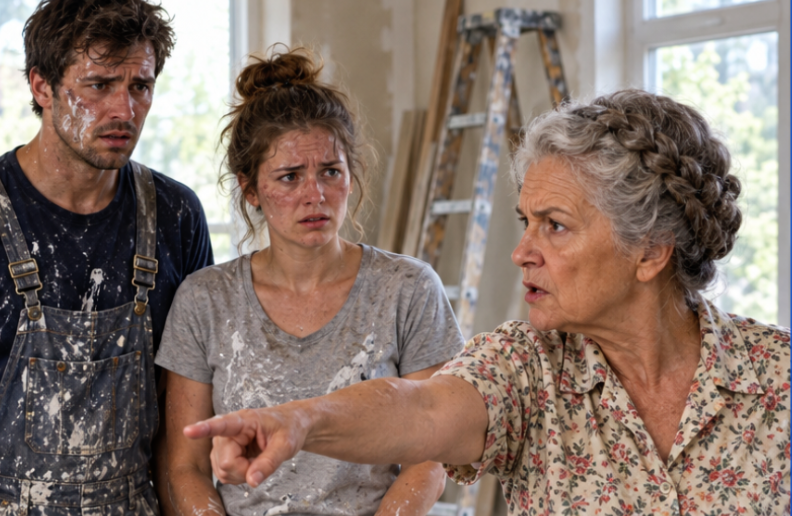
“Now that’s more like it! Look at this bathroom, Andrey, how stunning it looks with the new tiles. Bright, spacious, it feels like a palace! Polina, you truly have excellent taste—no question about it. I never would have chosen this shade myself, I’d have just stuck to beige and played it safe, but this ‘Sea Breeze’ color is so fresh,” said Raisa Vitalyevna, running her hand over the smooth, still cool surface of the new ceramic tiles, squinting with satisfaction.
Polina stood in the doorway, cleaning rag in hand, managing a tired smile. Her back ached from three hours of cleaning out grout, and her hands were dry and rough from all the construction dust, but her mother-in-law’s words warmed her heart. After all, jumping into this crazy renovation really was worth it.
“Do you really like it, Raisa Vitalyevna?” she asked, hoping for final approval. “We were worried it might be too bold.”
“Oh, honey, what boldness? This is style! Now I’m not embarrassed to have guests over. I shudder to remember what it was like before—plaster falling down, pipes leaking, black mildew in the corners. You two are my saviors, truly. Now enjoy your lives here, you’ve made such a beautiful nest.”
Andrey, Polina’s husband, came out of the kitchen, wiping his hands on his work pants. A proud smile shone on his face, streaked with chalk dust. He wrapped his arm around his mother’s shoulders and Polina noticed how much weight he’d lost over these six months. Renovation had drained their energy and money, but they managed to pull through.
This story started out just like for thousands of young families in Russia. Polina and Andrey rented an apartment, giving away half their family budget to a landlord. They dreamed of getting a mortgage, saved every penny, gave up vacations and new clothes. But property prices grew faster than their savings. Then, Raisa Vitalyevna, Andrey’s mother, came up with a “royal” offer.
She owned a three-room apartment in an old Stalin-era building—high ceilings, but in total disrepair. Raisa herself lived in a tiny one-bedroom on the outskirts, inherited from her late aunt, and she’d been renting out the “three-roomer” to some students, who’d finished off what was already a rundown place.
“Kids, why are you struggling?” she said six months ago, pouring tea in her little kitchen. “That apartment is just sitting there, rotting. The students moved out, and no new tenants will want to live in such a mess. I don’t have the money to fix it, you know what my pension is like. Here’s my idea: you two move in, fix it up however you want for your future family, and live there as long as you need. Five years, ten years. Just pay the utilities. The money you’d spend on rent, you can save up. Maybe later you’ll buy your own place, or I’ll even put this one in your names in the future.”
The offer sounded like a fairy tale. At first, Polina had doubts. She wasn’t thrilled about investing in someone else’s property, even if it belonged to her mother-in-law. But Andrey was all for it. This was his chance to feel like the man of the house—a provider, someone who could take care of his family.
We renovated my mother-in-law’s apartment, and then she immediately asked us to leave.
“Pol, but it’s my mom!” he would try to reassure his wife late at night. “She would never hurt us. Besides, if you want, we’ll set up an agreement. Not a written one, of course, but we’re family. Just imagine it: city center, three-meter-high ceilings, and we don’t have to pay anyone a thing. In just a couple of years, the place will be so renovated you won’t believe it!”
And Polina gave in. She also dreamed of building a real home, picking out wallpaper, curtains, furniture—anything but living surrounded by someone else’s tacky stuff.
They sold Andrey’s car—a well-aged foreign model—threw in everything they’d saved for a down payment on a mortgage, and dove headfirst into a sea of renovations.
They did most of the work themselves, only hiring professionals for the complicated stages: electrical wiring, new pipes, leveling the walls. Everything else—night after night, weekend after weekend—they tackled on their own. Polina learned how to apply filler, stick wallpaper edge to edge, distinguish between types of laminate and primer. Andrey mastered tiling and assembling furniture.
They spent a fortune. They gutted everything: rotting floorboards were stripped down to the beams and filled with expanded clay, new expensive five-chamber plastic windows went in to block the city noise. Doors—solid wood. German plumbing. A custom kitchen with built-in appliances. Polina didn’t spare any expense, since this was “for themselves,” for the long term.
Raisa Vitalievna visited often. She’d walk around, cluck her tongue, praise their work, and sometimes offer advice they’d listen to politely—then do it their own way. She seemed genuinely happy for her children.
Then, after six months of chaos, dust, and living out of boxes, the day finally arrived. The last touch: hanging the bathroom mirror and the curtains. The apartment was unrecognizable. It had gone from a musty cave to a light, modern Scandinavian-style space.
“Alright, let’s gather at the table,” commanded Raisa Vitalievna. “I baked pies—we’re celebrating your housewarming. Sure, you’ve technically lived here for six months, but you’ve only just settled in properly now.”
They sat in the new kitchen around a round table made of whitewashed oak. The chandelier softly lit up their happy faces. Polina felt an incredible sense of relief. Now she could breathe. Now she could think about kids. There was plenty of space for a crib in the big bedroom…
“You have golden hands,” her mother-in-law kept praising, placing a slice of cabbage pie on her son’s plate. “A great sense of style, and real perseverance. I keep thinking: whoever gets to live here is so lucky.”
Polina froze with her fork in the air. The wording of that last sentence grated on her nerves. “Whoever gets to live here”—not “you,” but someone else, some stranger.
“Mom, what do you mean?” Andrey chuckled with a mouthful of pie. “We’re the ones living here. We agreed, remember?”
Raisa Vitalievna set down her cup, dabbed her lips with a napkin, and let out a heavy sigh. Her look—just a moment ago so warm and maternal—suddenly turned shifty and guilty. Or was she just pretending to look guilty?
“Oh, Andryusha, Polechka… Here’s the thing. I just didn’t know how to tell you, didn’t want to upset you while you were still renovating. Didn’t want to distract you, ruin your mood.”
Polina felt a chill inside. She slowly set her fork down on the table.
“What is it, Raisa Vitalievna?”
Lara, my dear… It’s your sister, Andrey. She’s in trouble. She’s divorcing her husband. Life has become unbearable—he drinks, he’s started to get violent. What is she supposed to do with her child? Come live with me in my tiny apartment? There’s barely space to turn around, and at my age I need peace. My blood pressure’s all over the place.
Andrey stopped chewing.
“Wait, Mom. Larisa is getting divorced? Just a week ago she posted happy pictures of them at a barbecue on social media.”
“Oh, social media!” his mother waved her hand dismissively. “That’s all for show. It’s just tears behind those pictures, not real life. So, I’ve decided: Larisa and her daughter will move here. She needs support right now, and this place is much nicer. And you two… you’re young and strong, you don’t have kids yet. You’ll manage. It’s easier for you to rent a place or get a mortgage.”
A heavy silence filled the kitchen. The only sound was the hum of the new refrigerator they bought for eighty thousand rubles. Polina stared at her mother-in-law in disbelief. Was this some kind of cruel joke?
“Mom, are you serious?” Andrey asked quietly. “We’ve put a million and a half into this place. We sold our car. We worked here every night for six months. What do you mean, ‘move out’? We agreed to stay for at least five years!”
“Andrey, don’t you raise your voice at your mother!” Raisa Vitalievna immediately took a defensive stance. “Agreed… We said a lot of things! But things have changed. Your sister’s in trouble, your niece could end up out on the street, and all you care about is money? Has greed really gotten the better of you, son? I never expected this from you.”
“What does greed have to do with it?” Polina’s voice trembled as she tried to stay calm. “Raisa Vitalievna, that’s our money. It’s our hard work. If Larisa needs a place, let her move into your one-bedroom and you can come live here. Or have Larisa pay us back for the renovation. We kept every single receipt.”
Her mother-in-law threw up her hands in exasperation, as if swatting away an annoying fly.
“What compensation? The girl’s life is falling apart, she doesn’t have a penny to her name, and you want to squeeze money out of her? Shame on you, Polina. I thought we were family, but… Clearly, you’re not one of us.”
“So, the ‘outsider’ was good enough to do all the renovations when this place was a dump,” Polina shot back. “Back then, I was ‘sweetie’ and had ‘golden hands’. But now, when it’s all done, you can just kick us out?”
“No one is throwing you out on the street,” her mother-in-law said coldly. “I’m giving you time to pack. One week. Larisa arrives next weekend. So gather your things and move out calmly.”
Andrey jumped up from the table, knocking over his chair.
“Mom, this is just cruel. Truly cruel. You used us. You knew Larisa wanted to move in here from the very start, didn’t you?”
Raisa Vitalievna pressed her lips together and looked away.
“I just wanted the apartment to be in good shape. So I wouldn’t be ashamed to show it to anyone. Who lives here is secondary. The apartment’s mine, the paperwork is in my name. I’m the owner, I make the decisions. No need for a scene. Be grateful you lived here rent-free for six months.”
“Rent-free?!” Andrey grabbed his head. “We paid all the utilities! And the renovation… It cost more than any rent would have!”
“Renovation is a personal choice. Nobody forced you to install marble window sills. You could’ve just gone with simple paper wallpaper. That’s it, conversation over. My head hurts from all your yelling.”
Mother-in-law stood up, clutched her chest dramatically, and shuffled toward the exit. In the doorway, she turned back:
“Leave the second set of keys on the nightstand when you leave. And make sure to clean up, so there’s no dust. Lara and her child don’t need any allergies.”
The front door slammed shut. Andrey and Polina were left sitting in their dream kitchen, which now felt like nothing but a mirage. Andrey sank onto a chair and covered his face with his hands.
“Polya, forgive me… I’m an idiot. I really believed her.”
Polina stayed silent. Inside, a storm was raging, but on the outside, she looked eerily calm. Her eyes swept over the kitchen: built-in dishwasher, induction cooktop, convection oven, pricey faucets, designer light fixtures…
“Andrey,” she called to her husband.
“What?”
“Do you still have your tools? The screwdriver, the drill, the set of wrenches?”
“Of course, everything’s out on the balcony. Why?”
“Because,” Polina gave a predatory smile, though her eyes stayed cold, “Raisa Vitalievna said the apartment is hers. The walls, the floor, the ceiling—that’s hers. Those are ‘inseparable improvements,’ as she put it. But everything else… that’s ours. We have a week to pack? Great. That’s more than enough.”
“You want to…” Andrey looked up at her, realization dawning in his eyes.
“I want to take what’s ours. Every last screw. We have all the receipts. We bought these appliances, this furniture, those curtains, these faucets. Legally, they’re our property. And we’re going to take them.”
“But where will we put it all? We don’t have an apartment.”
“We’ll rent a garage for a month. Or a temporary storage unit. Meanwhile, we can stay in a hotel or with my parents for a few days until we find a place. But I won’t leave behind a single thing that your ‘poor’ sister could use.”
The next five days were a whirlwind. It was renovation in reverse. Demolition. Careful, methodical, and relentless.
At first, Andrey was doubtful. But after a phone call with his sister, he was furious. He called Larisa to clear things up, but instead of gratitude or an apology, she said, “So what? You’re being stingy with your own niece? You’ll earn more, I need to focus on my personal life. And why didn’t you put an air conditioner in the bedroom? It’s the sunny side, how am I supposed to live here in the summer?”
After that, Andrey picked up the screwdriver without saying a word.
They took everything down.
They started with the furniture. Disassembled the wardrobes, removed the kitchen set. It was tough—the kitchen had been custom-built for the space—but Andrey said, “We’ll modify it for the new apartment, saw it down, adjust it, but I’m not leaving it here.”
They took out all the appliances: the cooktop, oven, extractor hood, dishwasher. They even unscrewed the outlets and switches they had bought for a thousand rubles each, replacing them with the cheapest, plain white Soviet-style ones from the hardware market for fifty rubles apiece.
Polina took down all the curtains, curtain rods, and roller blinds. She unscrewed all the light bulbs. The chandeliers she had chosen with such love were carefully packed away in boxes. In their place, only lonely, bare bulbs now dangled by their wires from the ceiling.
The most interesting part was in the bathroom. They removed the vanity with the sink and faucet. Andrey put back the old, rusty sink—luckily, it hadn’t been thrown out yet; it was on the balcony, where he used to wash his paintbrushes. The toilet was also replaced with the old one—cracked, but still functional. The new installed toilet couldn’t be removed, since it was sealed in a box, but Andrey took off the flush button and the seat, leaving just the bolts sticking out. “Let them buy their own,” he muttered.
They couldn’t manage to take down the expensive interior doors—the door frames were glued in place—but Andrey did remove the handles and the magnetic locks from them.
By Saturday morning, the apartment looked odd. The walls were perfectly smooth, and the expensive laminate still covered the floor (they hadn’t had time to remove it, and even if they had, there was nowhere to put it). Beautiful “sea breeze” tiles still gleamed in the bathroom. But the apartment felt empty and lifeless. Wires stuck out from the walls, holes gaped where outlets should have been (when there weren’t any cheap replacements), and pipes protruded in the kitchen. Echoes bounced around the rooms.
A freight Gazelle truck pulled up to the building. The movers, grunting, carried out all of Andrey and Polina’s carefully packed life. The driver smirked:
“Moving is worse than a fire, isn’t it?”
“Worse,” Polina agreed. “This is an evacuation.”
By noon, as they were wrapping up the loading and Andrey was sweeping the floor (his mother insisted on leaving things tidy), Raisa Vitalievna appeared in the doorway. With her was Larisa—a plump, brightly made-up woman hauling a rolling suitcase—and a girl about seven, glued to her phone.
“So, you’re all packed up?” her mother-in-law asked brightly, stepping over the threshold. “We decided to come a bit early so that…”
She trailed off. Her smile slipped away like melting water. She stood in the entryway, staring at the bare wall where, just yesterday, a huge mirror with lights and a beautiful coat rack had hung. Now, only two wall plugs remained.
“What… what is this?” she whispered.
Larisa walked into the room and squealed:
“Mom! There’s nothing here! They took everything!”
“Took everything?” Raisa Vitalievna rushed to the kitchen.
When she saw only pipes sticking out of the wall and a lonely stool in the middle of the room (they’d forgotten the stool), she grabbed the door frame to keep herself from falling.
“Andrey!” she bellowed. “What does this mean?! What have you done? Where’s the kitchen? Where’s the stove? Where’s the crystal chandelier?”
Andrey came out of the bedroom with the last box in his hands. He looked at his mother calmly, tiredly.
“We took our things, Mom. Just like you asked—we cleared out the apartment.”
“Things?!” Larisa shrieked, running into the kitchen. “You robbed us! You ripped out everything you could! How am I supposed to live here? There’s not even anything to cook on!”
“That’s not our problem anymore,” Polina replied, following her husband out. “The apartment is yours, the walls are yours, the floor is yours. The renovations are done, fresh and clean. But the furniture and appliances—they’re ours. We have receipts for everything. If you want, go ahead and take us to court.”
“What court?!” Raisa Vitalievna was gasping with anger. “I’m calling the police! This is vandalism! You’ve wrecked the apartment!”
“Go ahead,” Andrey shrugged. “The police will come, check the paperwork. I have the sale contract for the kitchen, the appliances, the plumbing. All in my name. I have every right to do whatever I want with my property. As for the apartment… we don’t even have a rental agreement. We were just guests here. Now the guests are leaving, taking their things. Everything is by the book.”
“You… you’re no son of mine after this!” his mother hissed, spitting with rage. “Leaving your sister with bare walls! And with a child!”
“You made your choice, mom,” Andrey replied. “You prioritized your daughter’s comfort over your son. Enjoy your renovations. The tiles in the bathroom are really nice—Polina worked hard on them.”
“Wait!” Larisa cried, realizing things were spiraling out of control. “At least leave us the stove! And the fridge! Where are you even taking all of this? We’ll pay you back… later! In installments!”
“No, Larisa,” Polina cut her off. “No more ‘later.’ We’ve learned our lesson. No business with relatives without a notarized contract. And not without complete upfront payment.”
Andrey took Polina by the hand.
“Let’s go. The truck is waiting.”
They stepped out onto the landing. Curses were hurled at their backs. Raisa Vitalievna was shouting that they were thankless pigs and that God would punish them. Larisa was sobbing that she had no money to buy a kitchen. The granddaughter just stood there, confused, not understanding why the adults were all screaming.
When they climbed into the truck cab and it started moving, Polina suddenly burst into tears. The stress of the past days finally let go.
“Hey, what’s wrong, sweetheart?” Andrey hugged her, pulling her close to his dusty shoulder.
“It just hurts,” she sniffled. “We put so much work, so much of ourselves into that place.”
“Now we’re wiser,” Andrey smirked. “And free. We’ll earn more money. The main thing is, we’re together—and now my eyes are open. Thank you for insisting we take everything. I’d have been stupid enough to leave it all out of pity.”
“I just imagined Larisa banging around with my pots in my kitchen—and that made me so mad,” Polina said with a teary smile.
A month later, they rented a small but cozy apartment. Their furniture and appliances all came in handy—they had to do some sawing to make the kitchen fit, but it almost looked like it belonged there. Andrey picked up a side gig, Polina got a promotion. Life was looking up.
Raisa Vitalievna called a couple more times. At first, she made threats and demanded they return the “stolen” stuff. Andrey just hung up. Then Larisa called, drunk, yelling that they had ruined her life, that her husband didn’t pay child support, and there was nothing but echoes in the apartment and it was awful sleeping on the floor. Andrey blocked her number.
The last time his mother called was six months later. Her voice was quiet and pitiful.
“Andryusha, maybe you could come over? The cheap kitchen faucet you installed is leaking now. We’re flooding the neighbors below. Can’t you help your mother out?”
“Call a plumber, mom,” Andrey replied. “You have your daughter there now. Let her handle the problems. I’m busy. Polina and I are picking out wallpaper. For our own apartment. The one we got with a mortgage.”
“A mortgage?” his mother gasped. “That’s a trap! Why? You could’ve stayed here with me… I mean…”
“No, mom. Having your own place is more reliable. Goodbye.”
He pressed ‘end call’ and looked at his wife. Polina was standing by the wallpaper display, holding up a sample adorned with soft peonies against the wall.
‘What do you think, will this suit the nursery?’ she asked, gently caressing her still-flat belly.
‘Perfect,’ Andrey smiled. ‘It’s just right.’
He knew for sure: this time, they were renovating for themselves. And no one, ever again, would dare to force them out.
This story reminds us that even the people closest to us can sometimes act unfairly, but the most important thing is to never give up and to defend your boundaries.