Her mother said, “I won’t let you go.”
Her father said, “Forget about it.”
That year, spring came early and all at once—the snow melted in just a week, the river broke with a roar, and the air throughout the village was filled with that unique, unmistakable scent of meltwater and awakening earth. It was the kind of spring meant for falling in love. The kind of spring perfect for starting a new life. But they weren’t allowed.
Zoya was from the Stepanov family. Everyone in the village knew: the Stepanovs were strong, hardworking, and well-off. Her father, Ignat Petrovich, managed a large farm—four cows, a dozen pigs, chickens, geese. Their house was a real gem: carved window frames, a metal roof, and a flower garden out front. Two daughters—the eldest, Zoya, and her younger sister, Verka. They lived well and were always dignified in public.
And Seryoga came from the Sheludyakovs.
Even the family name seemed to carry something unserious. The Sheludyakovs were poor, always in debt, a bit careless. Seryoga’s father Yefim drank heavily, and his mother worked herself to the bone at the farm for pennies. Their house was leaning, the fence had collapsed, moss covered the roof. And even though Seryoga himself was a good-looking guy—tall, skilled, with cheerful eyes—he still bore that label. Sheludyakov. The family mark. Poverty.
So when the rumor started to spread through the village that Zoya Stepanova was seeing Seryoga Sheludyakov, the whole place gasped.
“Did you hear? The Stepanov girl! With Sheludyakov!”
“It can’t be true. Ignat Petrovich would have her out of the house.”
“But the guy’s not so bad. Hardworking. He doesn’t drink, he didn’t take after his father.”
“Even if he were a saint! The Stepanovs would never agree to this. Their pride’s enough for three elephants.”
And it was true. The Stepanovs had a lot of pride. Old, inherited pride—no one remembered how it started anymore, but it was passed through generations. Long ago, the Stepanov and Sheludyakov grandfathers had quarreled—maybe over land, maybe at a village meeting, maybe one didn’t help the other in a hungry year. No one really remembered, but the bitterness remained. It lingered, stubborn and sharp, like old tar on a pine board—impossible to scrape off.
Zoya and Seryoga met during the haymaking.
It was three years ago—she was nineteen, he was twenty. They shared the same field, the same work. Heat, horseflies, the scent of freshly cut grass. Seryoga mowed nearby—broad, swift, with that certain manly flair that turned heads. The scythe sang in his hands. The grass fell in even rows. He worked—and smiled. For no reason at all. At the sun, the sky, at life.
Zoya was turning over hay a little distance away. She kept sneaking glances. He noticed. During a break, he came over with a little can of kvass.
“Have some, Stepanova. It’s hot.”
“Thanks, Sheludyakov. Did you have some yourself?”
“I did. This is for you.”
And that was it. Nothing special. But everything started with that little can. One word led to another. That evening, they left the field together—just happened to be going the same way. And it turned out talking to him was easier than with anyone else. That he laughed in a way that made everything inside her flip upside down. That when he looked at her, he didn’t see the Stepanov girl or the daughter of Ignat Petrovich—just Zoya. A girl. Beautiful. And his own.
Within a month, they couldn’t be apart.
Their meetings were always in secret—by the river, behind the old mill, where nobody ever went. Seryoga would arrive before dawn and leave long before the sun rose. Zoya would sneak out once her parents were asleep—slipping through the back door, across the garden, barefoot on the cool, wet grass. She’d run to the riverbank where he was already waiting. They’d sit together until the roosters crowed, until the very first rays of light. Sometimes they talked. Sometimes they just sat in silence. He held her hand—and in that moment, it was enough.
This went on for almost half a year.
And then, they were caught.
Verka, the younger sister, was the one who saw them. She had been following them—maybe out of curiosity, maybe out of spite. Who knows now? She ran home and told their mother everything:
“Mom! Zoya was out with Sheludyakov! I saw them myself—down by the river, hugging!”
Their mother, Pelageya Fyodorovna—a strict, forceful woman with a heavy hand and sharp tongue—didn’t believe it at first. But when Zoya returned at daybreak, her mother met her at the entryway. She just looked Zoya in the eyes. She understood everything without any words.
“With Sheludyakov?” she asked quietly, and the silence was more frightening than a yell.
Zoya said nothing. Then, she nodded.
Her mother slapped her across the face—hard, with all her strength. Zoya recoiled, hitting her shoulder against the door frame. Tears sprang to her eyes—not from pain, but from hurt. Her mother had never hit her before. Never.
“You want to shame us?” Pelageya Fyodorovna hissed. “Bring disgrace to our family? The Stepanovs—forged together with the Sheludyakovs? The whole village will laugh at us! Every last one! Did you even think about that?”
“Mama, I love him…”
“Love?” her mother sneered bitterly. “Love, daughter, is like smoke. Here today, gone tomorrow. But disgrace? Disgrace is forever. If your father finds out, he’ll kill you. Both of you. You know what he’s like.”
Zoya knew. She had been afraid of her father since she was a child. Ignat Petrovich was a man of few, hard words—and when he did speak, it was with absolute finality. And his hand was just as heavy.
But scarier than her father’s anger was the thought of never seeing Seryoga again. That thought cut deeper than any knife.
The talk with her father happened the next day.
Ignat Petrovich was sitting at the table when her mother brought Zoya into the main room. His face was stone. He already knew—Pelageya Fyodorovna hadn’t kept it secret.
“So, with Sheludyakov,” he said quietly. “With the drunkard Yefim’s son. That ragamuffin. The one whose house is falling apart. Is this true?”
“It is,” Zoya said. Her voice trembled, but she held firm. “But Seryozha isn’t like his father. He works hard. He doesn’t drink. He…”
“Silence!” Ignat Petrovich thundered, pounding his fist on the table. “I didn’t give you permission to speak! Listen to your father. You’re a Stepanova. Your great-grandmother was the first to stand out in this village back in the days of the tsar. And those Sheludyakovs are drifters, pockets full of nothing but air. I built my house with my own hands, log by log. Built up our whole farm from nothing. And I didn’t do all that so my daughter could go into a house where the roof leaks and the table’s empty! That will never happen. Do you hear me? Never.”
“Papa…”
“Never! Forget about him. I don’t want to hear a word or a whisper. And if I find out you saw him again—don’t blame me for what happens. I’ll make that pup disappear. And you? In this house, you won’t be my daughter anymore. I’d turn my back on you. Do you understand?”
Zoya stood with her head bowed. Silent tears streamed down her cheeks.
“I’m waiting for your answer,” her father said. “Do you understand me?”
“I understand,” she whispered.
“Good. Now go. And remember: the Stepanovs never go back on their word.”
She walked out of the room like she was drunk. Everything was spinning before her eyes. Her heart was pounding somewhere in her throat. She made it to her room, collapsed onto the bed, and stayed there until evening—no tears, no thoughts, no strength.
That night, when everyone was asleep, she slipped out of the house and ran to the river.
Sergey already knew. His father, Yefim—the one who had been spotted drunk near the store that day—had told him. Someone from the village had joked, “Hey, Yefim, are you about to join the Stepanov family? Your son’s busy with their Zoya.” At first, Yefim didn’t get it, but then he got angry. Not at the Stepanovs—at his son.
“What were you thinking, you fool,” he snapped at Sergey when he came home. “Trying to join the Stepanovs? They don’t even see us as equals! They walk all over folks like us! Do you really think Ignat will give you his daughter? He’d sooner hang himself! Don’t disgrace our family. Stay out of their business. Find someone more like us. Sheludyakovs have always stuck with Sheludyakovs—that’s why we survive, why we’ve got food, why no one pushes us around. But them… pfft!”
Sergey listened in silence. He knew things were bad. He understood how tough Ignat Petrovich was. He knew the whole village would be against him. And that his own family wouldn’t stand by him. But he loved Zoya. Loved her the way you only can once in a lifetime—with trembling, with darkness in your eyes, with the readiness to turn the world upside down.
So when she ran to the river at night—crying, shivering—he was already waiting for her.
“Sergey… My father said he’d disown me. He said it would never happen.”
“I know. My father… well, he’s not happy either.”
“What should we do, Sergey? What are we going to do?”
He hugged her. Held her close. Stayed quiet for a long time. Then finally said:
“Zoya. Do you love me?”
“I do. More than life itself.”
“Then listen to me. Tomorrow, I’m going to your father. Myself. I’ll ask for your hand, properly. Face to face, like a man should.”
“He’ll throw you out. Or worse.”
“Then let him throw me out. I’ll come back again. And again. I won’t give up. Because you’re mine. And I’m yours. And this is only our business. Not your family’s, not mine. Not the village. No one else’s.”
Zoya looked at him—and she could see he wasn’t just boasting. He truly meant it. And that made her feel scared and happy at the same time.
“You’re crazy, Sheludyakov.”
“I’m in love, Stepanova. That’s even worse than crazy.”
And they laughed—through their tears, through the fear, through it all.
The next day, Sergey went to the Stepanovs’ house.
He put on the best he had—a clean shirt, freshly ironed trousers. He shaved. Combed his hair. Then walked through the village—under the neighbors’ eyes, their whispers, their smirks. He walked without looking back. Straight. Calm. Like a man heading to the gallows.
He knocked on the door. Pelageya Fyodorovna answered. When she saw him, her face twisted.
“What do you want?”
“I want to speak with Ignat Petrovich. About Zoya.”
“Go home, boy. While you still can. You don’t belong here.”
“I’m not leaving. Please call Ignat Petrovich.”
Ignat himself appeared in the doorway. He stood there, blocking the entrance. Arms crossed over his chest. He looked at Sergey—down his nose, even though they were about the same height. He stared for a long time. Stonily.
“Well?” he asked shortly.
“Ignat Petrovich, I’ve come to ask for your daughter’s hand in marriage. I’m being honest with you. I love her. I’ll be a good husband to her. I don’t drink, I’m hardworking, I’ve got capable hands—I can do any job. I’ll build a house. I’ll start a household. I won’t let you down.”
Ignat Petrovich listened in silence. Then he smirked—cruelly, unpleasantly.
“And how are you going to build a house, Sheludyakov? You’ve got nothing to your name. Your father has only debts. Your mother—just a bent back from the farm. What are you going to give Zoya? Love? Well, son, you can’t fill your soup with love. You can’t feed children with it. You can’t build a home on it. Who are you to court my daughter? Who?!”
Seryoga stood there, silent. His jaw muscles clenched and worked.
“I’m asking you—who?!” Ignat Petrovich stepped forward. “Well?!”
“A man,” Seryoga said quietly. “A man, just like you.”
“A man…” Ignat Petrovich spat at his feet. “Get out. And don’t let me see you again. Forget about Zoya. She’s not for you. Not your class. That’s it. We’re done here.”
The door slammed shut.
Seryoga stood there for another minute. Then he turned around and walked away—through the whole village, under the same stares as before. But now he wasn’t walking like a man on his way to be executed. He walked like a soldier who had lost a battle, but not the war.
A month passed.
Zoya was locked up at home. Literally. No club, no dances, no friends—nowhere. Her mother watched her every move. Her father was as grim as a thundercloud. Verka, feeling guilty, tried not to cross paths with her sister. The Stepanovs’ house sank into gloomy silence—only the clatter of dishes and the rare, unfriendly murmurs of the parents in the far room could be heard.
Zoya wandered the house like a shadow. She lost weight. Grew pale. Her eyes were sunken. She wouldn’t eat, wouldn’t sleep. At first her mother shouted, then pleaded, then cried. Nothing helped. Her daughter was fading before her very eyes.
Meanwhile, Seryoga wasn’t sitting idly by. He got a job at the logging site—doing the hardest work there, felling trees. He left before dawn, came back late at night. He saved his money. Not a drop of alcohol passed his lips. He started slowly fixing up the house: he repaired the roof, mended the fence, hung new shutters. The village watched and shook their heads: “Well look at that, Sheludyakov Junior has gotten serious. Is it really all because of Stepanova?”
But Ignat Petrovich remained adamant. To everyone who tried to talk to him, he had only one answer:
“As long as I’m alive—never. I’d sooner send my daughter to a convent than let her marry Sheludyakov.”
And no one could change his mind.
Then tragedy struck.
In the middle of September, as autumn arrived with the first frosts and a thin coat of ice glazed the puddles, Ignat Petrovich set off to town—for the fair, to sell some meat. The road was long, winding through the forest. His old “Niva” car, battered but reliable, always got him where he needed to go. But that time—he didn’t make it.
At the 40th kilometer, at Devil’s Bend, the brakes failed. The car skidded on the slippery road and flew into the ditch—sideways, straight into an old pine. The impact was so hard, the “Niva” folded in half.
Ignat Petrovich was pulled from the wreck by chance passersby—a forester and his son. He was alive, but in bad shape: both legs broken, ribs smashed, internal bleeding. They loaded him into the truck bed and rushed him to the district hospital.
News of the accident reached the village by evening.
Pelageya Fyodorovna broke down in loud, haunting sobs—her cries filling the night in that way only a mother can. She rushed to gather her things, desperate to get to the district. But how? The bus had already left, and there were no rides to be found. Neighbors offered help, but everybody had their own lives and worries. No one wanted to drive forty kilometers in the middle of the night.
And then Seryoga showed up.
He came on his own. Entered the Stepanovs’ house—no knocking, no asking. Pelageya Fyodorovna, seeing him, pulled back in surprise. But he said:
“I’ve got a motorcycle with a sidecar. I’ll take you. To the district. To Ignat Petrovich.”
“You?” she couldn’t believe it. “After everything?”
“After everything,” he answered. “Now isn’t the time, Pelageya Fyodorovna. Get ready. I’ll be waiting by the porch.”
Zoya stood in the doorway to the living room, watching him. He looked back at her—and nodded. Barely noticeable. But she understood: “Everything will be all right. I’m here. I’m near.”
For the first time in a terrible month, she felt a weight lift off her heart.
Seryoga drove Pelageya Fyodorovna to the district. He waited outside the hospital until morning. When they found out an operation was needed, and payment was required—the Stepanovs had money, but it was in their savings book and couldn’t be withdrawn quickly—he reached into his own funds. The very ones he’d been saving to build his house. Every penny. He handed it over to Pelageya Fyodorovna.
“Take it. Pay me back when you can.”
She took the money. Looked at him—and burst into tears. It was shameful. Bitter. For everything.
“Forgive us, Seryozha… Please forgive us…”
“No need,” he said. “You forgive Zoya. We’ll work things out between us later.”
For three days, Ignat Petrovich was in intensive care. During that time, Seryoga ran back and forth between the village and the district: bringing care packages, medicines, helping around the homestead—feeding the pigs, chickens, cows. All by himself. Nobody asked him. He just came and did it.
And when Ignat Petrovich was moved to a general ward and Pelageya Fyodorovna returned home, the first thing she did was embrace Zoya.
“Mom?..”
“Forgive me, daughter. Forgive your father, too. We were fools. Old fools. We should thank that young man all our lives. Forever.”
Ignat Petrovich came back home a month later. On crutches. Gaunt, withdrawn. Broken in body and spirit. He didn’t know everything. Didn’t know who had taken his wife to the hospital, who kept the household running, who paid for the surgery. They hadn’t told him—afraid it would upset him.
But when he found out, he stayed silent for a long time. Sat on the bench, staring into space. Then he said to his wife:
“Call him.”
“Who?” Pelageya Fyodorovna didn’t understand.
“Sheludyakov. Sergey. Call him. I want to talk.”
Seryoga came. Stood in the doorway. Ignat Petrovich sat on the bench, legs drawn up in pain. He looked at the young man—a long, heavy look. And suddenly said:
“Thank you. For everything.”
Seryoga nodded.
“I drove you away,” Ignat Petrovich went on. “Shamed you. In front of everyone, neighbors too. And you…” he trailed off, searching for words. “Turns out you’re a real man. Not by name, but by heart.”
“I love Zoya, Ignat Petrovich. I’d do anything for her.”
“I know,” said Ignat Petrovich. “Now I know. And please forgive me, if you can. I’m an old fool. Pride got in the way. And pride never leads to good things. I understand now. Learned it the hard way.”
He fell silent. Then suddenly smiled.
“Well, Sheludyakov. Invite the matchmakers.”
Seryoga couldn’t believe his ears.
“Really?”
“It’s true. I’ve given my word. And Stepanovs don’t go back on their promises.”
They shook hands—for the first time in their lives, as equals. As men. As father and future son-in-law.
The wedding took place in the fall, right as the first snow began to fall.
The whole village came to celebrate. No one could remember such a wedding in years. The tables were set inside the new house—the very one that Seryoga had built with his own hands. Ignat Petrovich, still on crutches but already in good spirits, sat at the head of the table. Beside him was Pelageya Fyodorovna, quiet and repentant. Verka, the sister, cried from happiness. Yefim Sheludyakov—the only time in his life sober—tried to give a toast, getting lost in his words, but everyone understood anyway.
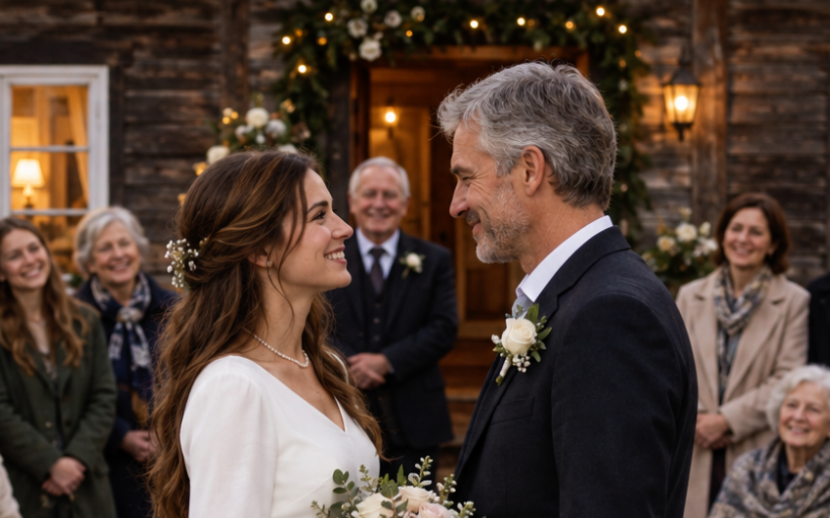
And Zoya, dressed in a simple village-style white dress—so beautiful it took Seryoga’s breath away—shone. She looked at her husband in disbelief. Could it really be happening? Had they really broken through—all those walls, all that old, senseless family anger?
But when she caught Seryoga’s eye, he winked at her—just like he did that night by the river. “Everything will be fine. I’m here. I’m right by your side.” And she smiled. Because now—they were together forever.
Fifteen years passed.
Zoya and Seryoga had three children—two sons and a daughter. Their oldest, Ignat, named after his grandfather, was now a teenager, helping his father with the chores. Seryoga had become a strong, skilled man—he rebuilt the house from scratch, making it spacious, with a veranda and a bathhouse by the river. He raised livestock, kept bees, and fished. The man who was once called a ‘pauper’ had become respected—people came to him for advice, invited him to community meetings, and elected him as a local council member.
Ignat Petrovich, now completely gray, adored his son-in-law. They would sit together on the bench by the house and talk about life. One day, the old man said:
“You know, Seryoga, I almost ruined my daughter. And you. And myself. All because of my foolish pride. Because I thought the Sheludyakovs weren’t good enough for us. But as it turned out—you’re better than all of us Stepanovs put together.”
“Oh, you shouldn’t say that, Ignat Petrovich,” Seryoga waved him off. “Every person is their own. It doesn’t matter what their last name is. What matters is what kind of heart they have.”
“That’s right,” the old man nodded. “The heart. Exactly. And I realized that too late. Good thing life set me straight. Good thing I wasn’t too late.”
They would fall into silence, watching the sunset, the village, and the river. Each wrapped in their own thoughts. But they agreed on one thing: it was good that, years ago by the river, two young fools didn’t get scared. Didn’t give up. Never betrayed their love.
Because love—love always breaks through. Against families. Against circumstances. Against pride, bitterness, old grudges. If it’s real, it can overcome anything. The most important thing is to never give up.
And they didn’t give up.