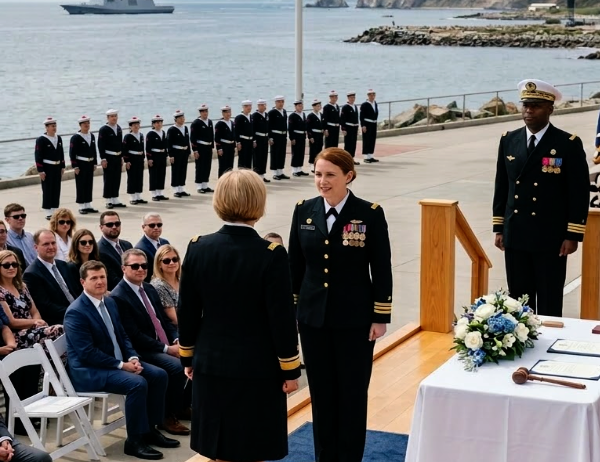
For some, childhood is a canvas of primary colors; for Pauline, it was a study in grayscale. She was the firstborn, arriving at a time when her parents, Margaret and David, were still navigating the early anxieties of adulthood. She was a quiet, observant child—attributes that, in a more discerning household, might have been heralded as signs of a burgeoning intellectual. But in the Grayson household, quietness was often mistaken for absence.
Three years later, Ethan arrived. If Pauline was the moon, reflecting a light she had to seek out, Ethan was the sun. He was the long-awaited son, the vessel for David’s unfulfilled athletic dreams and Margaret’s desire for a “protector.” The household reoriented itself overnight. Pauline watched as the orbit of her parents’ attention shifted. The refrigerator door, once sparsely decorated with her high marks in mathematics, became a crowded gallery of Ethan’s finger paintings, then his T-ball schedules, and eventually, his varsity football clippings.
This dynamic created a psychological rift. Pauline did not retreat into resentment; instead, she sought a different kind of validation—one that was objective, quantifiable, and immune to the whims of parental favoritism. While Ethan was celebrated for his natural charisma, Pauline cultivated a rigorous discipline. She was the valedictorian who spent her Friday nights mapping out her future while the house downstairs echoed with the cheers of her father and brother watching the game. She realized early on that if she could not be the favorite, she would be the best. Pauline’s choice to attend the United States Naval Academy at Annapolis was a tactical one. She sought a meritocracy where the color of her uniform and the precision of her mind would be the only metrics of her worth. At the Academy, the “Plebe Summer” broke many, but for Pauline, it was a relief. For the first time in her life, the rules were clear. If you performed, you were promoted. There were no “brother times” or “participation trophies.” There was only the standard.
She graduated in the top 10% of her class, but even then, the domestic pattern persisted. At her commissioning ceremony, her parents looked at her service dress whites with a vague, polite interest, as if she were wearing a costume for a community theater production. They left the ceremony early because Ethan had a regional baseball tournament. Pauline stood on the pier, an Ensign in the United States Navy, realizing that she had achieved what thousands could not, yet in her parents’ eyes, she was still just Pauline—the one who “did okay in school.”
Her career became a masterclass in the complexity of modern warfare. While the public often envisions military service as a series of kinetic engagements—the “warrior” archetype Ethan sought to fulfill—the reality of a global superpower relies on the gargantuan machinery of logistics. Pauline didn’t just “sit at a desk.” She mastered the art of moving a city’s worth of people, fuel, and munitions across the vast, unforgiving expanse of the Pacific Ocean.
The Weight of a Desk Job
To understand the absurdity of her father’s dismissal of her “desk job,” one must look at the variables Pauline managed. During a crisis in the South China Sea, Pauline was responsible for a Carrier Strike Group. This involved:
Sustenance: Coordinating the delivery of 20,000 meals a day across multiple vessels.
Fuel: Managing the “blood” of the fleet—millions of gallons of JP-5 and DFM (Diesel Fuel Marine) transferred ship-to-ship while underway in heavy seas.
Munitions: Ensuring that the precision-guided assets were available and maintained, a task requiring the synchronization of global supply chains with real-time tactical needs.
Humanity: Overseeing the medical and psychological readiness of over 5,000 sailors.
When she sat at her desk, she was not filing paperwork; she was playing a three-dimensional game of chess where the pieces were nuclear-powered ships and the board was half the planet. She received the Bronze Star for a logistics feat that prevented a regional conflict from escalating into a global one. She kept the medal in a safe deposit box. To explain it to her parents would have required them to acknowledge that she possessed power they couldn’t conceive of. The catalyst for the eventual revelation occurred during a brief leave. The scene was a domestic cliché: the Sunday roast. Margaret served Ethan the choice cuts of meat, her eyes shining with the reflected glory of his SEAL training. David poured the wine, filling Ethan’s glass with the enthusiasm of a man who believed his son was the only one in the room truly “serving.”
“At least Ethan’s serving for real,” Margaret had said, a comment that cut deeper than any enemy fire Pauline had ever faced. It was a dismissal of twenty-five years of sacrifice. It was an erasure of the nights Pauline had spent in the Command Center, eyes bloodshot, making decisions that kept Ethan’s future colleagues alive.
Pauline’s silence during that dinner was not a sign of weakness; it was the silence of a commander who knows that her position is secure, regardless of the enemy’s propaganda. She looked at her parents—two people who had spent three decades looking at her without ever seeing her—and felt a profound sense of detachment. She realized that they were not “blind” in the medical sense; they were willfully illiterate in the language of her life. The SEAL ceremony at Naval Amphibious Base Coronado was a spectacle of elite masculinity. The air was salt-thick and heavy with the prestige of the Trident. Pauline arrived in her Service Dress Blues. The single broad gold stripe on her sleeve—the mark of a Rear Admiral (Lower Half)—shimmered in the California sun. To anyone with even a passing knowledge of the Navy, she was the most important person in the crowd. To her parents, she was simply “Pauline in her work clothes.”
They had relegated her to a seat on the end of the row, a peripheral figure in the story of Ethan’s triumph. They were busy regaling the strangers around them with tales of Ethan’s grit, oblivious to the fact that the officers nearby were stealing glances at Pauline, their postures stiffening in instinctive respect.
Then, Lieutenant General Robert Miller took the stage. Miller was a man forged in the fires of Joint Special Operations. He was not a man of hyperbole. When his eyes swept the crowd and locked onto Pauline, the narrative of the Grayson family changed forever.
The General’s salute was not just a military courtesy; it was a thunderclap. When he walked off the dais and addressed her as “Admiral Grayson,” the silence that fell over the crowd was absolute. In that moment, the “desk job” daughter vanished, and the flag officer emerged. The look on David’s face was one of agonizing recalculation. He looked at the gold on her sleeve as if seeing it for the first time. Margaret’s mouth hung open, her mind frantically trying to reconcile the woman being saluted by a three-star general with the daughter she had mocked over pot roast.
The Anatomy of the Fallout
In the hours following the ceremony, the Graysons attempted to perform a “course correction.” But as any navigator knows, you cannot correct a course that has been fundamentally wrong for thirty years with a single turn of the wheel.
Their apologies were centered on their own embarrassment. “We didn’t know,” they said. It was the most damning admission they could have made. They didn’t know because they hadn’t asked. They didn’t know because the truth of Pauline’s success didn’t fit into the narrow domestic drama they had scripted for themselves.
Pauline’s response was a clinical assessment of the damage. She didn’t scream; she didn’t weep. She spoke to them with the cool, detached authority of a flag officer delivering a debriefing. She reminded them of the milestones they had missed—the promotions they left early, the photos they ignored, the life they had deemed secondary. One of the most complex layers of this story is the relationship between Pauline and Ethan. It would have been easy for Pauline to hate her brother, but she understood that he was a victim of their parents’ myopia as well. While Pauline was starved of attention, Ethan was smothered by it. He was forced to be “the hero,” a weight that nearly broke him during BUD/S.
The calls Ethan made to Pauline at 0200 hours revealed the truth: the Golden Child was terrified of being average. He couldn’t go to his parents with his doubts because they didn’t want a son; they wanted a legend. Pauline, the “invisible” one, became his only source of reality. She gave him the permission to fail that his parents never would. In doing so, she proved that she was not only his superior in rank but his superior in character. She mentored the brother who had been used as a weapon against her. The ultimate resolution of Pauline’s story came not with her parents’ apology, but with her promotion to Vice Admiral (O-9). This was the moment she reclaimed her narrative entirely. By choosing not to invite them to her three-star promotion ceremony, she was not being vindictive; she was being sovereign.
She realized that her parents’ presence at her achievements was a form of “stolen valor.” They wanted to bask in the glow of a fire they had never helped stoke. By celebrating her elevation to one of the highest ranks in the Navy with only her peers and her brother, she signaled that her worth was no longer up for domestic debate.
Reflection on Self-Worth
The story of Admiral Pauline Grayson serves as a potent reminder of several psychological truths:
Recognition vs. Validation: Recognition comes from others; validation must come from within. Pauline’s career was built on the latter, which made her immune to the lack of the former.
The Danger of Favored Status: Favoritism is a two-edged sword. It neglected Pauline, but it nearly paralyzed Ethan with the fear of disappointment.
The Power of Boundaries: Reconciliation is not always the goal. Sometimes, the goal is “peaceful distance.” Pauline chose to allow her parents back in on her terms—a controlled, scheduled interaction that protected her peace.
Pauline Grayson did not just build a career; she built a fortress of the self. She stands as a testament to the fact that you do not need to be seen by everyone to be significant. You only need to be seen by yourself and the mission you serve.