My Mother-in-Law Demanded a Restaurant for 60 Guests. I Said One Word, and She Fell Silent
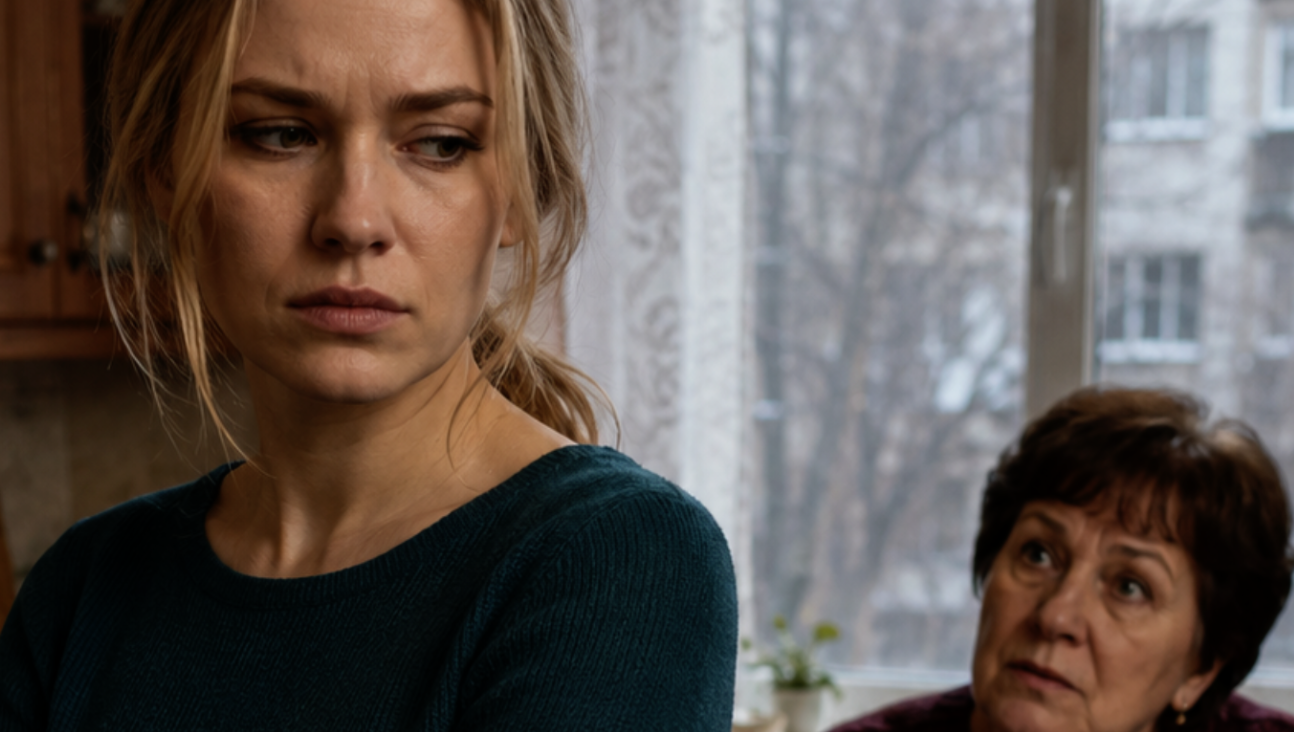
Galina Petrovna wanted a lavish wedding for her son. Sixty people, a restaurant, live music. Her daughter-in-law said one word, and the room went quiet.
The notebook appeared on Wednesday.
Galina Petrovna placed it on the kitchen table, exactly between the sugar bowl and the little vase with dry bagels, opened it to the first page, and ran her finger down the list. Sixty names. Some were underlined twice.
“Here,” she said, without lifting her eyes. “I’ve thought everything through.”
Rita stood at the stove, stirring buckwheat. The spatula scraped against the bottom of the pot, and that sound was the only one in the apartment, because Lyosha had not yet come home from work.
“Sixty people,” her mother-in-law continued. “That’s the minimum. I haven’t even written down Zoya Vladimirovna yet, and she’ll be offended.”
Rita turned off the burner. The buckwheat smelled slightly burnt. She had known this conversation would happen. She just had not known the notebook would be so thick.
She and Lyosha had submitted their marriage application two weeks earlier. Quietly, without announcements. They had gone to the registry office on Butyrskaya during their lunch break, because they both worked nearby and it was convenient. Lyosha held her hand while the girl behind the counter filled out the form. His fingers were warm and slightly damp.
“June twenty-seventh,” the girl said. “Will that work?”
Lyosha looked at Rita. She nodded.
It was drizzling outside, and they went into the coffee shop across the street. Lyosha ordered an Americano, and Rita got tea with lemon. The mug was hot, and she warmed her palms around it, even though May was already warm.
“Should we tell Mom tonight?” he asked.
“Let’s do it tomorrow.”
“Tomorrow is Sunday. She’ll come with a pie.”
“Then we’ll tell her over pie.”
He smiled. Lyosha had a habit of smiling with one side of his mouth, the left, as if the right side disagreed. Rita had known that smile for four years. Exactly as long as they had been together.
The pie on Sunday turned out to be cherry. Galina Petrovna brought it wrapped in foil, as always, put it on the table, as always, and said, “Cut it while it’s still hot,” as always. She was fifty-seven and wore burgundy blouses because her husband had once told her burgundy suited her. Her husband had been gone for eight years, but the blouses remained.
Lyosha told her about the wedding between the second and third slices of pie. He simply said they had submitted the application, June twenty-seventh.
Galina Petrovna set her fork down. Carefully, parallel to the edge of the plate.
“Lyoshenka.”
“Mom.”
“June twenty-seventh. That’s in five weeks.”
“Yes.”
She shifted her gaze to Rita. Her mother-in-law’s eyes were light brown, almost amber, and when she looked like that, without blinking, there was something in them like a cat waiting.
“And when were you planning to tell me?”
“We’re telling you now,” Rita answered.
“Two weeks after submitting the application.”
“We wanted to get used to the idea ourselves first.”
Galina Petrovna said nothing. She picked up her fork, cut off a piece of pie, but did not put it into her mouth. She held it in the air.
“All right,” she said. “All right.”
And that evening she said nothing else about the wedding. But, as it turned out, she had started the notebook the very next day.
Rita worked as a logistics coordinator at a small transport company near Paveletskaya. Her salary was forty-eight thousand, which was not much, but it was stable. Lyosha earned more; he was an engineer at a design bureau, but “more” meant seventy thousand, not seven hundred. A rented one-room apartment in Bibirevo, the metro a twenty-minute walk away, and a balcony that could fit one chair.
They were not poor. But they did not have extra money either.
They wanted a small wedding. Rita dreamed of something simple: register the marriage, have lunch with their closest people in some café, about ten guests. Rita’s mother lived in Kaluga and would come with her stepfather. Her friend Zhenya. Lyosha’s friend Pasha with his wife. Lyosha’s mother. Maybe two or three more people.
She had talked about it with Lyosha, and he had agreed. Nodding with that same left side of his mouth.
“I don’t need a circus,” Rita would say. “I need you and a normal lunch.”
“I agree.”
And everything had been decided. Until Wednesday.
Galina Petrovna was standing in the hallway, still wearing her beige coat, when she pulled the notebook out of her bag. Rita had only just opened the door for her.
“I won’t stay long,” her mother-in-law said. “No tea.”
But she walked into the kitchen, sat down, and spread out the notebook.
“Here,” she began. “These are my former colleagues. Human resources, accounting, planning department. There were twelve of us, and we still call each other.”
Rita silently sat across from her.
“Here are the relatives. Aunt Valya from Tula, she’s already asked. Uncle Zhenya with Natasha. Cousins: Olya, Sveta, Marinka. Marinka is in Voronezh, true, but she’ll come, I know it.”
“Galina Petrovna…”
“Wait. Here are the neighbors. Nina Fyodorovna, Tamara from the fifth floor. They helped bury Dad. We can’t not invite them.”
Her mother-in-law raised her head. The kitchen smelled of cooled buckwheat and a little of chlorine from the freshly washed floor. Outside the window, the avenue hummed.
“Sixty people,” Galina Petrovna repeated. “This is not a whim. These are people who have known Lyosha since birth. People who supported me when Vitya died. People we cannot fail to invite.”
Rita looked at the list. Her mother-in-law’s handwriting was small, slanted, with curls on certain letters. Old-school penmanship, Rita thought. Or a habit that could not be erased.
“I found a restaurant,” Galina Petrovna continued. “‘Beryozka’ on Dmitrovka. A hall for eighty, but we can arrange it for sixty. A banquet, three courses, live music. A four-tier cake, with swans.”
“With swans,” Rita repeated.
“With swans. It’s beautiful.”
Rita stood up. She went to the stove and moved the pot from one burner to another. Not because she needed to. Her hands simply demanded movement.
“How much does it cost?” she asked, without turning around.
“I asked. With current prices, for sixty people, with music and the cake, it comes out to about four hundred and fifty thousand.”
Rita turned around.
“Four hundred and fifty thousand.”
“It can be a little cheaper without live music. But Lyosha loves live music.”
“Lyosha loves a guitar in the kitchen.”
“That’s different.”
Rita sat down again. She ran her finger along the edge of the table. There was a long knife scratch on the tabletop. She always caught it with her fingernail when she was nervous.
Lyosha came home at eight. He smelled of gasoline and something metallic. He kissed Rita on the crown of her head, as always. Then he saw the notebook on the table.
“Is this Mom’s?”
“Guess.”
He sat down and flipped through it. His eyebrows crept upward. He had thick dark eyebrows, almost joined at the bridge of his nose, and when they rose, two deep lines appeared on his forehead.
“Sixty people,” he said.
“Sixty.”
“Aunt Valya from Tula.”
“And Marinka from Voronezh. She’ll come, your mother knows.”
Lyosha closed the notebook. Rubbed the bridge of his nose.
“I’ll talk to her.”
“You always say that.”
“Because I always do talk to her.”
“And then you always do what she wants.”
He said nothing. Not because there was nothing to say. Because she was right, and they both knew it.
Rita put the notebook in the desk drawer. She placed a towel on top of it. As if that could help.
The next evening Galina Petrovna called. Rita was in the bathroom brushing her teeth. The phone vibrated on the washing machine, the screen glowing with her mother-in-law’s name.
She spat out the toothpaste, wiped her mouth with the back of her hand, and answered.
“Ritochka, I’ve been thinking again.”
“Good morning, Galina Petrovna. It’s evening already, but all right.”
“The restaurant Beryozka is available on Saturday. The twenty-seventh is a Saturday. I can pay the deposit tomorrow.”
“No.”
“What do you mean no?”
“There’s no need to pay a deposit.”
“Why?”
“Because Lyosha and I planned a small wedding. About ten people. In a café.”
The line went quiet. Rita could hear a television playing somewhere behind her mother-in-law’s wall. Some talk show, muffled voices.
“In a café,” Galina Petrovna repeated.
“Yes.”
“Ten people.”
“Maybe twelve.”
“Rita. My son is getting married.”
“I’m getting married once too. And I don’t need swans on a cake.”
Her mother-in-law was silent for a moment. Then she said quietly, but firmly:
“I thought you would understand. Vitya didn’t live to see it. He wanted so much to see Lyosha’s wedding. And if I cannot invite him, then at least let there be people who remember him.”
Rita leaned against the cold tile wall. Her legs grew heavy.
She had not expected that. She had not expected that behind the notebook and the swans stood a man who was no longer alive.
“Galina Petrovna,” she said. “I’ll call you back.”
And she hung up.
That night she lay beside Lyosha and stared at the ceiling. The streetlamp outside drew a stripe on the ceiling, and the stripe trembled whenever cars passed under the window.
Lyosha slept on his side, facing the wall. He breathed evenly, with a slight whistle on the exhale.
Rita thought.
Four hundred and fifty thousand. That was almost their entire safety cushion. The money they had been saving for a mortgage down payment. They had been putting aside a little at a time for over a year, denying themselves vacations, new boots for Lyosha — he wore old ones with a cracked sole patched with electrical tape — and weekend restaurants.
And Galina Petrovna wanted to spend it on one evening. With swans.
But she did not know about the mortgage. They had not told her. Lyosha kept brushing it off: why burden Mom, we’ll figure it out ourselves.
And now his mother had made a list of sixty people because she wanted her dead husband to look at his son through the eyes of those who remembered him.
Rita turned onto her side. She pulled the blanket up to her chin. Her fingers found the edge of the pillowcase and began kneading it, folding it into a tiny accordion.
Why did she need swans? Why did she need three courses? Why did she need Aunt Valya from Tula, whom she had never seen?
But Galina Petrovna’s voice echoed in her ears: “Vitya didn’t live to see it.”
And Rita did not know what to do with that.
In the morning she called her mother.
Her mother lived in Kaluga, in a five-story building on the outskirts, with her stepfather Boris, who repaired washing machines and stayed silent at dinner. Her mother worked as a nurse at a clinic, and she had a low, hoarse voice, like a woman who had long been tired but refused to show it.
“Mom, my mother-in-law wants a wedding for sixty people.”
“Wow.”
“In a restaurant. With live music. With a cake with swans.”
“Beautiful.”
“Four hundred and fifty thousand.”
A pause. Rita heard her mother moving something around in the kitchen. A glass clinked against the sink.
“Who’s paying?”
“Exactly.”
“She is?”
“She’s retired, Mom. Her pension is twenty-three thousand. Plus a little from tutoring; she teaches math.”
“So you are.”
“So we are.”
Her mother sighed. Not heavily, but the way people sigh when they know the answer yet want their daughter to reach it herself.
“Ritka, did you talk to her properly?”
“I said no.”
“No is not a conversation. No is a wall. And right now she doesn’t need a wall.”
“What does she need?”
“For you to hear why she wants this.”
Rita sat on the windowsill. The balcony door was slightly open, and morning coolness drifted in. Down below, the janitor scraped a shovel along the asphalt, even though there was nothing to scrape; just habit.
“She said Viktor Pavlovich didn’t live to see it.”
“Well, there you go.”
“Mom, that’s still not a reason to spend half a million on a banquet.”
“No, it’s not. But it is a reason to sit down and talk. Not on the phone, not through Lyosha. Just the two of you. With tea.”
Rita said nothing.
“Ritka?”
“I’m thinking.”
“Think. But don’t take too long. The wedding is in four weeks.”
She dragged it out for three days.
On Thursday, Galina Petrovna sent a photo of the hall at Beryozka. White tablecloths, crystal glasses, a wall panel with birch trees. The caption said, “Beautiful, isn’t it?”
Rita did not answer.
On Friday, her mother-in-law called Lyosha. He spoke in the hallway, quietly, but the walls in their one-room apartment were like paper, and Rita heard every word.
“Mom, we decided on a small wedding… No, Mom… No, I understand… Mom, wait…”
He came back into the room with a face as if he had spent an hour standing in the wind.
“She’s crying,” he said.
Rita sat on the bed with her legs tucked under her. She held a book she had not been reading for twenty minutes.
“Lyosh.”
“What?”
“Sit down.”
He sat beside her. The bed creaked.
“Do you want a big wedding?” she asked.
“I want Mom not to cry and you not to be angry. Is that possible at the same time?”
Rita put the book on the nightstand. Its spine faced upward, the pages spreading out like a fan.
“I don’t know,” she said honestly. “But I’ll try.”
On Saturday morning Rita went to Galina Petrovna’s.
Her mother-in-law lived in Medvedkovo, in a two-room apartment on the eighth floor. The elevator smelled of old rubber and a little of lily of the valley because someone had hung an air freshener on the ventilation grille.
The door opened immediately. Galina Petrovna stood there in a house dress with tiny flowers and pink slippers. Without makeup. Without a burgundy blouse. Rita thought it was the first time she had seen her like that. Unprotected.
“Come in,” her mother-in-law said. “The kettle is hot.”
Galina Petrovna’s kitchen was small, six square meters, with yellow curtains and a calendar from the year before last on the wall. Magnets from Anapa and Kislovodsk were on the fridge. Violets stood on the windowsill, three pots, and the soil in them was damp, which meant she had watered them that morning.
They sat across from each other. The tea was strong, with bergamot. Rita warmed her hands around the cup, although the apartment was warm.
The notebook lay on the table.
Between them.
“Galina Petrovna,” Rita began.
“You can just say Galina.”
“Galina. I want to understand. Not argue. Understand.”
Her mother-in-law nodded. Her fingers rested on the notebook as if she were holding down something alive.
“When Vitya got sick,” she began, and her voice trembled, but she regained control, “people came to us. Every day. Nina Fyodorovna made broth. Tamara from the fifth floor brought apples from the village. Zoya Vladimirovna sat with him in the evenings while I went to the pharmacy.”
Rita listened. The tea grew cold.
“When he passed away, they all came. All sixty people. They stood in this kitchen, in the corridor, on the stairs. And I understood: this is family. Not blood, but those who come.”
Her mother-in-law fell silent. She looked out the window. Outside was the courtyard: swings, a sandbox with a blue border, a poplar tree that had not been cut down only because the residents had written a collective complaint.
“I want them to come for joy,” Galina Petrovna said. “At least once. Not for a funeral.”
Rita put her cup on the table. The cup was white, with a thin gold rim, and there was a chip in the rim. Small, barely noticeable.
She could have said: I understand, but we don’t have the money.
She could have said: let’s compromise.
She could have said: this is your dream, not ours.
But she looked at her mother-in-law, at her hands resting on the notebook, at the chipped cup, at the violets on the windowsill, and said one word.
“Tell me.”
Galina Petrovna blinked.
“Tell you what?”
“About everyone. On the list. Who these people are. Why they matter.”
Her mother-in-law opened the notebook. She ran her finger over the first name.
“Valentina Sergeyevna. Aunt Valya. Dad’s sister. She took Lyosha to his first day of school because Vitya and I were both working and couldn’t make it.”
Rita nodded.
“Next.”
“Evgeny Palych. Uncle Zhenya. He gave Lyosha a bicycle for his tenth birthday. A green Kama. Lyosha rode half the city on it.”
Her mother-in-law spoke, and with every name her voice became steadier, as if she were remembering not a list, but a life. Every name was a story. Not a long one, sometimes just two sentences, but alive.
Nina Fyodorovna, who had sewn Lyosha a snowman costume for a kindergarten performance. Tamara from the fifth floor, who let him come over to do his homework when the pipes were being replaced in the apartment. Zoya Vladimirovna, who taught him to play chess and deliberately lost to him for the first six months.
Rita listened. And somewhere around the twentieth name, she realized it was not a notebook.
It was an album.
They sat there for two hours. The tea cooled, was brewed again, cooled again. Galina Petrovna reached the fifty-third name when Rita raised her hand.
“Stop.”
“What?”
“Let’s be honest.”
Her mother-in-law froze. The kitchen went quiet. Even the refrigerator stopped humming, as if it too were waiting.
“Lyosha and I don’t have four hundred and fifty thousand for a banquet,” Rita said. “Well, technically we do. But that money is for a mortgage. For a down payment. For an apartment where we will live. Maybe with children.”
Galina Petrovna slowly closed the notebook.
“I didn’t know.”
“We didn’t tell you.”
“Why?”
“Lyosha didn’t want to burden you.”
Her mother-in-law lowered her eyes. Her fingers found the chip on the cup and paused there.
“I thought you just didn’t want a big wedding,” she said quietly. “I thought it was a whim. A trendy thing. Minimalism.”
“It’s not minimalism. It’s math.”
Galina Petrovna stood up. She went to the window. Her back was straight, her shoulders slightly lowered. Rita saw her clench and unclench her fingers.
“Rita.”
“Yes.”
“I’m ashamed.”
Rita did not answer right away. She stood up, walked over, and stopped beside her. She did not hug her. She simply stood there.
“You don’t need to be,” she said. “You didn’t know.”
“I should have asked.”
“We should have told you. Lyosha should have. I should have too. We’re all guilty here.”
Her mother-in-law turned around. Her eyes were shining, but she was not crying. She held herself together.
“So, a café for ten people?”
And it was then that Rita smiled. For the first time all week.
She returned home by lunchtime. Lyosha was sitting on the balcony, on the only chair, scrolling through something on his phone. The boots with the cracked soles stood by the door; he still had not bought new ones.
“Well?” he asked, without lifting his eyes.
“Sit properly.”
“I am sitting properly.”
“Lyosh.”
He looked at her. Put the phone aside.
“I was at your mother’s.”
“I know. She texted.”
“What did she write?”
“‘Rita came over. We’re talking.’ And a smiley. Mom sent a smiley.”
“Which one?”
“A flower.”
Rita sat on the balcony floor, leaning her back against the railing. The concrete felt cold through her jeans.
“We’re not going to have a wedding for sixty people in a restaurant,” she said.
“I know.”
“But we’re going to do something else.”
He waited.
“I suggested this to her. The courtyard. Her courtyard in Medvedkovo. Tables, like on Victory Day. Long ones, pushed together, covered with tablecloths. Each of the sixty people brings one dish. One. Their best. Aunt Valya brings her aspic, Nina Fyodorovna her pies, Tamara an apple pie. Zoya Vladimirovna will probably bring something with cottage cheese.”
Lyosha looked at her. His eyebrows were level, the wrinkles on his forehead smoothed out.
“For music,” Rita continued, “we’ll find something cheap. Or Pashka will bring his speaker. He has a good one. I’ll bake the cake myself. Without swans.”
“You don’t know how to bake cakes.”
“I’ll learn. I have four weeks.”
“Three and a half.”
“Then three and a half.”
He was silent for a moment. Then he said:
“And Mom?”
“She cried.”
“Bad?”
“No. Good.”
Galina Petrovna called that evening. Her voice was different: not demanding, not quiet, but somehow new. Rita could not find the word. Then she understood: grateful.
“Ritochka, I spoke to Nina Fyodorovna. She’ll make three kinds of pies. With meat, with cabbage, and with potatoes.”
“Excellent.”
“And Tamara said she’ll bring not only a pie but also her samovar. A real one, coal-fired, from her grandmother.”
Rita smiled. She stood in the kitchen, and the buckwheat on the stove smelled normal, not burnt.
“Galina Petrovna.”
“Galina.”
“Galina. I need your help.”
“With what?”
“The cake. I don’t know how. At all.”
Her mother-in-law laughed. Quietly, briefly, but it was real laughter. Not polite laughter.
“Come on Sunday. I’ll teach you. I have Vitya’s recipe. He loved medovik.”
Rita looked at Lyosha, who was standing in the doorway and listening. He was smiling. With both sides of his mouth.
On Sunday, Rita went to Medvedkovo. Her mother-in-law met her in a burgundy blouse and an apron. On the table were flour, eggs, a jar of honey, and butter in a paper wrapper.
“Vitya’s recipe,” Galina Petrovna said, placing a sheet torn from a notebook on the table. The paper was yellow, the handwriting masculine and sweeping. “He wrote it himself. When Lyosha was two.”
Rita took the sheet carefully, with two fingers, as if it might crumble.
“Medovik. For Galka. Melt the honey in a water bath, do not overheat. Cream: sour cream + sugar + vanilla — a little. Thin layers, 8 of them. Assemble in the evening so it soaks overnight.”
Below, in another color, there was a note: “Galka, don’t skimp on the honey. I’m serious.”
Rita placed the sheet on the table. She ran her finger over the final line.
“He was good,” she said.
“Yes,” her mother-in-law answered. And added nothing else.
They kneaded dough for two hours. Rita’s wrists ached, and a stripe of flour appeared on her forehead without her noticing. Galina Petrovna worked quickly and precisely, as if her hands remembered the movements by themselves.
“Thinner,” she would say. “Even thinner. The layer should be like paper.”
“It’s tearing.”
“It’s not tearing. You’re rushing.”
Rita slowed down. The rolling pin moved over the dough slowly and evenly. The dough gave in.
“There,” her mother-in-law said. “See? Patience.”
The first cake layer came out crooked. The second was a little better. The third was almost even. By the eighth, Rita was no longer counting; she simply rolled, and Galina Petrovna silently nodded.
The kitchen smelled of honey and hot butter. It was getting dark outside. They assembled the cake, spread sour cream between each layer, and put it in the refrigerator.
“Until morning,” her mother-in-law said. “It will soak overnight. Like Vitya wrote.”
Rita washed her hands. The water was hot, and it made her fingers tingle.
“Thank you,” she said.
Galina Petrovna stood by the sink, wiping the table with a cloth. Her movements were circular, familiar. She had done this a thousand times. Ten thousand.
“Rita.”
“Yes?”
“You said ‘tell me.’ That first time. One word.”
“Yes.”
“No one had ever asked me to tell them before.”
Rita did not answer. She came over, took the cloth from her mother-in-law, and finished wiping the table herself.
June twenty-seventh fell on a Saturday, just as the calendar had promised.
In the morning, Rita put on a white dress, simple, without lace or a train, bought on sale for three thousand eight hundred rubles. Lyosha put on a blue suit that had been hanging in the closet since his diploma defense, and new shoes. Galina Petrovna had bought the shoes. Silently. She placed the box by the door and left.
At the registry office, everything was quick. Twenty minutes. The girl behind the counter smiled when they signed the papers. Lyosha kissed Rita, and his lips were dry from nerves.
Then they went to Medvedkovo.
Galina Petrovna’s courtyard was unrecognizable. Four long tables, made from kitchen and writing desks pushed together, covered with white tablecloths. On each one stood wildflowers in old compote jars. Nina Fyodorovna arranged pies on trays. Tamara from the fifth floor lit the samovar. Uncle Zhenya brought folding chairs on the trailer of his old Moskvich and arranged them while giving orders to his wife, who did not listen to him.
Aunt Valya had come from Tula at six in the morning. Her aspic had set while still on the train.
Zoya Vladimirovna brought a chess set. She placed it on a separate little table.
“For Lyosha,” she said. “For luck.”
Sixty-two people. Two came without an invitation: the neighbor from the first floor, who simply saw the tables in the courtyard and asked if he could join, and his wife with a pot of borscht.
Galina Petrovna stood by the entrance in her burgundy blouse. The very same one. She had lipstick on, which she usually did not wear. She looked at the courtyard, at the tables, at the people, at her son in his blue suit, and she did not cry.
They played music through Pashka’s speaker. The first song was “How Beautiful This World Is” by David Tukhmanov. Then someone switched it to Antonov, and Aunt Valya went dancing between the tables, holding a pie in one hand.
They brought out the cake at nine in the evening. Medovik. Eight layers. No swans.
Rita cut it with a kitchen knife, and the cream squeezed out between the layers, and everything was uneven, and one layer had slid slightly to the side, but Galina Petrovna said:
“Beautiful.”
And it was true.
At eleven in the evening, the guests began to leave. Nina Fyodorovna carried away the empty trays. Tamara put out the samovar. Aunt Valya fell asleep on a folding chair, and Uncle Zhenya covered her with his jacket.
Rita sat on the bench by the entrance. Her shoes stood beside her, her bare feet resting on the cool asphalt. Lyosha brought her tea in a plastic cup and sat down next to her.
Galina Petrovna came out of the entrance with a garbage bag. She saw them and stopped.
“Don’t leave yet,” she said.
“We’re not leaving,” Rita answered.
Her mother-in-law put the bag by the trash bin and came back. She sat on the bench on the other side of Lyosha. Three people on one bench. The courtyard was empty now; only the streetlamp was burning, casting a circle of light onto the asphalt.
“Rita,” Galina Petrovna said.
“Yes?”
“Thank you.”
Rita did not answer. She simply moved closer. Lyosha’s shoulder was warm on one side. On the other side, beyond Lyosha, sat a woman in a burgundy blouse who had lost her husband eight years earlier and had found something else today.
The streetlamp buzzed. It smelled of honey.
The notebook with sixty names lay at home on the kitchen table, opened to the last page. There, after the final name, Galina Petrovna had added one more.
“Rita.”
The next morning Rita woke up in Bibirevo, in their rented one-room apartment, beside her husband. One chair stood on the balcony. Outside the window, July was beginning.
On the nightstand lay the notebook sheet with the medovik recipe. She had taken it yesterday. Galina Petrovna had given it to her herself.
“Don’t skimp on the honey. I’m serious.”
Rita smiled without opening her eyes. Her pillow smelled of someone else’s perfume: her mother-in-law had hugged her goodbye yesterday, and the scent had remained in her hair.
The mortgage money was untouched. The wedding had cost twelve thousand: tablecloths, flowers, plastic cups, and honey for the cake.
Everything else had been brought by people.
Sixty-two people who came not because they had been invited to a restaurant. They came because they remembered a boy on a green Kama bicycle, a woman in a burgundy blouse, and a man who did not skimp on honey.
Rita turned onto her side. Lyosha slept, whistling softly on the exhale.
Everything was right.
Everything was exactly as it needed to be.