The autumn wind carried the scent of woodsmoke and damp earth across the village, whispering through the skeletal branches of the ancient birch tree that stood sentinel beside the porch. Katya sat quietly on the weathered wooden step, her gaze fixed on the winding dirt track that disappeared into the sprawling emerald forests of her childhood. Years seemed to condense into moments as she listened to the rhythmic, familiar ticking of the old pendulum clock inside the house—a steady, unyielding heartbeat that marked the passage of time in a world where everything else had transformed.
When Katya’s mother departed over three decades ago, she left behind a vacuum that words could never quite fill. She did not vanish into the abyss of tragedy, nor did she leave a trail of bitter recriminations; she simply packed a modest suitcase, offered a fleeting kiss upon her three-year-old daughter’s crown, and stepped out into an entirely different existence. In that new life, there was no room for a hardworking tractor driver, no tolerance for a drafty village home warmed by a wood-burning stove, and no place for a little girl wearing pristine white bows in her hair. Katya retained almost nothing tangible from that departure—only fragments of sensory ghosts, such as the faint, sweet trace of French perfume, the chill of a receding cheek, and the distant roar of an engine fading into the morning mist.
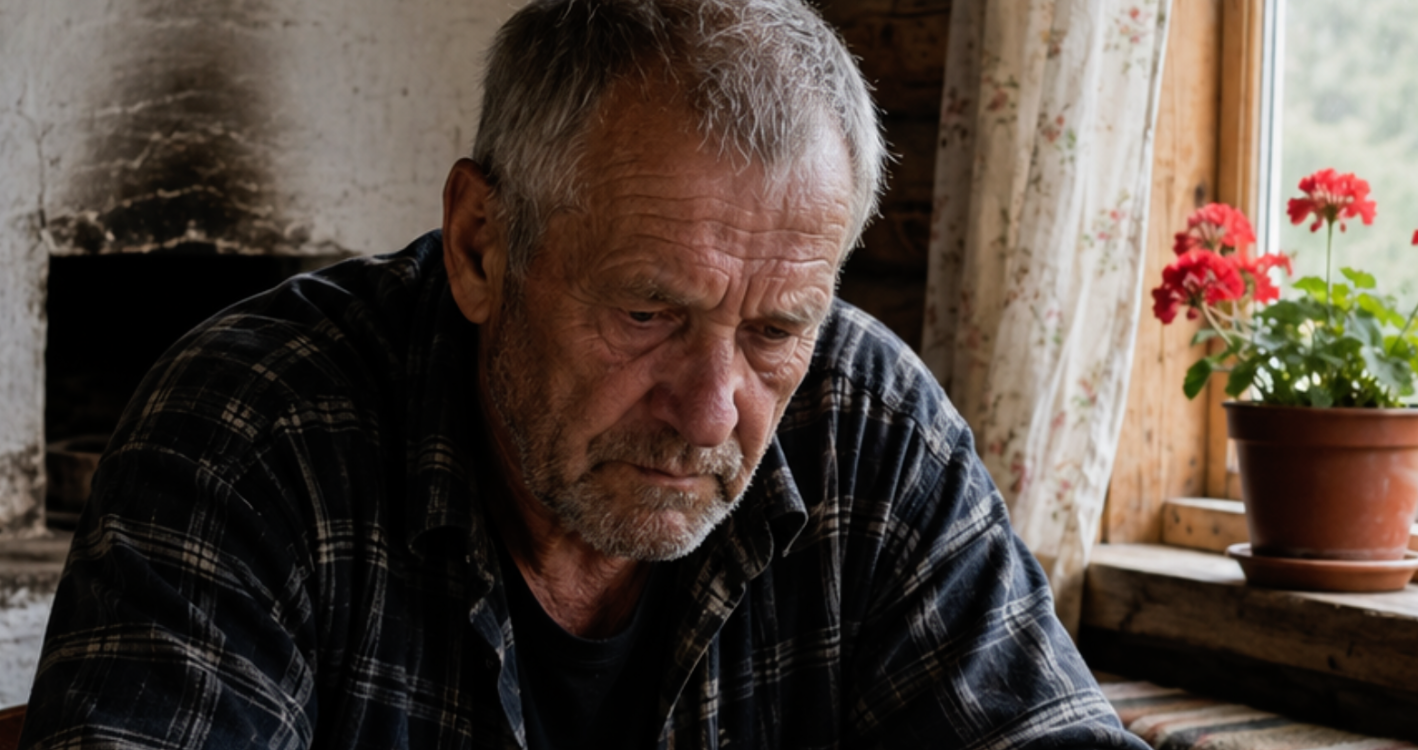
Her father, Pyotr Ivanovich—known simply as Ivanych to everyone in the district—never uttered a single word of condemnation against his vanished wife. He possessed a massive, imposing frame, with shoulders broad enough to bear the weight of an entire community, and hands permanently stained with machine oil and pine resin. To casual observers, he was a stern, taciturn man who rarely smiled and spoke only when absolute necessity demanded it. Yet beneath that stoic, weathered exterior beat the heart of a devoted father who dedicated every fiber of his existence to shielding his daughter from the harsh realities of their isolated world.
Long before the sun pierced the horizon, while the winter frost still traced intricate, frozen ferns across the windowpanes, Pyotr was already awake. He knelt before the cast-iron stove, coaxing stubborn embers into life, filling the kettle, and preparing warm porridge for his growing daughter. Though he never mastered the delicate art of braiding hair, he grew exceptionally skilled at fastening neat, symmetrical bows and ensuring that Katya’s woolen scarf was wrapped securely against the bitter sub-zero winds. When educational challenges arose, such as the daunting transition into fractions during her school years, Pyotr sat hunched over dog-eared textbooks until midnight, laboring in absolute silence to master the principles so he could lucidly explain them the following afternoon.
Sacrifice was the quiet currency of their household. When funds dwindled to a dangerous nadir ahead of a school theatrical performance, Pyotr unhesitatingly parted with his treasured motorcycle—his sole luxury—to purchase vibrant lengths of fabric, which their neighbor Zinaida transformed into a dress that made Katya feel like a princess. Years later, when academic brilliance propelled Katya toward university admission in the capital, Pyotr accompanied her every step of the way. He secured a modest room in the apartment of an elderly retired teacher, prepaid the rent for several months, pressed a small reserve of cash into her hand, and delivered a simple, monumental mandate:
“Your job is to study. I’ll take care of everything else.”
And study she did, graduating with high honors before carving out a successful corporate career that eventually drew the attention of Mark—a warm, articulate professional from the Netherlands. Mark brought an entirely different rhythm into her world, introducing her to the serene canals of Amsterdam, the quiet grace of historic European architecture, and a lifestyle defined by comfort, predictability, and ease. When Katya broke the news of her impending relocation during a warm May evening on the old wooden porch, Pyotr listened with characteristic stillness. He offered no manipulative guilt trips, no dramatic reproaches, and no desperate pleas for her to stay. He merely nodded, masked his profound loneliness behind a gentle acceptance, and whispered for her to call whenever time permitted.
For a season, Katya kept that promise, telephoning weekly, then bi-weekly, and eventually stretching the intervals into months as the dizzying turbine of international corporate life, high-profile projects, domestic renovation, and social obligations consumed her days. She married Mark, welcomed two wonderful children into the world, and allowed herself to believe the comforting illusion that her father was an immutable, self-sustaining monument who existed comfortably outside the vulnerabilities of aging and illness. Whenever a pang of guilt stirred in the quiet hours of the night, she silenced it with a brief telephone check-in, accepting his invariable, stoic assurances that everything was entirely fine.
Then came the silence.
On March thirteenth, coinciding with Pyotr’s seventieth birthday, the telephone rang into an empty void. Hour after hour yielded only an unyielding electronic tone. Panic, cold and sharp, pierced Katya’s composure. Ignoring Mark’s rational, measured arguments about faulty telecommunications and demanding corporate timelines, she packed a suitcase with frantic energy and embarked upon a grueling two-day pilgrimage across borders, time zones, and snowy expanses, driven by a singular, desperate prayer: Just let him be alive. God, please, just let him be alive.
When she finally reached the village, the desolation of the snow-choked yard confirmed her darkest fears. Neighboring Aunt Zina, now frail and bent with age, delivered the devastating blow: Pyotr had suffered a severe stroke nearly two weeks prior and lay confined to the district hospital.
The hospital ward smelled sharply of industrial disinfectants and despair. There, near a drafty window, lay a man who had once seemed invincible. The broad shoulders had caved; the massive hands, once capable of lifting heavy timber and steering massive machinery, now lay dry, fragile, and unresponsive. When recognition flickered in his dimmed eyes, Pyotr’s face crumpled, and tears—silent, heavy, and completely uncharacteristic—traced paths through his gray stubble. He could not speak, nor could he wipe the moisture from his cheek. Katya dropped to her knees beside the metal frame, pressing his withered hand against her face, weeping tears of profound contrition.
The medical prognosis was stark: permanent paralysis on one side, severely impaired speech, and an absolute requirement for round-the-clock specialized care. When Mark suggested arranging an exclusive private sanatorium funded from afar, Katya experienced a sudden, clarifying epiphany. The glittering illusion of her foreign life—the pristine Amsterdam streets, the corporate status, the comfortable domesticity—shattered against the harsh reality of her moral debt.
“I’m staying here,” she told her husband over the shaky connection.
“For how long?” Mark asked, his voice tightening with disbelief.
“I don’t know… He raised me alone. And I abandoned him.”
The ensuing months brought a quiet revolution of the soul. Mark arrived months later with quiet dignity to finalize an amicable divorce, recognizing that Katya’s heart had already crossed the threshold back to where her roots lay buried. Katya rented a modest space nearby during the initial hospital phases, tirelessly working alongside physical therapists to coax her father’s voice back through painstaking phonetic repetition—syllable by syllable, word by word, until “water” and “porridge” transformed from impossible hurdles into triumphant milestones.
When Pyotr was finally discharged and returned to the old village homestead, Katya initiated a comprehensive transformation of the property. She hired local contractors to reinforce the sagging roof, install modern indoor plumbing, build a wheelchair-accessible ramp, and strip away decades of accumulated neglect. Slowly, painfully, the house reclaimed its soul, transitioning from a crumbling relic of the past into a sanctuary of healing.
Now, as the summer evening bled into shades of amber and violet, Katya wheeled her father out onto the porch just as they had done every evening since his recovery. She adjusted the warm woolen blanket over his knees and seated herself on the step below, resting her head gently against his steady, unyielding leg.
Pyotr turned his head slightly, studying her features with a depth of ancient wisdom that transcended language. With halting, deliberate pauses, he broke the evening silence.
“Are… you… happy?” he whispered, his voice trembling slightly with effort.
Katya turned, her eyes shining with absolute peace as she covered his fragile hand with her own.
“I’m happy, Dad,” she smiled softly, breathing in the rich fragrance of blooming bird cherry and damp earth. “I’m home.”
Her father closed his eyes, a single, peaceful tear escaping to slide down his cheek—not a tear of sorrow or helpless frustration, but one of profound, consummate grace. Sitting there beneath the rustling leaves of the old birch tree, Katya understood the ultimate truth of her journey: true fulfillment is rarely found in the distant horizons we chase or the grand ambitions we conquer. Sometimes, it resides entirely within the quiet courage to return, to be present, and to answer the call of love before the twilight fades into night.