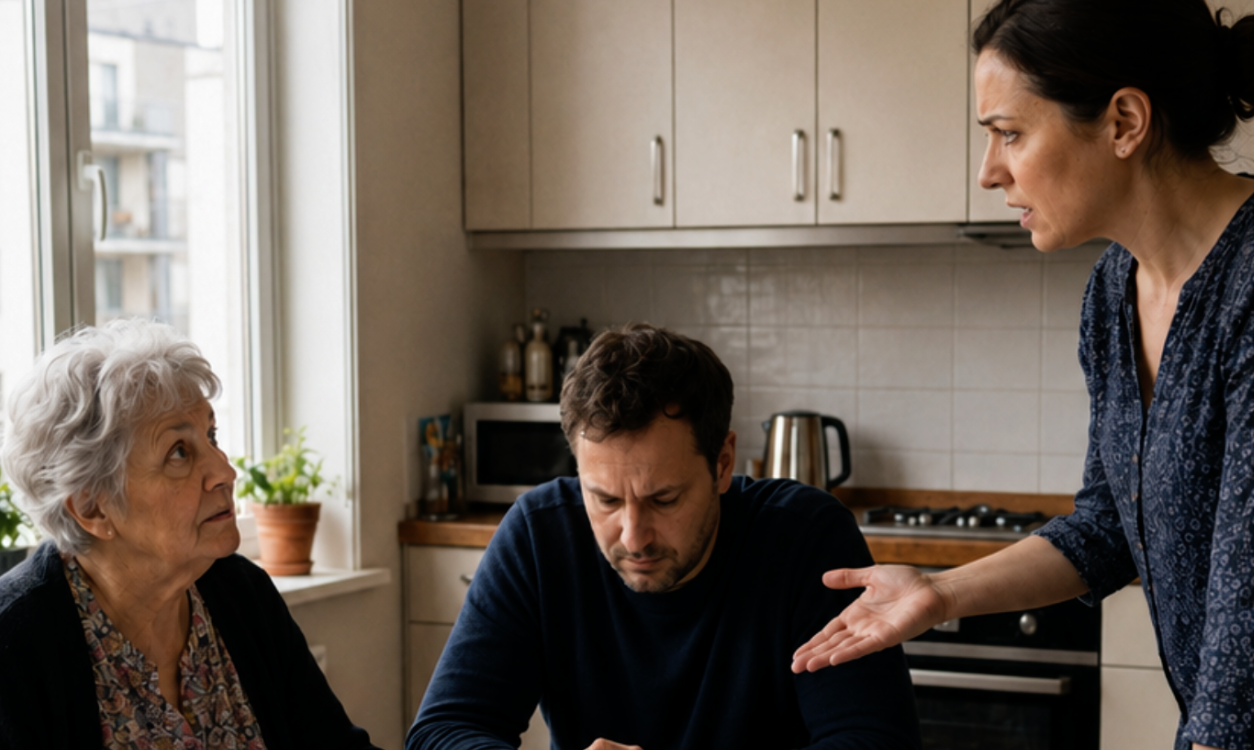
“Help YOU? After everything? Don’t make me laugh!” Masha could barely keep her voice from trembling
“Come by at nine on Saturday. Wash the windows, sort out the pantry, and make lunch,” Galina Arkadyevna tapped her pen against the notebook she used for planning chores at the country house. “After lunch, help Pyotr Sergeyevich with the shed. We’ve already divided everything up.”
“Help you after your complaint brought inspectors to my parents’ shop? Don’t make me laugh,” I said, placing three printouts in front of her. “Here’s your complaint, the family correspondence, and the report from Rospotrebnadzor. Not a single accusation was confirmed.”
Anton sat beside his mother, staring down at his plate. Just the evening before, he had assured me that his parents had nothing to do with the complaint. Now, lying on the table was his message: “Do whatever you want, just don’t tell Masha.”
Galina Arkadyevna pushed the papers toward the sugar bowl.
“The shop is still operating and there was no fine. So nothing terrible happened. Don’t be selfish. There’s plenty of work at the country house without you.”
That was exactly how every conflict was handled in their family. My in-laws did whatever they wanted, Anton called it a misunderstanding, and I was expected to forget my resentment and come help them. This time, “forgetting” meant pretending my parents hadn’t just endured an inspection that had been deliberately triggered out of spite.
My mother and father had opened a butcher shop in the autumn of 2020. Nina Petrovna had registered as an individual entrepreneur, while Viktor Alexeyevich handled suppliers, deliveries, and refrigeration equipment. They had poured so much effort into the little store that my father noticed an unusual hum from a display refrigerator before any technician did, while my mother remembered the arrival date of every batch of goods.
My parents never gave merchandise away to relatives. Even I bought from them through the register. Sometimes Mom tried to slip the money back to me, but Dad always stopped the argument: the shop supported both of them, so family feelings did not cancel out rent, electricity bills, or payments to suppliers.
On June 28, Galina Arkadyevna called my mother and ordered meat, poultry, and sausages for a gathering at the country house. She wanted the price to be almost wholesale and planned to postpone payment until her pension came in. Mom offered her a family discount, free delivery, and a normal transaction through the register.
My mother-in-law agreed, but later presented the situation very differently in front of relatives.
“You smile at strangers, but squeeze the last kopeck out of us,” she said when my father delivered the order. “For family, you could have stopped counting profits for once.”
My father placed the receipt in front of her and calmly explained that the merchandise belonged to the business. Galina Arkadyevna fell silent, but she remembered the refusal.
In the car, I asked Anton to put an end to the accusations that my parents were greedy. He waved me off.
“Mom lost her temper. Everyone lives like this, and once again you’re turning it into some matter of principle. For family, they could have made an exception.”
I reminded him about the discount and free delivery, but my husband repeated that the issue was about respect. In his family, that word meant only one thing: someone else gave up their money, time, or labor, while Galina Arkadyevna accepted the sacrifice as something she was entitled to.
On July 10, Mom called before the shop opened. The regional office of Rospotrebnadzor had requested explanations concerning a complaint alleging improper storage temperatures, products without documentation, and boxes being kept near the service entrance.
The mention of the service entrance immediately made me suspicious. Customers couldn’t see it. Galina Arkadyevna had been near the receiving area when my father carried her purchases to her car, but suspicion alone wasn’t enough for an accusation.
My parents gathered invoices, logs, and all the other documents. Dad checked every folder several times, while Mom reviewed all the labeling again. Both of them knew the shop was in order, but someone else’s complaint forced them to prove it as though years of proper work meant nothing.
After reviewing the complaint, the authorities conducted an inspection. The specialists checked the refrigeration equipment, compared documentation, and examined product labels. The shop continued operating, although one delivery had to be rescheduled, and my father barely slept the night before.
On July 20, my parents received the report: no violations of mandatory requirements had been found. Mom placed the document beside the cash ledger and sat down, rubbing her stiff neck. Dad went out to the unloading area, stood there for a while, and then returned to receive a shipment.
That evening, I told Anton the result. He hugged me, said the unpleasant situation was over, and immediately changed the subject to the country house: his parents’ pump was malfunctioning, the shed needed sorting out, and Galina Arkadyevna expected us there on Saturday.
“Did your parents write the complaint?” I asked.
Anton removed his arm from my shoulder.
“Mom has a difficult personality, but she wouldn’t go that far. Stop connecting everything to them.”
His confidence might have reassured me before. Now I noticed something else: he hadn’t once asked why I suspected his parents specifically, and he had been far too quick to change the subject to Saturday’s chores.
On July 22, Anton left our shared tablet in the kitchen with the family group chat open. A message from Galina Arkadyevna appeared on the screen:
“Just don’t let anything slip to Masha about the complaint. We need her at the country house on Saturday.”
Then Pyotr Sergeyevich wrote:
“The inspection didn’t find anything. That means the complaint wasn’t written strongly enough, even though I mentioned the service entrance.”
I scrolled upward through the conversation. There was a copy of the complaint, and in messages dated July 13, my father-in-law listed the accusations they had included. Galina Arkadyevna reminded him that she had suggested adding wording about a threat to customers’ health. Anton had replied:
“Do whatever you want, just don’t involve me and don’t tell Masha.”
He had known everything before the inspection even began and had chosen to remain silent. Then he listened while I told him about my father’s sleepless night, hugged me, and continued defending his parents.
I saved the messages, printed the relevant pages, and called my father. My parents forwarded the messages to the authorities together with their own explanations. They weren’t demanding immediate punishment; the decision would be left to the officials.
The following evening, Anton met me in the hallway wearing work gloves. He was already preparing to go to his parents’ house and reminded me that Galina Arkadyevna had assigned everyone their Saturday chores.
“Did you know about the complaint?” I asked.
“No. And stop accusing Mom without evidence.”
That answer was enough.
I put my shoes back on, took the printouts, and went with him. The conversation needed to be finished with everyone involved present.
At my in-laws’ kitchen, the air smelled of dill and freshly cut wooden boards that Pyotr Sergeyevich had been planing on the balcony for a canopy. Galina Arkadyevna served soup, opened her country-house notebook, and began listing my responsibilities.
She had no interest in how my parents had endured the inspection. In her mind, I had already been returned to my usual schedule.
I listened until she finished and placed three printouts in front of her.
At first, my mother-in-law claimed she had never seen the papers before. When I showed her own messages, she quickly changed her story and called the complaint an act of concern for customers. Pyotr Sergeyevich said that an honest business owner had nothing to fear from an inspection.
Anton asked me to lower my voice, even though his mother was the one speaking the loudest.
“You reported violations you had never actually seen,” I said. “The inspection didn’t confirm a single one of your claims.”
“If everything was in order at the shop, then there was nothing to be afraid of,” Galina Arkadyevna replied. “Now everyone knows the shop is clean. After everything we’ve done for you, you could have avoided turning this into a family war.”
In her notebook, my name was still written between “windows” and “pantry.”
As far as my mother-in-law was concerned, the complaint was already in the past because the shop hadn’t been closed. My parents could go back to being convenient suppliers, while I could go back to being unpaid labor at the country house.
“You controlled our weekends, bought products at a discount, and demanded that my parents sell to you at a loss. Which part of that exactly was supposed to count as helping me?”
Pyotr Sergeyevich pushed his plate aside and muttered that I didn’t have to come anymore. Then he added that after this, I shouldn’t expect any support from them.
“I never asked for it before.”
Galina Arkadyevna turned to her son and demanded that he explain to his wife how one was supposed to speak to elders. Anton raised his eyes, but still couldn’t bring himself to admit his role.
“My parents went too far,” he said. “But the shop is operating and there’s no fine. You’ve blown this out of proportion too. Let’s just stop here.”
What he wanted was for me to pay for family peace with my silence once again.
My father’s sleepless nights, my mother’s humiliation, and Anton’s own lies were not included in that calculation.
I slid the page with his July 13 message toward him.
“You knew what they did. Then you looked me in the eyes and lied. As far as I’m concerned, this conversation is over.”
Galina Arkadyevna became outraged that I had read the family chat. Pyotr Sergeyevich declared that my parents still owed them a separate explanation concerning the complaints.
“Copies of the messages are already with the authorities. Direct any questions to my parents in writing,” I replied. “I’m not coming to the country house anymore. And there will be no more discounted products either.”
At the mention of the discount, Galina Arkadyevna sharply raised her head.
She slammed the notebook shut and said she had considered me one of the family, while I had humiliated them in front of their relatives.
“Your complaint managed that without any help from me.”
I got up from the table.
Anton caught up with me on the stairwell and spent several minutes talking about his parents’ age, his mother’s difficult personality, and the fact that the complaint had supposedly led to nothing.
He had no intention of explaining his own lies.
At home, my husband suggested that we calm down and that he could simply go to the country house without me.
I told him I was filing for divorce.
Anton refused to submit a joint divorce application through the civil registry office and called my decision a momentary reaction made out of anger.
“Take whatever you need and spend the night at your parents’ place. You can collect the rest later by arrangement.”
He asked whether defending a tiny shop was really worth such a high price.
But the shop had only been the trigger.
His parents had deliberately targeted mine, and Anton had helped them hide it while continuing to lie even after the inspection.
Anton packed a sports bag with his laptop, clothes, and chargers. He left his apartment key on the dresser himself. Before walking out, he paused, clearly waiting for the familiar request to stay so we could talk everything through.
But the conversation had already happened.
On the morning of July 24, I submitted a petition for divorce to the magistrate court. We had no minor children together, and I made no property claims in the petition. Anton had refused to file jointly at the civil registry office the day before.
Then I went to the shop.
Mom was checking price tags, while Dad accepted a delivery of chilled products and compared the labels with the invoices. The inspection report confirming that no violations had been found lay beside the cash ledger.
My phone vibrated again.
Galina Arkadyevna was calling.
I silenced it and helped Mom arrange the new delivery.
Dad opened the door for the first customer, Mom switched on the scales, and the sign on the door remained turned to the side that said:
“OPEN.”