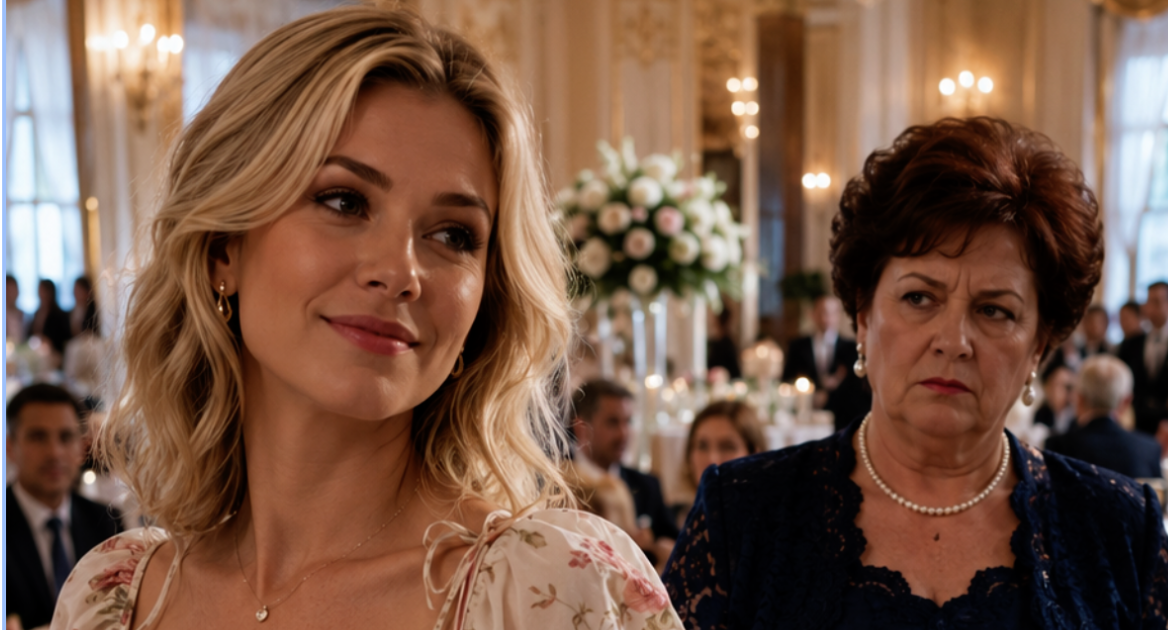
“Ridiculous,” Inna Valeryevna said with disgust, pinching the edge of the gift box between two fingers as though there were a dead mouse inside.
“Honestly, Tanechka, it would have been better if you hadn’t given me anything at all than embarrass yourself like this.”
“Mom, now say that again to my face,” Andrey said in an even, almost icy tone, pushing aside his plate of aspic. “Only slowly and clearly.”
A heavy, sticky silence settled over the festive table. The guests froze with forks halfway to their mouths. Uncle Vitya remained sitting with a bottle of homemade liqueur raised over a shot glass, and Aunt Sveta even stopped chewing.
I sat upright, without lowering my eyes. I am a technologist in food production. My work is strict measurements, standards, and an understanding of processes. If you violate the technology, what comes out in the end is inedible waste.
My relationship with my mother-in-law had been one continuous defective batch from the very first day, but like a proper daughter-in-law, I had spent years trying to salvage that hopeless production line with pretty packaging, politeness, and endless patience.
Inna Valeryevna, a former section manager at a Soviet department store, was used to evaluating people like goods on a shelf — by how rare they were and how useful they were to her personally. I did not belong on her elite list.
But her daughter, my sister-in-law Mila, a twenty-nine-year-old girl who made a living photographing other people’s children at school celebrations, always sat in the front row of her mother’s personal theater.
“What did Mom say that was so wrong?” Mila snorted spitefully, yapping from behind her mother’s back like a pocket poodle that had sensed its owner had allowed it to bite the guests.
“Tanya, honestly. It’s Mom’s birthday, she’s sixty-one, and you dragged her some kind of scarf. You work at a factory, your taste has gone dull. You’re used to work uniforms.”
For the record, inside the box was not “some kind of scarf,” but a luxurious Italian cashmere stole in the color of dusty rose. The very same one my mother-in-law had sighed meaningfully over a month earlier while leafing through a catalog in our presence. It cost exactly twenty-five thousand rubles — an amount Andrey and I had deliberately set aside. But the problem was not the gift. The problem was that I was the one who handed her the box.
“I am simply used to a different level of attention,” my mother-in-law hissed arrogantly, adjusting the gold chain around her neck. “From my own son, I expected something more substantial. And these handouts…”
Andrey did not perform any diplomatic dances around his mother’s mood. He stood up, calmly took the box with the stole from the table, carefully closed the lid, and put it into his backpack.
“Here’s how it’s going to be,” my husband said, his voice like a hammer striking an anvil.
“We chose this item together. And we paid for it from our shared budget. If you think it’s ridiculous, Mom, then we’re ending this comedy right here. You can do without a gift.”
“Inna, don’t lose all sense of proportion!” Uncle Vitya suddenly spoke up, slamming the bottle onto the table.
“It’s a gorgeous thing. Give it here, I’ll take it for my Nyura if it rubs your neck so badly. Sister, you’ve completely lost your bearings from your own self-importance.”
My mother-in-law’s face turned blotchy with an unhealthy burgundy color, like an overripe beet. She noisily sucked in oxygen through her nose, preparing to launch into a tirade about ungrateful children, but we were no longer willing to listen. Andrey took me by the hand, and we walked out into the hallway.
I did not throw hysterics in the car. I did not cry. On the contrary, a strange, cold calm was blooming inside me. I looked out the window at the flashing streetlights and understood: enough playing the good girl. It was time to bring out the abacus.
Andrey’s family had lived for years according to a fascinating system. Inna Valeryevna and Mila firmly believed that my husband was their personal, free service center. Andrey worked as a technician at a large service site; he had golden hands. Who repaired Mila’s camera lenses after she dropped them at corporate events? Andrey. Who rebuilt the engine of my mother-in-law’s old foreign car for free? Andrey. Who hauled construction materials to their dacha every weekend because “delivery is expensive, and you are her son”? My husband. And all of it was accepted like tribute from conquered nations. With slight contempt.
Three weeks passed after the scandal at the anniversary celebration. Naturally, my mother-in-law did not apologize. She chose the tactic of an offended queen who was graciously prepared to give the serfs a chance to redeem themselves.
On Wednesday evening, the phone rang.
“Andryusha,” Inna Valeryevna’s voice sounded sweet, like syrup.
“The pipes in my bathroom have gotten completely awful. And it’s time to replace the tiles. I was thinking it over — you have vacation in a week, don’t you? So you can take care of it. Buy the materials yourself; you get those work discounts. Consider it your real gift to me. Last time it all turned out rather awkward.”
In the background, Mila’s voice could be heard:
“And have him hang a mirror with lights for me! I’ll bring clients to Mom’s place!”
Andrey tiredly rubbed the bridge of his nose. He was working two jobs so we could pay off our mortgage faster, and that vacation was as necessary to us as air. I placed my hand over his, pressed the end-call button on the phone, and said:
“I’ll handle this myself. Trust me.”
I spent the next three days gathering data. I pulled up all the receipts, card statements, and remembered every “brotherly” and “sonly” request from the past five years. I created the perfect technological process of retribution.
On Saturday morning, we went to my mother-in-law’s place. Inna Valeryevna and Mila were sitting in the kitchen, sipping tea from porcelain cups. They were clearly expecting to see Andrey in work overalls, with a hammer drill and bags of cement.
But we came in wearing clean everyday clothes. I calmly pulled out a chair, sat down opposite my mother-in-law, and placed a thick folder on the table.
“What is this wastepaper?” Inna Valeryevna narrowed her eyes suspiciously, not touching the plastic folder.
“This, Inna Valeryevna, is an estimate,” I said with perfect politeness, looking straight at the bridge of her nose.
“Here is a detailed calculation. Removal of the old tiles, replacement of the pipes, waterproofing, laying new tile, installation of plumbing fixtures. Plus materials and delivery. Total: two hundred eighty thousand rubles. A mirror for Mila with installation is another fifteen. As relatives, we gave you a five percent discount.”
The arrogance vanished instantly from the face of the former department store manager, leaving only comical confusion behind. Mila nearly dropped her cup.
“Are you… are you out of your minds?!” my mother-in-law shrieked, rising into ultrasound. “Charging your own mother money?! Andrey, why are you silent?! Your wife has completely lost all limits! This is your duty as a son!”
Andrey leaned his hands on the edge of the table and looked at his mother with a heavy, unblinking gaze.
“My duty, Mom, is to provide for my own family. Renovating your apartment is a commercial order. Tanya and I discussed it and decided that doing your renovation for free as an apology would be, as you so aptly put it at your birthday, ridiculous. We decided not to embarrass ourselves anymore with free handouts. Pay the estimate, and I’ll work. No money — hire a crew from an advertisement.”
“Oh, so that’s how it is!” my mother-in-law jumped up, knocking over the stool. “Business now, is it?! Then you can no longer expect my presence in your life! I’ll transfer this apartment to my dear Milochka, and you, Andryusha, will be left with nothing! You won’t get a single kopeck of inheritance!”
I had been waiting for that argument. The perfect moment for the final ingredient in my recipe.
“A very reasonable decision,” I said, taking a second sheet from the folder.
“Only first, Inna Valeryevna, you will have to buy out Andrey’s share. One third of the apartment, which he inherited by law after his father’s death. He never renounced it. So feel free to gift your square meters to Mila.”
I paused, enjoying the way the faces across the table changed.
“And one more nuance,” I said, placing a stack of printed bank receipts on the table.
“Since we are moving into market relations, let’s balance the accounts. For the past six years, all utility bills for this apartment have been paid by Andrey from his salary card. You and Mila live here, you use the water, you burn the electricity, and he pays. It turns out rather funny, doesn’t it?”
Mila began blinking in fear, shifting her gaze from the papers to her mother.
“All the payments are collected here,” I continued in the tone of an auditor.
“The amount has grown quite substantial. We won’t demand interest for using someone else’s money; we’re not monsters. But you are obligated to return half of this amount to Andrey. Otherwise, we will simply file a claim for unjust enrichment and separate the personal utility accounts. Then you will pay for yourselves.”
Inna Valeryevna moved her hunted gaze from the printouts to my husband, searching for support. But Andrey stood beside me — a reliable, monolithic wall against which every manipulation shattered.
“You… you have no shame,” my mother-in-law whispered, sinking back onto the chair. There was no longer any steel in her voice, only a pathetic attempt to save face.
“We are fair,” I corrected her, fastening my bag.
“You have Andrey’s card details. We expect the transfer for the utilities by the end of the month. And don’t rush with the renovation estimate. Think it over.”
We left the apartment calmly, without slamming doors or making theatrical gestures. We stepped outside into the fresh, frosty air.
Andrey put his arm around my shoulders, inhaled deeply, and smirked.
“You know, that stole suited my Aunt Sveta perfectly. She called yesterday to thank us.”
“There, you see,” I smiled back. “Good things should go to those who know how to appreciate them.”
We walked toward the car, and I felt a years-long burden fall from my shoulders. The balance had been restored. And no one in that family believed anymore that they could ride on our backs for free.