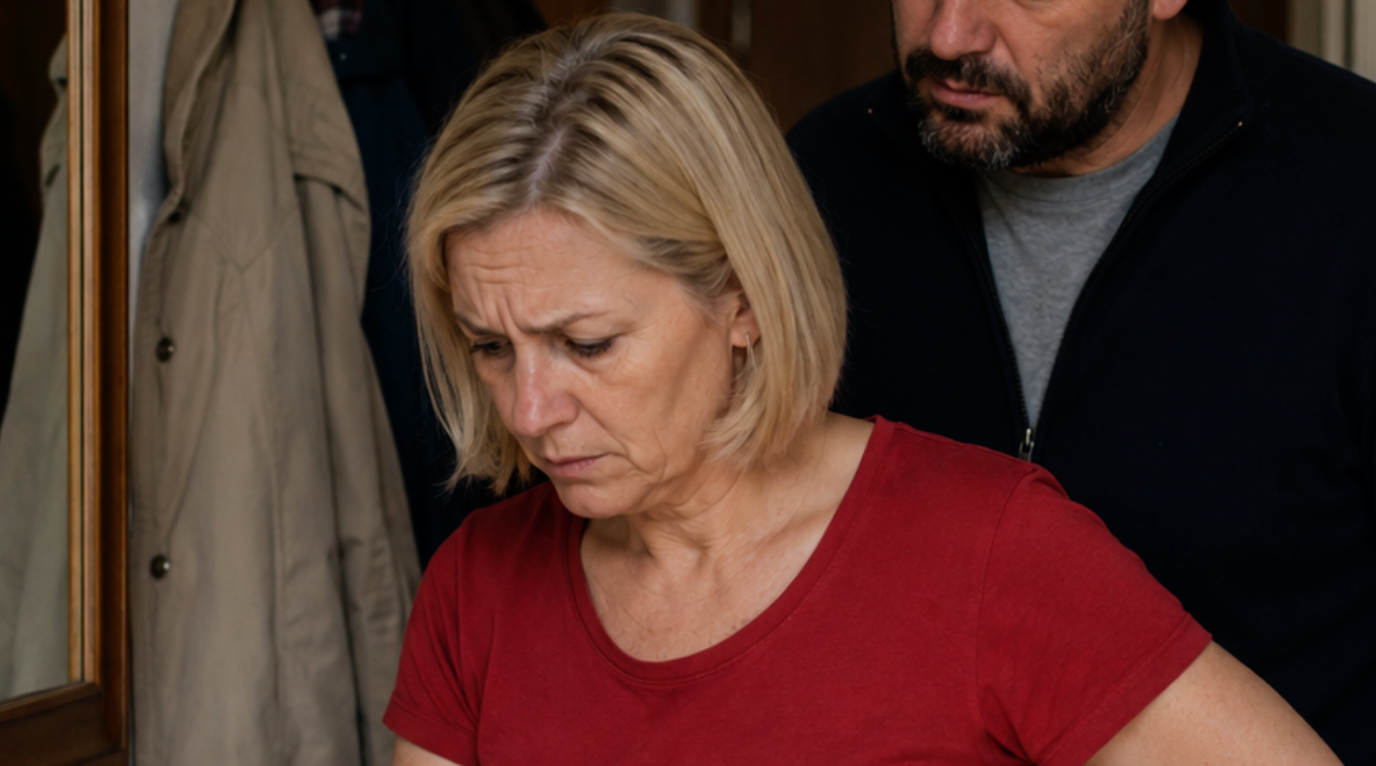
“I never signed up to be a collective farm worker! If she wants potatoes, she can dig them herself,” the wife said, then hung up.
Olga was sitting at the kitchen table in their city apartment, sipping hot coffee and scrolling through the news on her phone. Outside, the rain was noisy, washing the first yellow leaves from the trees. The workweek had come to an end, and the long-awaited weekend was ahead.
Her husband, Dmitry, was already getting ready for work, tying his tie in front of the hallway mirror. The couple lived a calm city life: work, home, and meeting friends on weekends. Olga worked as a manager at a construction company, while Dmitry held a position as an engineer at an industrial plant. Both worked five-day weeks and valued their weekends.
The phone rang sharply and insistently. Her mother-in-law’s name appeared on the screen: Valentina Ivanovna. The woman rarely called, and usually only for a specific reason. Olga answered, mentally preparing herself for the conversation.
“Is Dmitry home?” her mother-in-law asked sternly, without even saying hello.
“He’s still home, getting ready for work,” Olga replied.
“Tell him that tomorrow you both need to be at my place by six in the morning with shovels. The potatoes are ready, and it’s time to dig up the carrots too. And the weeds have grown everywhere—the whole garden is getting overrun.”
Olga felt a familiar tightness in her chest. Every season, the same story repeated itself. In spring, Valentina Ivanovna demanded that they come to plant vegetables; in summer, to weed the beds; in autumn, to dig up the harvest. Their weekends turned into heavy physical labor on a village plot.
“Valentina Ivanovna, maybe not tomorrow? We have plans for the weekend…”
“What plans could be more important than your parents’ household?” her mother-in-law interrupted. “The harvest won’t wait. Once the rains start, all the potatoes will rot in the ground.”
Dmitry heard the conversation and came over to his wife, reaching out for the phone. Olga reluctantly handed it to him.
“Hello, Mom,” Dmitry said politely. “Yes, of course, we’ll come. We’ll be there at six in the morning. We’ll bring the shovels, don’t worry.”
The conversation continued for several more minutes. Valentina Ivanovna listed the amount of work: three hundred square meters of potatoes, a carrot bed, weeding the paths, and collecting apples. Dmitry only nodded and agreed, as if it were something completely natural.
“All right, Mom, we’ll do everything. Goodbye.”
Dmitry hung up and looked at his wife.
“Well, tomorrow morning we’ll go to Mom’s. The harvest really does need to be gathered.”
Olga silently finished her coffee. Thoughts spun in her head about the lost weekend and the plans that would have to be canceled again. For the second year in a row, every weekend had turned into mandatory labor duty.
The first time Olga went to her mother-in-law’s dacha, she was enthusiastic. City life was tiring, and she wanted to spend time in nature and breathe fresh air. But her romantic ideas about countryside relaxation quickly disappeared. From six in the morning until eight in the evening, it was nonstop work without a break.
Valentina Ivanovna managed the process like a foreman on a construction site. She pointed out where to dig, how to stack the potatoes, which carrots were large and which were small. The lunch break lasted half an hour, after which the work continued with the same intensity.
“City people have become lazy,” her mother-in-law commented, watching the young couple work. “In my day, we worked in the garden even after a full day at our jobs.”
Dmitry never argued with his mother. He saw helping on the plot as a son’s duty, not something open for discussion. Olga tried to hint to her husband that she would like to spend weekends differently sometimes, but she always received the same answer:
“Mom lives alone. Who else is going to help her? We’re young, we’ll manage.”
Last autumn, Olga worked on the plot with a high fever. She had caught a cold the day before, but she did not dare refuse the trip. Valentina Ivanovna let her daughter-in-law go home only after Olga was barely able to stand from weakness.
“You should have said right away that you were sick,” her mother-in-law grumbled. “Now we’ll have to finish digging the potatoes in the dark.”
Dmitry had not shown much sympathy for his wife then. He stayed to finish the work until the end and came home around midnight, exhausted and dirty. Olga lay in bed with a fever of thirty-nine degrees, but her husband was more concerned about his mother’s displeasure over the unfinished harvest.
That summer, the situation repeated several times. In June, there was weeding the strawberries; in July, hilling the potatoes; in August, picking cucumbers and tomatoes. Each time, Valentina Ivanovna called on Friday evening with a demand that they come the next day at six in the morning.
Olga’s friends were surprised by such a weekend schedule.
“Can’t your mother-in-law hire workers?” her friend Elena asked. “There are plenty of ads now from people offering help with garden plots.”
“Why pay money when you have relatives?” Olga replied with a bitter laugh.
Her colleagues at work also noticed that Olga always looked tired on Mondays. Instead of rest, her weekends turned into physical labor harder than her workdays. Her back hurt from constantly bending over the garden beds, and her hands were covered in calluses from the shovel.
Dmitry left for work, leaving his wife alone with gloomy thoughts. Olga imagined the coming day: getting up at five in the morning, the drive to the village, ten hours of digging in cold, damp soil. Another weekend would be lost.
The phone rang again. It was Valentina Ivanovna once more.
“I forgot to say,” her mother-in-law began without any introduction. “There are a lot of potatoes this year, at least three sacks for sure. And the carrots grew large too. So prepare yourselves for a long day.”
“Valentina Ivanovna, couldn’t we divide the work over several days?” Olga carefully suggested. “Maybe potatoes tomorrow, and carrots next weekend?”
“What nonsense!” her mother-in-law protested. “The rains will start, and everything will be ruined. It all needs to be gathered in one day. You’re young and healthy.”
“But we work all week. We’d like to rest a little…”
“You can rest in winter,” Valentina Ivanovna cut her off. “Now is the time to work. And in general, it’s strange to hear such talk from a daughter-in-law. In normal families, people help their elders without unnecessary questions.”
Olga felt the blood rush to her face. Her mother-in-law’s voice sounded instructive and demanding, as if this were not a request but an unconditional order.
“One more thing,” Valentina Ivanovna continued. “The apples need to be collected too. And the pears are ripe. I’ve prepared jars for preserves; you’ll cut everything and seal them.”
“Valentina Ivanovna, but preserves are a completely different job…”
“What’s so difficult about it? You have hands, and your head is in place. You’ll drink compote in winter. Or do you think it’s better to buy it from the store?”
Olga’s irritation grew with every minute of the conversation. She clenched her fists, trying to maintain a polite tone.
“All right, Valentina Ivanovna. We’ll come tomorrow.”
“That’s right. And don’t be late. There isn’t much daylight left.”
Her mother-in-law hung up without saying goodbye. Olga remained sitting in the kitchen with the phone in her hands, feeling her anger rise. Another weekend was turning into forced hard labor.
In the evening, Dmitry returned home. His wife met him in the kitchen, where she was cooking dinner. Olga’s face showed poorly hidden dissatisfaction.
“Your mother called again,” Olga said without looking up from the frying pan. “She added apple picking and winter preserves to the list of work.”
“Well, that’s good,” Dmitry answered carelessly. “Homemade compote is always better than store-bought.”
“Dmitry, we have plans too!” Olga could not hold back. “We wanted to go to the theater. We bought the tickets long ago.”
“The theater isn’t going anywhere, but the harvest might be lost,” her husband objected. “Mom is right. Everything needs to be gathered on time.”
“And why does it have to be us?” Olga insisted. “Let her hire workers if the plot is so big.”
Dmitry looked at his wife in surprise.
“What workers? Mom is a pensioner. Where would she get money for hired labor? We’re her children. It’s our duty to help our parents.”
“But every weekend, Dmitry! We don’t rest at all!”
“But in winter we’ll eat fresh vegetables,” her husband said in a conciliatory tone. “And besides, physical labor is good after sedentary work.”
Olga turned toward her husband, her eyes shining with tears of outrage.
“I never signed up to be a collective farm worker!” the woman shouted. “If she wants potatoes, let her dig them herself!”
Dmitry blinked in confusion, not expecting such a sharp reaction from his usually accommodating wife. Olga grabbed her mobile phone and pressed her mother-in-law’s speed-dial number.
Valentina Ivanovna answered after the first ring.
“What else did I forget?” she asked irritably.
“Valentina Ivanovna, we are not coming tomorrow,” Olga said firmly.
“What do you mean, you’re not coming?” her mother-in-law was stunned. “Then who is going to gather the harvest?”
“I don’t know. Hire helpers or ask the neighbors.”
“How dare you!” Valentina Ivanovna cried indignantly. “What kind of daughter-in-law speaks to her mother-in-law like that?”
“The kind who is tired of working for free on weekends,” Olga replied, then hung up.
Dmitry stood in the middle of the kitchen with his mouth open, unable to believe what had just happened.
For several minutes, her husband remained silent, processing what he had heard. His wife’s harshness had caught Dmitry off guard. In all their years of marriage, Olga had never spoken to his mother in such a tone. The man tried to find words to smooth over the conflict.
“Olga, why did you have to be so rude?” Dmitry reproached her. “Mom is doing this for the family, growing vegetables. Of course, the work is hard, but the benefit is for everyone.”
“The benefit is only for your mother,” Olga answered sharply. “Valentina Ivanovna gets free labor every weekend. And we lose our time and our health.”
“But she is my mother!” her husband protested. “How can you refuse to help an elderly person?”
Olga turned toward Dmitry, and there was an unshakable decision in her eyes.
“I did not sign up to be a farm worker. I have a job that pays me a salary. On weekends, I want to rest or do my own things.”
“Is the theater really more important than family duties?” he tried to appeal to her conscience.
“Is every weekend really more important than my peace of mind?” Olga parried. “For two years in a row, I have lost all my weekends. When am I supposed to recover after the workweek?”
Dmitry shifted uncertainly from one foot to the other. His wife’s logic was understandable, but refusing his mother seemed unthinkable.
“Olga, listen,” her husband began in a conciliatory tone. “Maybe we can reach a compromise? We’ll go tomorrow, help with the potatoes, and leave the preserves for another day.”
“No compromises,” Olga stated firmly. “Tomorrow we have theater tickets that we bought a month ago. Valentina Ivanovna can wait or find other helpers.”
“But Mom will feel embarrassed…”
“Embarrassing is exploiting us for years as cheap labor,” Olga interrupted. “Not asking for help once.”
Dmitry fell silent, realizing that further persuasion was useless. His wife was showing a rare stubbornness. He tried to find other arguments.
“All right, then I’ll go alone,” Dmitry announced. “I can’t leave Mom without help.”
“Go,” Olga agreed calmly. “Just without me. I’m going to my friend Elena’s for the whole day.”
The woman went into the bedroom and began packing things into a small bag. Dmitry followed his wife, trying to convince her with final arguments.
“Olga, think about what the neighbors in the village will say. The son came alone, and his wife refused to help…”
“Let them think whatever they want,” Olga replied indifferently, zipping the bag. “I don’t care about the opinions of people I see once a year.”
“But Mom will be upset…”
“Let her be upset. Maybe it will help Valentina Ivanovna understand that free labor is not endless.”
Olga took the bag and headed for the exit. Dmitry helplessly watched his wife get ready, realizing how serious her intentions were.
“When will you come back?” her husband asked.
“Tomorrow evening,” Olga answered briefly. “Give yourself a chance to decide whether it’s worth turning every weekend into labor duty.”
The door closed behind his wife softly but decisively. Dmitry remained alone in the apartment, thinking about the conflict that had just happened. For the first time in all their years of marriage, his wife had openly gone against family traditions.
In the morning, Dmitry went to the village alone. The road took an hour and a half, and the whole time, the man thought about the conversation with his mother. He needed to explain his wife’s absence somehow without mentioning the scandal.
Valentina Ivanovna met her son at the threshold of the house, looking around the car in surprise, searching for her daughter-in-law.
“Where is Olga?” his mother asked suspiciously.
“She’s sick,” Dmitry lied. “Caught a cold, has a fever. It’s better for her to stay home and lie down.”
“Hm,” Valentina Ivanovna drawled with displeasure. “So you’ll have to dig the whole garden alone. Good thing at least you came.”
The work began at half past six in the morning. Dmitry took the shovel and headed toward the potato beds. The first hour passed relatively easily, but gradually his back began to ache from constantly bending over.
Valentina Ivanovna supervised the process from a distance, occasionally approaching with comments and instructions.
“Dimka, dig more carefully. Don’t damage the potatoes. And put them straight into the boxes, don’t scatter them on the ground.”
By lunchtime, Dmitry was barely able to stand. The man had never worked alone on such a large plot. Usually, his wife dug half the beds, which made the task significantly easier. Now the entire burden fell on one person’s shoulders.
“Rest a little,” his mother allowed, noticing her son’s exhaustion. “But don’t sit too long. There’s still a lot of work before dark.”
Dmitry lowered himself onto an old stool near the house, feeling the muscles in his back and arms ache. His palms were covered in blisters from the shovel handle, even though he had worked for only five hours. Ahead of him still remained the carrots, apples, and winter preserves.
“Mom, maybe we can dig up the carrots next weekend?” Dmitry suggested. “It’s already getting late today.”
“What nonsense!” Valentina Ivanovna protested. “The rains will start, and everything will rot in the ground. It all needs to be gathered today.”
The second half of the day turned into true hard labor. Dmitry dug carrots, collected apples, and carried heavy boxes of produce. By evening, the man could barely move his legs from exhaustion.
“We’ll leave the preserves for tomorrow,” his mother unexpectedly took pity on him. “You see, it’s hard to manage without an assistant.”
Dmitry agreed with relief. The thought of chopping vegetables and sterilizing jars filled him with despair. His hands were trembling from overexertion, and pain shot through his back with every movement.
The road home seemed endless. Dmitry stopped several times at the roadside to stretch his stiff muscles. In the city, the man worked in an office, and his physical activity was limited to the gym twice a week. Ten hours of labor in the garden turned out to be an unbearable test.
Dmitry returned home around ten in the evening. Olga was already home, sitting in an armchair with a book, looking rested after spending the day with her friend.
“How are things on the agricultural front?” his wife asked with mild irony, assessing her husband’s exhausted appearance.
Dmitry silently went to the bathroom, turned on the hot water, and stood under the shower for a long time, trying to relieve the muscle tension. His hands burned from blisters, and his back ached unbearably. For the first time in years, the man felt what kind of burden had fallen on his wife’s shoulders every weekend.
“Was it hard?” Olga asked sympathetically when her husband came out of the bathroom.
“Very,” Dmitry admitted honestly. “I didn’t think one person physically couldn’t handle that amount of work.”
“That is why I’m not going there anymore,” his wife said calmly. “Two years of suffering is enough.”
Dmitry sank into the armchair opposite his wife, still feeling the consequences of the hard day. Arguments about filial duty and family obligations no longer seemed convincing.
“Maybe we really should find Mom some paid helpers?” her husband said thoughtfully.
“Of course you should,” Olga agreed. “There are many teenagers in the village who would gladly work in the garden for a little money. Valentina Ivanovna simply got used to free labor.”
The next day, Dmitry struggled to get out of bed. His back hurt so badly that every movement took effort. His hands were covered in blisters that burst at the slightest touch.
“Now do you understand how I felt every Monday?” Olga remarked, watching her husband’s suffering.
In the evening, Valentina Ivanovna called, asking about her son’s health and plans for the next weekend.
“Dima, how is your back? Have you recovered from yesterday’s work?” his mother asked sympathetically.
“It still hurts,” her son admitted. “Mom, maybe next time we can find helpers for you? The neighbor boys would probably agree to earn a little money.”
“For money?” Valentina Ivanovna was surprised. “Why spend money on strangers when there is family?”
“Because family also has the right to rest,” Dmitry unexpectedly answered firmly. “We work all week, and weekends are needed to recover our strength.”
His mother-in-law fell silent, processing her son’s unexpected position. Dmitry had never objected to working on the plot before.
“All right,” Valentina Ivanovna reluctantly agreed. “I’ll try to arrange something with the neighbor boys. But it won’t be cheap.”
“Mom, it’s better to pay money than ruin your health,” her son reasonably noted.
After the conversation with his mother, Dmitry turned to his wife.
“Olga, forgive me for reproaching you. The workload really is unbearable. We shouldn’t turn every weekend into hard labor.”
The woman smiled softly at her husband.
“The main thing is that you understood it yourself. I didn’t want to offend anyone. I was just tired of constant pressure.”
The following Saturday, the spouses spent at the theater, enjoying the performance and the chance to truly rest. They devoted Sunday to walking around the city and meeting friends.
Valentina Ivanovna, no longer receiving her usual free help, hired two teenagers from the neighboring house. The boys dealt with the remaining carrots in two hours and received a small but honest payment for their work.
“It turns out you don’t have to torment relatives after all,” the mother-in-law admitted to her son during a phone conversation. “The boys work quickly and neatly.”
Since then, the demands for regular help in the garden stopped. Valentina Ivanovna got used to hiring local residents for seasonal work, and Olga no longer heard accusations about not wanting to help the family. Weekends regained their original purpose: time for rest and recovery after the workweek.