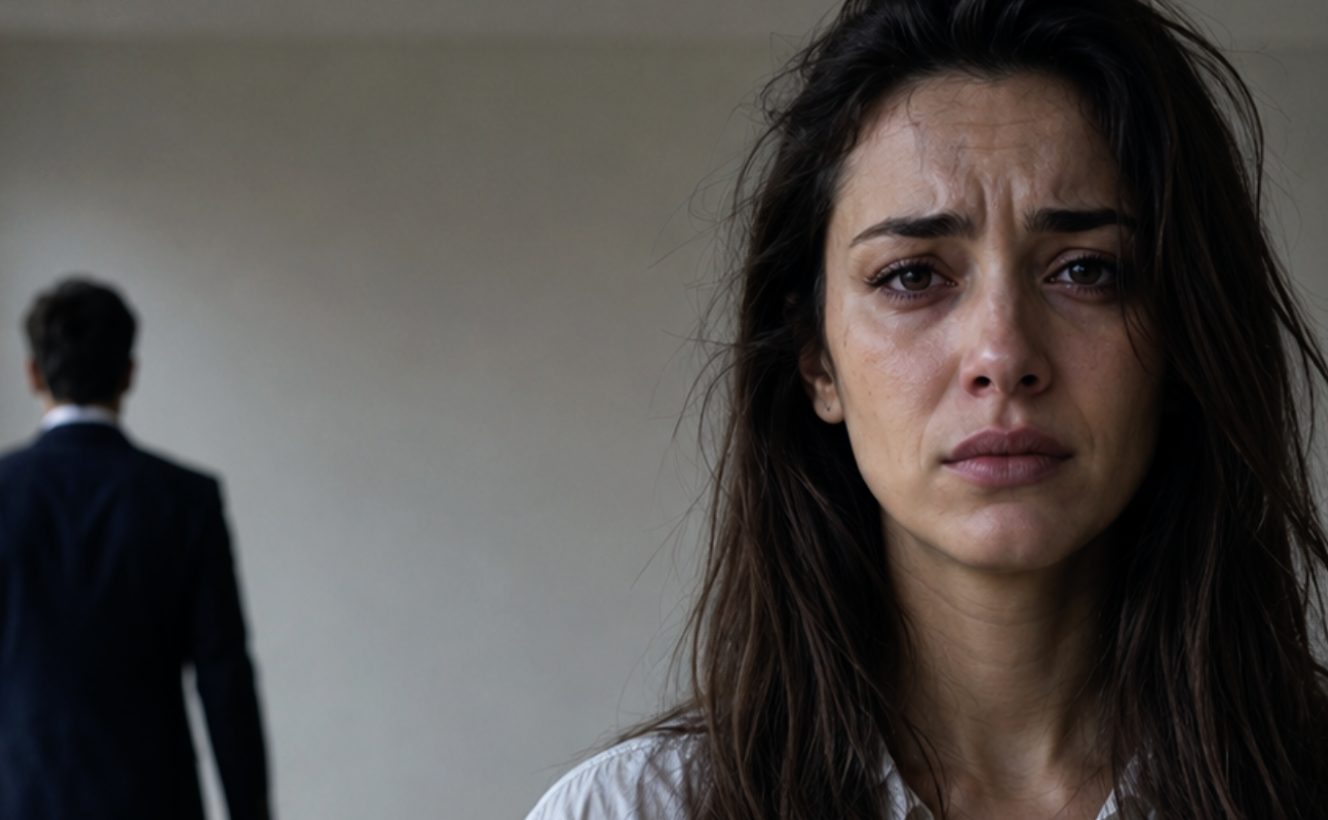
My Husband Packed My Suitcase and Said He Was Sending Me Back to My Mother. I Didn’t Try to Stop Him—Three Days Later, My Lawyer Called Him
“Pack your things. You’re going back to your mother. The apartment stays with me.”
Bogdan placed the suitcase by the front door and stepped back toward the wall, folding his arms across his chest. His shirt was untucked, and he smelled of fresh cologne. Even the way he had dressed today was unusual. As though he were going to a job interview.
Or on a date.
I looked at the suitcase. It was mine—the old one with the wheel I had repaired with tape the previous summer. He had already packed my belongings inside it. Neatly, I had to give him that. Everything was folded into tidy little piles. He had even rolled up my bathrobe—the turquoise one I had bought for myself on my birthday three years earlier.
It was the only thing I had bought for myself in the past three years, apart from a pair of winter boots.
“Bogdan, are you serious?”
“I’ve never been more serious.” He snapped his fingers, as he always did when he felt he was in control. “I’ve thought it over and made my decision. I need a fresh start. I’m going to begin with a clean slate. I’ll take you to your mother’s place. You’ll be fine there. The apartment stays with me. I’m the one who paid for it.”
Twelve years.
I silently tasted those words, and they seemed bitter, like cold coffee left at the bottom of a cup.
For twelve years, I had cooked meat patties for him every Tuesday. I had driven Sonya to dance lessons four times a week, crossing the entire city and spending two hours in traffic each time. I had taught Matvey how to read. I had washed Bogdan’s shirts—the same untucked shirts he had recently begun wearing when he went out somewhere in the evenings.
I ironed them. Folded them. Hung them in the wardrobe.
For twelve years, I had been a wife, mother, laundress, cook, driver, cleaner, and tutor.
For free.
And now there was a suitcase by the door and an order to pack my things.
He was waiting for me to cry. I could see it on his face—he had prepared himself for a scene. Perhaps he had even rehearsed it in front of the mirror that morning while I was taking the children to the neighbor’s apartment.
He had chosen his words carefully: short and commanding, leaving me no phrase to latch onto and argue against.
But I didn’t cry.
I adjusted the watch strap around my wrist—a habit Bogdan had always criticized.
“Stop twisting it. It’s irritating,” he would say.
Then I picked up the suitcase and walked into the hallway. I put on my shoes and pulled on my jacket. He stood in the bedroom doorway, watching me zip it up.
The kitchen faucet was dripping. I had been asking him to fix it since January.
Two months.
He still hadn’t done it.
“You’re just leaving like that?” His voice changed. He didn’t understand.
“What did you expect? That I would cling to your legs? Crawl around on my knees?”
He opened his mouth and then closed it again.
He definitely hadn’t rehearsed an answer to that.
I didn’t wait for the taxi inside the apartment. I stepped onto the landing, sat on the windowsill between two floors, and ordered a car.
The stairwell smelled of dampness and dust. The radiator beneath the window was barely warm. It was March, and the heating had already been turned down.
Through the window, I could see the courtyard.
An ordinary Tuesday.
For everyone else, it was an ordinary Tuesday.
For me, it was the end.
Or perhaps the beginning.
In the taxi, I opened my wallet. Between my clinic card and an old photograph of Sonya—the one from her kindergarten performance where she had been dressed as a snowflake—there was a business card.
White cardboard. Black lettering.
Semyon Ilyich Kovrov. Attorney. Family Law.
That card had been in my wallet for six months.
Since October, when Bogdan had first told me:
“You’re nobody without me. Do you understand? Nobody.”
We had argued about money that day. I had asked him to buy Matvey a winter snowsuit, and he replied that I hadn’t earned the right to have an opinion about financial matters.
He said I was living off him.
He said that without him, I was nothing.
I didn’t answer him then.
I came home, put the children to bed, and searched on my phone for “family-law attorney” until one in the morning.
That was how I found Semyon Ilyich.
The following day, I went to his office on Volgogradskaya Street. It was a small office with a coffee machine in the corner and folders lining the shelves.
I told him everything.
He listened without interrupting. He took notes. Then he asked me to bring him the apartment documents, our marriage certificate, and anything I could find concerning the car and Bogdan’s business.
“Just in case,” he said. “So that we’ll be prepared if it comes to that.”
I brought him everything.
The apartment purchase agreement. The vehicle records. I even found the incorporation documents for Bogdan’s company, B-Stroy LLC. He had registered the business three years earlier and printed the documents on our home printer.
Back then, I had even helped organize and staple the copies for him.
For six months, all those papers had been sitting in a folder in Semyon Ilyich’s office.
My mother opened the door and gasped.
A suitcase. Her daughter standing there without tears. March outside.
“Yanochka, what happened? Why do you have your things? What about the children? Where are they?”
“They’re with the neighbor, Mom. Bogdan has decided to begin a new life. Without me.”
My mother pressed both hands to her cheeks.
I walked into the room, placed the suitcase against the wall, and took out my phone.
I called Semyon Ilyich.
He answered after the second ring.
“He did it,” I said.
“I’ve been expecting your call, Yana. I have the documents. Come to my office tomorrow at ten.”
I placed the phone on my mother’s bedside table and sat down on the bed. It was narrow, covered with a small floral bedspread.
Thirty-six years old, and I was back in my mother’s apartment with a suitcase.
The last time I had left this place, I was going to live with my husband.
Now I had left my husband to return here.
Bogdan had probably opened a beer and settled onto the sofa.
Pleased with himself.
Free.
He had no idea that I had spent six months waiting for this day.
I hadn’t wanted it to happen.
But I had prepared for it.
The following morning, my mother made tea and sat across from me. Her hands were folded in her lap, and her eyes were red. She had cried during the night. I had heard her through the wall.
“Yanochka, perhaps you should call him. Maybe he lost his temper. It happens. Men can be hot-headed. He’ll calm down and ask you to come back. And you have two children. How will you manage alone?”
The continuation is just below, in the first comment.
My Husband Packed My Suitcase and Said He Was Sending Me Back to My Mother. I Didn’t Try to Stop Him—Three Days Later, My Lawyer Called Him
“Pack your things. You’re going to your mother’s. The apartment stays with me.”
Bogdan placed the suitcase beside the front door and stepped back against the wall, folding his arms across his chest. His shirt was untucked, and he smelled of fresh cologne. Even the way he was dressed was unusual today. As though he were going to a job interview.
Or on a date.
I looked at the suitcase. It was mine—old, with one wheel I had repaired using tape the previous summer. He had already packed my belongings inside. Neatly, I had to give him that. Everything was folded into tidy piles. He had even rolled up my bathrobe—the turquoise one I had bought myself for my birthday three years earlier.
It was the only thing I had bought for myself in the past three years, apart from a pair of winter boots.
“Bogdan, are you serious?”
“I’ve never been more serious.” He snapped his fingers, the way he always did when he felt he was in control. “I’ve thought it through and made my decision. I need a fresh start. I’m going to begin with a clean slate. I’ll take you to your mother’s. You’ll be fine there. The apartment stays with me. I paid for it.”
Twelve years.
I rolled the words around in my mind, and they tasted bitter, like cold coffee left at the bottom of a cup.
For twelve years, I had cooked cutlets for him every Tuesday. I had driven Sonya to dance lessons four times a week, spending two hours in traffic each time as we crossed the entire city. I had taught Matvey how to read. I had washed Bogdan’s shirts—the same untucked shirts he now wore when he went somewhere in the evenings.
I washed them. Ironed them. Folded them. Hung them up.
For twelve years, I had been a wife, a mother, a laundress, a cook, a driver, a cleaner, and a tutor.
For free.
And now there was a suitcase beside the door and a command: “Pack your things.”
He expected me to cry. I could see it on his face. He had prepared himself for a dramatic scene. Perhaps he had even rehearsed in front of the mirror that morning while I took the children to the neighbor’s apartment.
He had chosen short, commanding phrases so that I would have nothing to cling to and no chance to begin an argument.
But I didn’t cry.
I adjusted the strap of my watch—a habit Bogdan had always criticized.
“Stop fiddling with it. It’s annoying,” he would say.
I picked up the suitcase and walked into the hallway. I put on my shoes and jacket. He stood in the doorway of the room, watching as I zipped it up.
The kitchen faucet was dripping. I had been asking him to fix it since January.
Two months.
He still hadn’t done it.
“You’re just leaving like that?” His voice changed. He didn’t understand.
“How did you want me to leave? Clinging to your legs? Crawling on my knees?”
He opened his mouth, then closed it again.
He definitely hadn’t rehearsed for that.
I didn’t wait for a taxi inside the apartment. I went out to the stairwell, sat on the windowsill between floors, and called a car.
The building smelled of dampness and dust. The radiator beneath the window was barely warm. It was March, and the heating had already been turned down.
Through the window, I could see the courtyard.
An ordinary Tuesday.
Everyone else was having an ordinary Tuesday, while mine was the end.
Or perhaps the beginning.
In the taxi, I opened my wallet. Between my clinic card and an old photograph of Sonya dressed as a snowflake at a kindergarten performance was a business card.
White cardboard. Black lettering.
Semyon Ilyich Kovrov. Attorney. Family Law.
That card had been in my wallet for six months.
Since October, when Bogdan had first said to me:
“You’re nobody without me. Do you understand? Nobody.”
We had argued about money. I had asked him to buy Matvey a winter snowsuit, and he had told me that I had no right to speak about financial matters. He said I was living off him.
That without him, I was nothing.
I hadn’t answered him then.
I went home, put the children to bed, and stayed awake until one in the morning searching on my phone for a family lawyer.
That was how I found Semyon Ilyich.
The next day, I went to his office on Volgogradskaya Street. It was a small room with a coffee machine in the corner and folders lining the shelves.
I told him everything.
He listened without interrupting. He took notes. Then he asked me to bring the apartment documents, our marriage certificate, and anything I could find relating to the car and Bogdan’s business.
“Just in case,” he said. “So that we’ll be prepared if it ever comes to that.”
I brought everything.
The apartment purchase agreement, the car records, and even the charter documents for his company, B-Stroy LLC. He had registered the company three years earlier and printed the documents at home on our printer.
I had even organized the copies for him.
Everything had been sitting in a folder in Semyon Ilyich’s office for six months.
My mother opened the door and gasped.
A suitcase. Her daughter standing there without tears. March outside.
“Yanochka, what happened? Why do you have your things? What about the children? Where are they?”
“They’re with the neighbor, Mom. Bogdan has decided to start a new life. Without me.”
My mother pressed both hands to her cheeks.
I walked into the room, placed the suitcase against the wall, took out my phone, and called Semyon Ilyich.
He answered on the second ring.
“He did it,” I said.
“I’ve been expecting your call, Yana. I have the documents. Come tomorrow at ten.”
I placed the phone on my mother’s bedside table and sat on the bed.
It was narrow, covered with a small floral bedspread.
Thirty-six years old, and I was back in my mother’s apartment with a suitcase.
The last time I had left this place, I had been going to live with my husband.
Now I had left my husband to come back here.
Bogdan had probably opened a beer and settled onto the sofa.
Satisfied.
Free.
He didn’t know that I had spent six months waiting for this day.
I hadn’t wanted it to happen.
But I had prepared for it.
The following morning, my mother made tea and sat across from me. Her hands were folded in her lap, and her eyes were red. She had cried during the night. I had heard her through the wall.
“Yanochka, perhaps you should call him. Maybe he lost his temper. It happens. Men can be hotheaded. He’ll calm down and ask you to come back. How are you going to manage alone with two children?”
“Mom, he packed my suitcase. He folded everything into neat piles.”
“So what? Your father, may he rest in peace, once put my suitcase beside the door too. Then he carried it back inside himself. We lived together for forty years.”
I said nothing.
I didn’t tell her that my father and Bogdan were two different men.’
My father had worked in a factory and repaired the faucet when someone asked him to.
Bogdan had opened a construction company and decided that his wife was a member of the service staff who could be ordered out of the house.
At ten, I arrived at Semyon Ilyich’s office.
It was exactly the same: cramped, with a coffee machine in the corner and folders on the shelves.
My folder was already lying on top of his desk.
He had been waiting for me.
“Tell me what happened,” Semyon Ilyich said, taking out a notebook. “In detail.”
I told him about the suitcase, about Bogdan saying the apartment belonged to him, and about his plan to start with a clean slate.
The lawyer listened and made notes.
“Yana, let’s go through this carefully. When was the apartment on Krasnoarmeyskaya Street purchased?”
“In 2016. Two years after we got married. The mortgage was in Bogdan’s name, but the payments came from our shared money. He was still employed by a company then, and his salary went into his bank account. I saw the statements.”
“Has the mortgage been paid off?”
“Yes, in 2022. He paid it off early when his business started doing well.”
Semyon Ilyich nodded and opened the folder.
“The apartment was purchased during the marriage. It is jointly owned property under Article 34 of the Family Code. It doesn’t matter whose name is on the documents or who made the payments. If it was purchased during the marriage, it is divided equally. The BMW was also purchased during the marriage, correct?”
“Yes, in 2023.”
“And B-Stroy LLC was registered in 2023?”
“Yes. He invested our savings in it. One and a half million rubles from our joint account.”
Semyon Ilyich put a full stop in his notebook and looked at me over his glasses.
“Yana, your husband thinks he has thrown you out of his life. In reality, he has thrown himself out of his comfort zone. Half of the apartment belongs to you. Half of the car belongs to you. The company was established during the marriage using shared funds, so you are entitled to a share of it as well. In addition, he will have to pay child support for two children—one-third of his income. I’ll prepare the claim.”
I adjusted my watch strap, unable to stop myself, and asked:
“How long will it take?”
“I’ll file it within two or three days. Until then, don’t contact your husband. All communication should go through me.”
I returned to my mother’s apartment.
On the way, I opened my phone and saw that Bogdan had posted a story.
It showed our kitchen, the new curtains, and a bottle of beer on the table.
The caption read:
Day Two. Freedom.
Seventeen likes.
His friend Lyokha had commented:
Good for you. You should have done it long ago!
Someone named Max had written:
I’m jealous, brother.
I scrolled further.
Another photograph showed the television remote, a bag of chips on the sofa, and his feet resting on the coffee table.
Now this is the life.
He was forty-one years old. He had two children and a wife staying at her mother’s with a suitcase, yet he was celebrating like a schoolboy who had been excused from class.
Then Sonya called.
“Mom, when are you coming back? Dad said you went to Grandma’s to rest. Matvey is crying. He wants you.”
“Soon, sweetheart. Very soon.”
I ended the call and sat on my mother’s bed.
In the next room, she was clattering dishes.
Twelve years, and this was the result.
An old suitcase. My mother’s bed. My daughter believing that I had gone away to rest.
Perhaps my mother was right.
Perhaps I should call him, apologize, and go back.
For the children.
For Sonya, who went to dance lessons, and for Matvey, who would begin first grade in September.
That was what everyone did, wasn’t it?
They endured. Forgave. Returned.
Then I refreshed Bogdan’s page and saw a new post.
It was a close-up photograph of our front door.
A new lock. Shiny brass.
The caption read:
An upgrade. New life, new keys.
After twelve years, I could no longer enter my own home.
Not even to collect my belongings.
Not even to take the children’s photographs from the shelf in the hallway.
He had changed the locks on the second day.
I closed the app and looked out the window.
No, my mother wasn’t right.
There was nowhere to return to.
He had closed the door himself.
The next day, Semyon Ilyich would request the official property records.
The day after that, Bogdan would discover that his “freedom” came with a price.
A very high price.
Bogdan worked quickly.
In two days, he had managed not only to change the locks and celebrate his freedom on social media, but also to tell his version of the story to his relatives.
His version.
His mother was the first to call.
“Yana, is it true that you abandoned my son? He told me everything. He said you packed your own things and left. He fed you, clothed you, bought the apartment, and you walked out on him!”
I shifted the phone to my other hand and pressed my palm against my thigh to keep myself from answering in anger.
“Tatyana Yuryevna, Bogdan placed my suitcase beside the door and told me to pack. I didn’t leave him. He threw me out.”
“You’re lying! My son would never do such a thing!”
She hung up.
An hour later, a message appeared in the family group chat—the one that included his parents, his brother, and two aunts.
Bogdan had written:
Yana decided to leave. I’m not stopping her. I’ll keep the children. The apartment and the business belong to me because I worked for them. I hope we can avoid a scandal.
Aunt Lyuba reacted with a like.
His brother Dima wrote:
Good for you for not making a scene. There are plenty of women out there. You’ll find someone better.
No one—not one person in his family—asked what had actually happened.
Then our mutual acquaintances began messaging me.
Irka, my former friend—we had socialized as couples—wrote:
Yan, maybe it’s your own fault? He worked like a dog to build that business while you stayed at home. Men don’t forgive things like that.
I read it and closed the conversation.
I didn’t respond.
Not because I had nothing to say, but because it was pointless.
My mother noticed my expression as I read the messages over dinner. She pushed a plate of pancakes toward me. They were hot and fluffy, just as they had been when I was a child.
“Stop reading that nonsense. You’re only upsetting yourself.”
“Mom, they all think I abandoned him. That’s what he told them.”
“Then write the truth. Explain it to everyone.”
“No. My lawyer can explain it. In court.”
My mother shook her head but said nothing.
She didn’t understand why I needed a lawyer, why I wanted to go to court, or why I needed these “official disputes.”
To her, family meant enduring, forgiving, and carrying the burden.
She had lived that way with my father for forty years, and she had accepted it.
But unlike Bogdan, my father had possessed enough decency not to change the locks on the second day.
On the third day, Semyon Ilyich called me.
“Yana, I’ve received the records. The apartment is sixty-three square meters, with a cadastral value of five million eight hundred thousand rubles. Your share is half. The car has a market value of three million two hundred thousand. Again, half belongs to you. B-Stroy LLC has substantial turnover. Preliminary estimates place your share at approximately one and a half million. Altogether, your legal share is worth four million seven hundred thousand rubles.”
Four million seven hundred thousand.
I repeated the number silently.
Bogdan believed he had thrown away something worthless.
But that “worthless thing” was worth four million seven hundred thousand rubles.
“And then there is child support,” Semyon Ilyich continued. “For two children, he must pay thirty-three percent of his income each month. If he conceals income through the company, we can request a fixed monthly amount through the court.”
“When will we file?”
“I’m preparing everything. I’ll file tomorrow.”
I thanked him and ended the call.
Immediately, the phone rang again.
It was Sonya.
“Hi, Mom. Mom, I wanted to ask you something…” Her voice was quiet and cautious, as though she were afraid I might become angry.
“Ask me anything, Sonechka.”
“Is Aunt Lena Dad’s friend? She spent the night at our apartment. She came in the evening and stayed. Dad said she was his colleague.”
I pressed the phone against my ear and closed my eyes.
Aunt Lena.
A colleague.
She had spent the night.
On the third day after throwing his wife out, he had already brought another woman into our home.
Into the apartment whose mortgage we had paid together.
Into the bed where I had fallen asleep for twelve years.
“Sonechka, everything will be all right. I’ll come and get you and Matvey soon. Very soon.”
I ended the call and stepped onto my mother’s balcony.
It was March. The air was still cold and smelled of wet asphalt and something bitter. Someone below was burning dry branches.
I placed my hands against the balcony railing.
The metal was icy, and somehow the cold helped me think more clearly.
For twelve years, I had slept in that bed, cooked in that kitchen, and washed his clothes in that washing machine.
I had cleaned the floors. Ordered groceries. Made Sonya’s medical appointments. Taken Matvey to speech therapy.
Every day had been like a shift at a factory, except there was no salary and no time off.
Yet within three days, he had brought another woman into the apartment and introduced her as a “colleague” to our eight-year-old daughter.
You know, I really had tried.
During the previous two years, when Bogdan began changing, I had tried to reach him.
I would say, “Let’s talk. What’s wrong?”
He would reply, “Everything’s fine. Stop imagining things.”
I suggested marriage counseling.
He laughed.
“What am I, crazy?”
Once, I told him that I wanted to return to work.
“Why?” he replied. “I earn enough. Stay at home.”
So I stayed.
Because the apartment was his.
The car was his.
The money was his.
And I was merely an adjective attached to his surname.
Go back?
No.
Forgive him?
No.
I walked back into the room, called Semyon Ilyich, and said three words:
“File for everything.”
In one week, Bogdan would receive an envelope that would turn his world upside down.
He simply didn’t know it yet.
Semyon Ilyich called Bogdan on the third day.
I was sitting beside him. The lawyer had warned me that he would put the call on speaker so I could listen.
Two rings.
Three.
Bogdan answered in a cheerful, lively voice. He clearly wasn’t expecting anything unpleasant.
“Hello?”
“Good afternoon. Bogdan Alexeyevich?”
“Yes. Who is this?”
“My name is Semyon Ilyich Kovrov. I’m an attorney representing the interests of your wife, Yana Sergeyevna. I’m calling to notify you that a claim has been filed for the division of jointly acquired marital property.”
Silence.
Three seconds.
Four.
I heard Bogdan swallow. It was clearly audible through the speaker.
“What… what claim?”
“The apartment located at 47 Krasnoarmeyskaya Street was purchased during your marriage in 2016. It is jointly owned property. The BMW X3 registered in your name in 2023 is also jointly owned. B-Stroy LLC, founded by Bogdan Alexeyevich in 2023, was established during the marriage using one and a half million rubles in shared marital savings. Your wife has a legal right to a share.”
Another pause.
“Wait. That’s my apartment. I paid for it. I paid the mortgage!”
“The mortgage was paid from the family budget during the marriage. Under Article 34 of the Family Code, anything acquired during a marriage is jointly owned, regardless of whose name appears on the documents. The preliminary value of your wife’s share is four million seven hundred thousand rubles. In addition, you will be required to pay child support for two minor children, amounting to thirty-three percent of your income. The claim has been filed. You will receive a copy at your registered address.”
I sat in an armchair beside the window in Semyon Ilyich’s office, pressing my palm against my thigh and listening to my husband struggle to breathe on the other end of the phone.
Not from physical exertion.
From realization.
From discovering that his “clean slate” wasn’t clean after all.
There were numbers written all over it.
Large ones.
Bogdan ended the call.
Semyon Ilyich calmly removed his glasses and placed them on the desk.
“An expected reaction. He’ll call again within an hour or two. This time, he’ll call you.”
My phone vibrated forty minutes later.
Bogdan’s name appeared on the screen.
It was the first time he had called me himself in three days.
Three days without a single message. Not one question about the children. Not one inquiry about how we were doing.
But now he was calling.
I answered.
“Yana.” His voice was completely different. There was no arrogance, no commanding tone, no snapping of fingers. He spoke quietly and quickly. “Yana, what are you doing? What lawyer? What lawsuit? We can talk normally, like adults. Without all these… without court. Let’s meet, sit down, and discuss everything. Maybe I… maybe I lost my temper. We can work it out ourselves. Why do we need lawyers?”
Three days earlier, he had placed my suitcase beside the door.
He hadn’t asked whether I wanted to leave.
He hadn’t suggested talking.
He hadn’t said he might have lost his temper.
He had simply said, “Pack your things.”
And I had packed them.
Now he wanted to “talk normally.”
I adjusted my watch strap.
I looked at Semyon Ilyich, and he silently nodded.
“No, Bogdan. Everything goes through my lawyer.”
Then I ended the call.
Semyon Ilyich stood, walked to the coffee machine, and pressed a button.
The smell of fresh coffee filled the office.
An ordinary working day.
An ordinary phone call.
An ordinary lawsuit.
For him.
For me, it was a revolution.
For twelve years, I had been “nobody.”
A housewife, cook, laundress, and nanny—everything unpaid, everything without a contract, everything based on trust.
And Bogdan had flushed that trust away on an ordinary Tuesday when he placed my suitcase beside the door.
My phone vibrated again.
A message from Bogdan:
Yana, please, let’s not go to court. I didn’t mean any harm. I’ll give you money—however much you want. Just don’t involve lawyers.
I didn’t reply.
I placed the phone inside my bag.
On the way back to my mother’s apartment, I looked through the bus window.
At one of the stops, a woman was holding the hand of a boy about Matvey’s age. He was whining because he wanted ice cream.
An ordinary life.
Mine was already different.
My mother met me at the door.
“Well? What did he say?”
“He asked me to talk without lawyers.”
“There, you see!” My mother threw up her hands. “He’s come to his senses! Perhaps you really should sit down and discuss everything.”
“Mom, he didn’t call me for three days. For three days, he didn’t care where I was or how the children were doing. He only called when he learned about the lawsuit. He isn’t afraid of losing me. He’s afraid of losing his money.”
My mother fell silent.
That evening, I called Sonya and asked her to give the phone to Matvey.
“Mom, when are you coming to get us?” my son asked. His voice was sleepy and hurt.
“Soon, sweetheart. Very soon.”
I lay down on my mother’s bed.
The ceiling was white, with a small scratch in one corner. It had been there when I was fifteen.
My mother’s apartment hadn’t changed.
My life had been turned upside down.
My phone lit up.
Another message from Bogdan:
I’ll give you money—however much you want. Just don’t involve lawyers.
He would give me as much money as I asked for.
The law said I was entitled to four million seven hundred thousand rubles.
I wondered whether his idea of “however much you want” would match what I was legally owed.
Probably not.
But that was no longer my problem.
It was Semyon Ilyich’s problem.
And the court’s.
A week passed.
Bogdan wrote to me every day.
At first, the messages were short:
Call me.
Then they became longer:
Yana, why do we need court? Let’s settle this ourselves.
Then longer still:
I understand that I was wrong. I lost my temper. Let’s meet and discuss everything. I’m prepared to compromise.
Compromise.
Three days earlier, he had placed my suitcase beside the door and ordered me to pack.
Now he wanted a compromise.
I didn’t answer.
Every message was met with silence.
He could speak to Semyon Ilyich.
He could explain to a lawyer that he had been wrong.
He could offer compromises to a man wearing glasses who knew the Family Code by heart.
The stories disappeared from his social media account.
The “freedom” photographs were deleted.
“Aunt Lena” no longer spent the night. Sonya told me so.
Bogdan started coming home on time, cooking dinner for the children, and driving Matvey to kindergarten.
It was as though he had suddenly become the husband he should have been all those years.
But he didn’t change the locks back.
And he didn’t offer me a key.
I remained at my mother’s apartment, drinking tea with lemon and counting.
Twelve years.
Four thousand three hundred and eighty days.
Breakfasts, lunches, and dinners.
Laundry, ironing, and cleaning.
School, dancing, and speech therapy.
All unpaid.
No vacations.
No sick leave.
No gratitude.
When he decided he no longer needed me, he simply carried my suitcase to the door.
He believed he was throwing away his past.
But his past turned out to be more expensive than his future.
Four million seven hundred thousand rubles more expensive.
Should I feel sorry for him—or make him pay every last ruble?