After Her Husband’s Funeral, She Found Messages to a Woman He Had Been Sending Money to for Ten Years — and Went to See Her
Nadezhda found her husband’s old phone three days after his funeral.
Nikolai was already buried, but his belongings were still everywhere—shirts in the wardrobe, tools in the shed, and a mug of unfinished tea in the kitchen. She could not bring herself to put anything away. It felt as though removing his things would make his death final.
His old button phone was lying in the bedside table.
Nikolai had never liked smartphones.
“I only need a phone to make calls,” he used to say.
Nadezhda picked it up simply because she wanted to see something connected to him. Maybe old photographs. Maybe familiar messages he had sent her.
Instead, she found a conversation with an unknown number.
The messages were short and regular.
“Sent five thousand.”
“Sent three.”
“Sent seven.”
The replies always came from a woman.
“Thank you.”
“Received it.”
“God bless you.”
Nadezhda scrolled farther back.
The messages stretched across ten years.
Every month, Nikolai had been secretly sending money to this woman.
Her hands began to shake.
Then she found messages that frightened her even more.
“How is Alyosha?”
“Alyosha is sick. Bronchitis.”
“Sent another three thousand. Buy medicine.”
“Thank you, Kolya. You’re saving us.”
Nadezhda stared at the screen.
Who was this woman?
Who was Alyosha?
For thirty years, she had believed she knew her husband completely.
They had met in the early 1990s. She worked in a canteen at a timber enterprise, and Nikolai was a lumberjack. The first time he saw her, he confidently said:
“I’m going to marry you.”
She laughed.
“You don’t even know my name.”
“I’ll find out. I’m persistent.”
And he did.
They married, built a house, raised a daughter, and lived a quiet, steady life together. Nikolai worked hard, rarely drank, never chased women, and was known as a dependable man.
Nadezhda had never suspected he was hiding anything.
But now there was a woman.
And a boy named Alyosha.
And ten years of secret payments.
That night, Nadezhda could not sleep.
Her anger turned into pain, then fear.
What if Alyosha was Nikolai’s son?
What if her husband had maintained a second family all these years?
By morning, she had made a decision.
She called the number.
A tired woman answered.
“This is Nikolai’s wife,” Nadezhda said. “Nadezhda.”
Silence filled the line.
“I know he was sending you money. For ten years.”
The woman still said nothing.
“I want to see you. Where do you live?”
Finally, the woman answered.
“Zarechnaya village. House twelve. About a hundred kilometers from you.”
“I’ll come tomorrow.”
The next morning, Nadezhda drove there alone.
During the journey, terrible possibilities filled her mind.
Maybe the woman had been Nikolai’s lover.
Maybe Alyosha really was his child.
Maybe the boy even looked like him.
Halfway there, Nadezhda stopped the car.
She almost turned around.
Perhaps it would be easier not to know.
But she realized she could not live with the uncertainty.
So she continued.
Zarechnaya was a small, quiet village. House twelve stood near the forest. It was old but well maintained, with a painted fence and flowered curtains.
Nadezhda knocked.
A thin woman around fifty opened the door.
She had tired eyes, gray strands in her hair, and wore a simple cotton dress.
“I’m Valentina,” she said quietly. “Come in.”
The house was clean but poor.
The furniture was old, the wallpaper faded, and there was a faint smell of medicine.
Then Nadezhda heard a strange creaking sound coming from another room.
“That’s Alyosha,” Valentina said. “My son.”
Nadezhda followed her.
Near the window stood an old medical bed.
A seventeen-year-old boy lay inside it.
He was extremely thin and pale. His arms and legs were twisted, his head tilted backward. When he saw them, he made a quiet guttural sound.
“This is Alyosha,” Valentina said. “He has severe cerebral palsy. He can’t walk, speak, or eat by himself.”
Nadezhda stared at him.
Then she asked the question she had traveled a hundred kilometers to ask.
“Who is his father?”
“My husband,” Valentina replied. “Grigory.”
Nadezhda swallowed.
“And Nikolai? Who was Nikolai to him?”
Valentina sat beside her son and gently stroked his hand.
“Your husband was Grigory’s best friend.”
She began explaining.
Nikolai and Grigory had served in the army together. Years later, they worked together in logging.
Sixteen years earlier, an accident happened.
A heavy log came loose from a timber truck.
Grigory saw it falling toward Nikolai and pushed him out of the way.
Nikolai survived.
Grigory did not.
The log struck him in the head, killing him instantly.
Alyosha had been only one year old.
Nadezhda stood motionless.
“After the funeral,” Valentina continued, “Nikolai came here and told me, ‘Now I’m responsible for you.’”
Valentina had tried to refuse his help.
Nikolai already had his own wife and daughter.
But he kept returning.
He brought money.
He chopped firewood.
He repaired the roof.
He helped with Alyosha.
Whenever Valentina protested, Nikolai said the same thing:
“Grigory gave his life for me. I owe him.”
Nadezhda felt tears gathering in her eyes.
“Why didn’t he tell me?”
Valentina looked down.
“He said he didn’t want to burden you. He always said, ‘My Nadya is a good woman. She doesn’t need to worry about this.’”
They went into the kitchen.
Valentina made cheap tea and placed some dry bread rings on the table.
As they talked, Nadezhda slowly learned about the part of her husband’s life she had never known.
After Grigory’s death, Nikolai had been overwhelmed by guilt.
“I told him many times that it wasn’t his fault,” Valentina said. “But he always answered, ‘I should have been the one who died, not Grisha.’ Sometimes he cried like a child.”
Nadezhda felt ashamed.
She had driven there believing Nikolai might have betrayed her.
Instead, she discovered that he had spent sixteen years keeping a promise to a dead friend.
Valentina looked nervous.
“You aren’t angry with me?”
“Why would I be?”
“For accepting the money. It was your family’s money.”
She explained that she had never asked Nikolai for anything.
But Alyosha needed medicine, diapers, special food, and constant care. Valentina could not work because she could never leave him alone.
“Nikolai always insisted,” she said. “He said the money was for Alyosha.”
“I’m not angry,” Nadezhda whispered.
She wanted to say that she was proud of her husband.
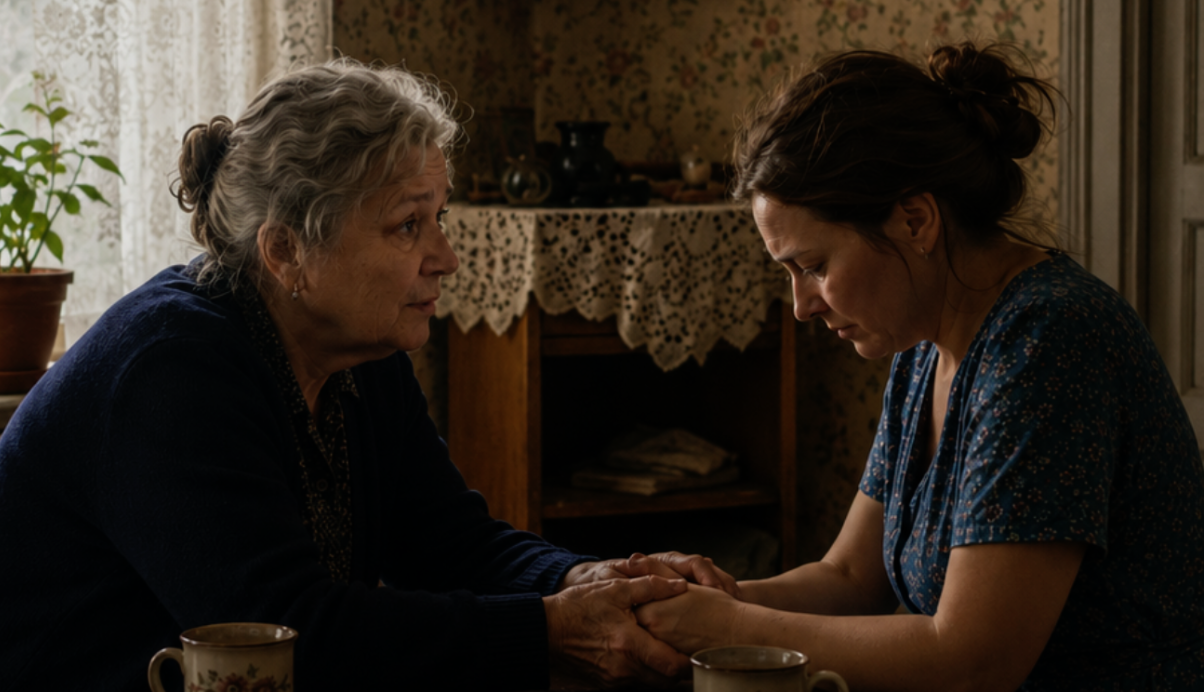
Instead, she reached across the table and took Valentina’s hand.
Both women began to cry.
They were strangers, yet somehow they were connected through Nikolai.
One had loved him as a husband.
The other had seen him as the man who had saved her family after her husband died.
Before leaving, Nadezhda went back to Alyosha’s room.
The young man looked at her with surprisingly alert eyes.
“I’ll come again,” she told him.
Then she turned to Valentina.
“And next time I’ll bring my daughter.”
On the drive home, Nadezhda thought about Nikolai.
She had lived beside him for thirty years and still had not known everything about him.
But what she discovered after his death did not make her love him less.
It made her love him more.
A week later, Nadezhda returned with her thirty-year-old daughter, Svetlana.
At first, Svetlana was confused.
“Why was Dad sending money to these people?”
When Nadezhda explained, her daughter began to cry.
They brought groceries, medicine, diapers, and enough money to help Valentina for another month.
Valentina tried to refuse.
Nadezhda stopped her.
“Don’t. This is our responsibility now too. Kolya would want it that way.”
Svetlana quickly began helping around the house.
She repaired part of Alyosha’s bed and promised to look into new medicines available in the city.
Watching her daughter work, Nadezhda thought:
Goodness doesn’t disappear when someone dies.
It passes from one person to another.
Six months went by.
Nadezhda continued visiting Valentina every month.
Sometimes Svetlana came too.
They brought supplies, helped around the house, drank tea, and talked.
One day Valentina said:
“I used to envy Nikolai a little. He had you. A daughter. A home. I had my husband’s grave and a sick child. But he never made me feel pathetic. He always told me I was strong.”
“He respected you,” Nadezhda replied.
“And I respected him. He was a very good man.”
Then Valentina smiled sadly.
“Do you know how much he loved you?”
Nadezhda looked at her.
“He talked about you constantly. ‘My Nadya is gold.’ ‘Nadya baked pies.’ ‘Nadya would feel sorry for you if she knew.’ He wanted to tell you about us many times.”
“Why didn’t he?”
“He was afraid you might ask him to stop helping. He loved you so much that he didn’t want to risk being disappointed.”
Nadezhda lowered her head.
She remembered moments when Nikolai had come home quiet and troubled.
She had assumed he was simply tired from work.
Now she understood that perhaps he had been worrying about Alyosha.
On the first anniversary of Nikolai’s death, everyone gathered together.
Nadezhda.
Svetlana.
Nadezhda’s young granddaughter.
Valentina.
And Alyosha.
Svetlana arranged special transportation so Alyosha could come.
They sat around the table and remembered Nikolai.
They cried.
They laughed too.
Valentina told stories about him, including one winter when he had come to deliver firewood and fallen waist-deep into a snowdrift.
He had cursed so dramatically that she laughed until she cried.
Even Alyosha had smiled.
Nadezhda imagined her husband standing angrily in the snow and smiled.
For the first time in months, the memory did not only hurt.
It also brought warmth.
Later, she walked over to Alyosha’s bed.
She took his hand gently.
The young man looked directly at her.
“Hello, Alyosha,” she said softly. “I’m Aunt Nadya.”
She squeezed his fingers.
“We’re family now.”
And Alyosha made a sound that was almost like laughter.