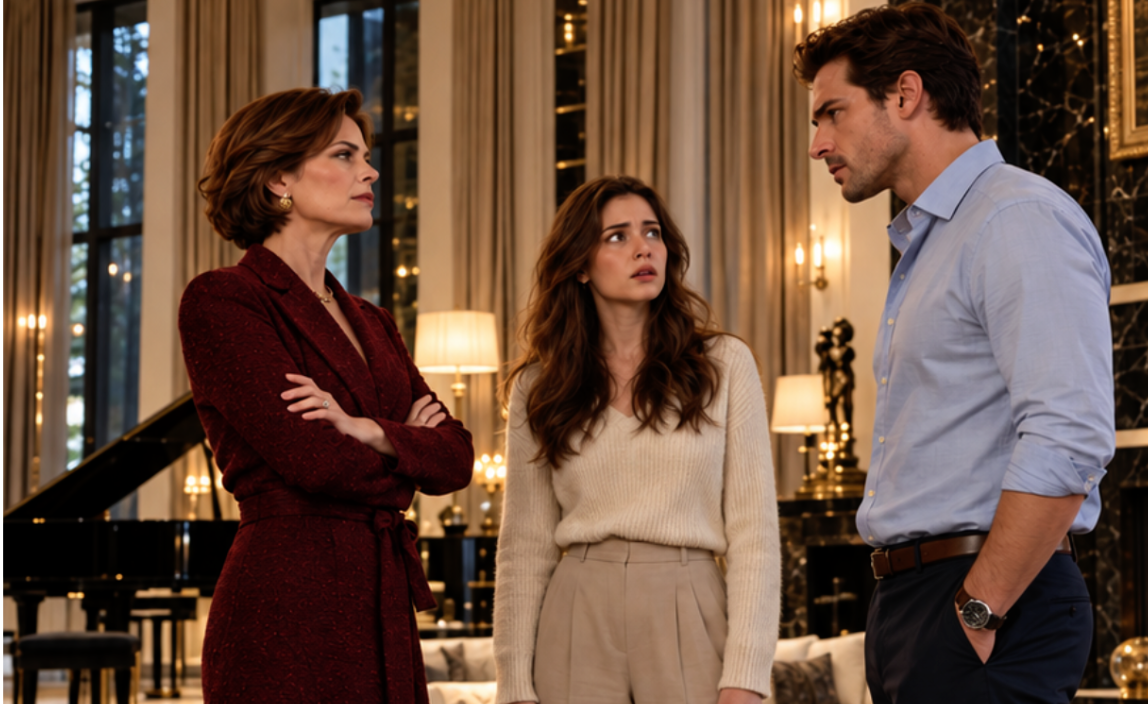
“Mom is gone, so now you have to support me,” Vika declared to her brother-in-law and younger sister.
The door flew open so sharply it looked as if someone had kicked it in. Vika stood on the threshold—disheveled, with a feverish gleam in her eyes, while some unfamiliar man hovered behind her. Polina pulled her one-year-old son close and took a step back. She had been expecting this visit. Three years had passed since they sold the apartment they jointly owned, and Vika’s money was bound to have run out by now.
“So, rich little sister, did you think I wouldn’t come?” Vika stepped into the entryway, looking around the two-room apartment. “Your husband can probably support a mistress and feed his mother, but helping your own sister is too much? It would be a betrayal if you left me out on the street. We’re family, after all!”
“We’re half-sisters, Vika,” Polina replied calmly without looking away. “And the money you received from selling your share was yours. What happened to it?”
“What difference does it make what happened to it?” Vika shrieked. “Life happened! You’ve been sitting here in your cozy little hole while I was trying to survive! Mom died, your dad died even earlier, and now I’m all alone! You have to support me, do you understand? You have to!”
Anton came out of the room and silently leaned against the wall. A barely noticeable smirk crossed his face. Polina noticed and gave him a slight nod: I can handle this myself.
“Let’s do the math,” Polina said. She handed the child to her husband and stood facing Vika. “You received three million six hundred thousand. Over three years, that comes to one hundred thousand a month. Where is it?”
“None of your damn business!” Vika stomped her foot like an offended child.
“It is my business if you’ve come here making demands. The situation is simple: you blew through all of it because you were used to Mom solving your problems. Now Mom is gone. And I have no intention of becoming your new mommy.” The man behind Vika shifted nervously from one foot to the other. Polina looked at him and tilted her head slightly. He appeared to be about five years younger than Vika, wearing an expensive but already worn jacket.
“And who’s this? Your latest ‘savior’?” she asked with a faintly mocking tone.
“This is Maxim, my boyfriend!” Vika snapped. “And he loves me!”
“He loves you so much that he can’t rent a room for the two of you? Interesting kind of love.”
Maxim opened his mouth, but Vika spoke before he could.
“What are you talking about? He’s going through temporary difficulties! We’ll get through it together, we just need some help! Temporarily! You understand—temporarily!”
Polina burst out laughing. It was genuine, heartfelt laughter.
“Three years ago, you said you’d sell the apartment ‘temporarily,’ live in a rental place, and ‘temporarily’ figure out your life. I asked you to wait and not rush into it. Do you remember what you told me?” “Shut up!” Vika clenched her fists. “Shut up, do you hear me? You were always Dad’s favorite! You got everything! What about me? What did I get?”
“You got exactly half. Exactly the same amount as I did. The only difference is that I invested my money in this apartment and have been paying the mortgage for three years. And you—what did you do?”
“They stole from me!” Vika shouted. “They deceived me! They set me up!”
“Who?” Polina took a step forward. “Be specific. Who stole from you? Who deceived you? Maybe this young man standing behind you, who already seems to be figuring out how to make a quick escape?”
Maxim flinched. Vika turned toward him, and fear flashed in her eyes.
“Max, tell her! Tell her we’re together! Tell her we have plans!”
He said nothing. His gaze darted between the door and Vika, and his choice was obvious.
“Plans are wonderful,” Polina said, folding her arms across her chest. “Especially when those plans involve someone else’s apartment and someone else’s money. That’s why you brought my sister here, isn’t it? You thought I’d soften up, let you stay here, and then you’d see how things went?”
“I… I have to…” Maxim began backing toward the door.
“Where are you going?!” Vika grabbed his sleeve. “Where do you think you’re going?”
“I’ll call you, okay? Later. Sort this out yourself. I’m not involved…”
The door slammed shut. Vika froze. “And there goes all that love,” Polina said quietly. “Three seconds to think it over, and he runs at the first sign of trouble. Familiar pattern?”
Vika slowly turned around. Tears streamed down her cheeks, her mascara smeared into black streaks. She looked pathetic, and Polina felt a stab of sympathy. But she immediately suppressed it. Sympathy was a luxury she couldn’t afford with people like this.
“You… you scared him away on purpose,” Vika whispered. “You ruined everything…”
“I didn’t ruin anything. I just asked questions. He made his own choice. Just like he always does. Just like he’ll keep doing. How many have there been already, Vika? Five? Ten?”
Vika sank into a crouch right there in the entryway and covered her face with her hands.
“What am I supposed to do? I have nowhere to go… I don’t know how… I don’t know how to live…”
Polina crouched beside her. She didn’t hug her—she simply lowered herself so that their eyes were level.
“Learn. The way I learned. The way every normal adult learns. You’re not disabled, you’re not an old woman, and you’re not a sick child. You’re a healthy thirty-year-old woman who spent three years burning through her inheritance and now wants someone else to solve her problems.”
“But I’m your sister!”
“Half-sister. And that does not give you a right to my life.” Vika raised her head. Something had changed in her eyes—anger, despair, or perhaps both at once.
“You’re cruel,” she hissed. “A cruel bitch. Mom was right. You were always cold. Like a snake.”
“Your mother,” Polina stood up, “couldn’t stand me. That’s true. But you know what? She was an honest woman. She worked until the very end. She left you an inheritance so you could get on your feet. Not so you could throw it all away on yet another freeloader.”
“Don’t you dare!” Vika jumped to her feet. “Don’t you dare talk about my mother!”
“Why? Because I’m right? Because you know she wouldn’t have praised you for this?”
Silence settled over the hallway. Anton was still standing by the wall, holding their sleepy child in his arms. Polina could feel his silent support. He didn’t interfere, but he didn’t judge her either.
“I have enough money for a hostel,” Polina finally said. “Exactly enough for two weeks. After that, it’s your life. I will not support you. I will not let you move in here. I will not solve your problems.”
“Go to hell!” Vika spat, but she took the money.
The door slammed shut again. Polina leaned back against the wall and slowly exhaled. Her hands were trembling. The adrenaline was fading, and exhaustion was setting in—heavy and sticky, like a swamp.
“You did the right thing,” her husband said quietly as he put their son into his crib.
“I’m a monster,” she said with a crooked smile. “I just threw my sister out onto the street.”
“You gave her a chance to grow up.”
Polina was silent for a moment. Then she looked directly at her husband.
“Anton, I need to tell you something. About your brother.”
He tensed. She saw his shoulders twitch.
“What does Lyoshka have to do with this?”
“Your parents are doing exactly the same thing with him. Supporting him. Paying for everything. Solving his problems. He’s thirty-two, and he’s still living at their expense.”
“That’s different,” Anton said, his voice turning cold.
“How is it different? Because it’s your family and not mine?”
“Stay out of my parents’ affairs,” he said, taking a step back, and it was as though a wall rose between them. “They’ll sort it out themselves.”
“Sort it out? The way my stepmother sorted things out with Vika? She died, and her daughter was left helpless because she was never taught how to cope on her own. Is that what you want for Lyoshka too?”
“Shut up,” Anton clenched his fists. “Just shut up. You’re crossing a line.”
“I’m not crossing it. I’m standing on it and showing you what’s on the other side.”
“You just threw your own sister out, and now you’re teaching me how to live? Maybe you should deal with your own conscience first.”
The words hit hard. For several seconds, they stared at each other—two people who loved one another and had suddenly found themselves on opposite sides of a barricade.
“You know what,” Polina said quietly, almost in a whisper, “I don’t regret what I did. Because pity can destroy a person faster than indifference. Vika will never get on her feet if someone is always holding her up. And neither will Lyosha.”
Anton remained silent. His face was hard, but something flickered in his eyes.
“I love you,” Polina continued. “And I love our family. But I’m not going to stand by and watch us repeat other people’s mistakes. If you want to help your brother, help him. But not with money. Teach him how to earn. Teach him how to live.”
“You don’t understand…”
“I understand perfectly. I just went through it myself. And it hurt. It hurt a lot. But I know it’s the only way.”
Anton sat down on the sofa. He remained there for a long time, staring at the floor. Polina didn’t rush him. She waited.
Finally, he looked up.
“I’m sorry. I… I need time.”
“We have time. But only if we’re honest with each other.”
He nodded. He reached out his hand, and she squeezed it tightly, almost painfully. The crack between them was still there. But they both knew that cracks could be repaired—if they wanted to repair them.
That evening, after their son had fallen asleep, they sat on the balcony. The city hummed below, lights flickered, and life went on. Polina thought about Vika—where she was now, what she was doing, whether she would manage.
There were no answers.
“I’ll call Mom tomorrow,” Anton suddenly said. “I’ll talk to her about Lyoshka.”
“Thank you.”
“Don’t thank me. You were right. It’s just… hard to admit it.”
Polina rested her head on his shoulder. She felt something close to peace. Not happiness—peace. Because she had done what she believed she had to do, even though it had caused pain. Even if scars remained.
Love is not only warmth and care. Sometimes love means knowing how to say “no”—even when you desperately want to say “yes.”