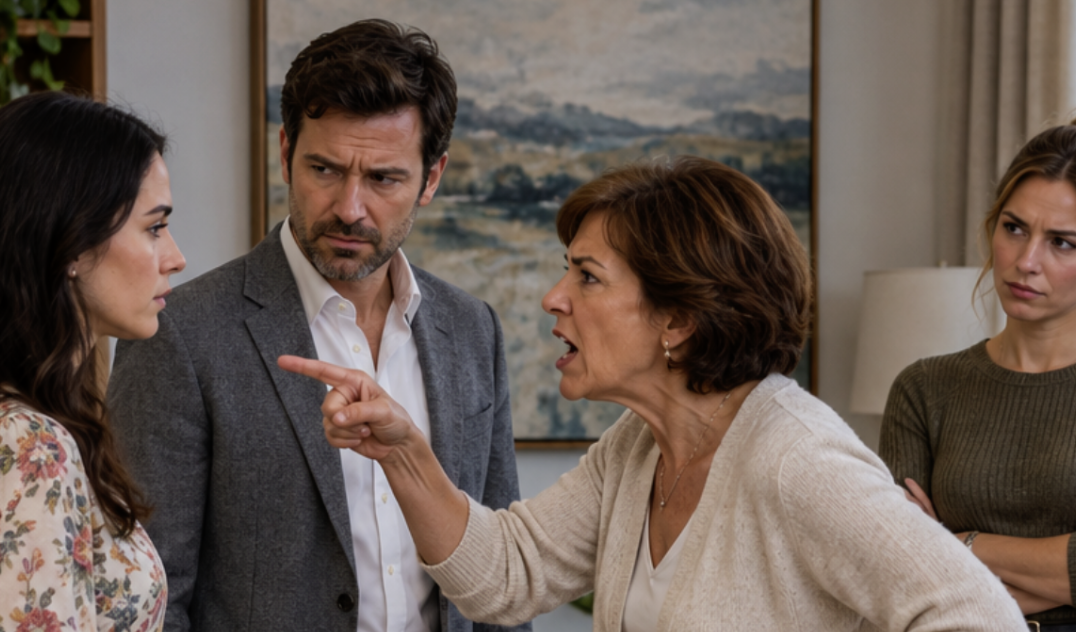
“Hey, do you even realize what you’re saying?” Oleg spoke quietly, almost calmly—but it was that quietness that was scarier than if he’d yelled. “Your aunt lived her whole life alone. She welcomed us for so many years. And this is how you repay her now?”
Katya stood by the kitchen table, looking at her husband—not angry, just tired. The kind of tiredness that builds up over years, layer by layer, like limescale on an old faucet.
“The inheritance from my aunt is mine—and that’s final. No arguments about fairness,” she said in an even voice. “That’s it.”
Oleg was silent for three seconds. Then he got up, grabbed his jacket, and left without slamming the door. That was somehow worse than if he had.
Aunt Zoya passed away in February—quietly, in her sleep, in her apartment on Rechnoy Prospect. Three rooms, third floor, windows overlooking the courtyard with the linden trees. By today’s standards—that’s serious money. Very serious.
Katya was her only niece. Zoya had no other family left—her brother died long ago, and her parents even earlier. She spent her whole life working in the city hospital archive, never really traveled, didn’t splurge, just saved her money. She got the apartment in Soviet times, renovated it in the nineties, and barely touched it since. Cabinets full of books, an old china case, and faded photos on the walls.
Katya would visit every two weeks. She’d bring groceries, sit with her, drink tea, and listen to stories about the neighbor Verochka and her cat. Oleg would sometimes come too—especially in the last year or so, when it became clear Zoya was getting weaker.
They found the will in the top drawer of the china cabinet. Handwritten, notarized. Everything goes to Katya.
Her mother-in-law called three days after the funeral.
Nadezhda Viktorovna had a way of calling that made you feel guilty right away. Her voice was special—gentle, almost tender, with that little quiver that sounded as if she wasn’t being demanding, just quietly suffering.
“Katenka, you know we all loved her. Olezhek visited her so often, helped her out. And I myself—you remember, for her birthday, I brought a cake…”
Katya remembered the cake. Nadezhda Viktorovna brought it exactly once, five years ago, and had brought it up at every opportunity since.
“We’re not asking for anything,” her mother-in-law went on, and that “not asking” sounded exactly like “very much asking.” “Just… as a family, even something small. Something at least, symbolically. We are family, after all.”
Katya politely said goodbye and hung up the phone.
Then her sister-in-law Irina showed up.
Irina was three years older than Oleg and had the rare gift of saying something nasty while looking like she was doing you a favor. She worked at an insurance company and knew all the laws about inheritance, shares, and “de facto acceptance of property”—and never missed a chance to show off her knowledge.
They bumped into each other by accident in a shopping mall, right by the escalator. Irina was walking with a friend but as soon as she saw Katya, she broke away.
“Oh, Katya, hi. I heard you’re already getting the apartment registered?”
“I am.”
“Well, that’s the right move, no point dragging things out,” Irina said with a smile. “Just remember, Oleg spent a lot of time there too. Legally, of course, you’re the heir, no one’s disputing that… but if you and Oleg ever split up, half still counts as joint property, right? Are you two planning to sell the apartment?”
Katya looked at her calmly.
“Irina, is something wrong? Do you need help?”
Irina blinked.
“No, I just…”
“Then have a good day.”
And Katya walked on—towards the grocery store, back straight and jaw clenched.
The conversation at home happened that evening.
Oleg came home later than usual, put the kettle on, and sat down at the table. Katya was sorting papers: documents from the notary, receipts, and a to-do list for the apartment.
“Mom called,” he said.
“I know.”
“She didn’t mean anything bad.”
“I understand.”
Oleg was silent. He took a sip of tea.
“Katya, maybe we should talk? Not even about money. Just… family.”
“Family is you and me,” she said, meeting his eyes. “Not your mom, who only visited Zoya once in five years. And not Irina, who started lecturing me yesterday at the mall about joint property.”
Something changed in his expression.
“Irina talked to you?”
“Irina talked to me.”
He slowly set his mug down.
Katya didn’t say anything else. She just picked up the top sheet in the stack—a printed floor plan from the online cadastre—and placed it in front of him. Three rooms. Rechnoy Prospect. Windows facing the courtyard.
“I want to rent it out,” she said. “At least until I decide what to do next. The place just needs a basic refresh, the furniture’s in good shape. I’ll find tenants by next month.”
Oleg looked at the floor plan.
“Weren’t you going to tell me?”
“I’m telling you now.”
That was honest. And they both knew it.
The next day, Katya headed to Rechnoy.
She unlocked the door with her own key—Zoya’s old key, with the little fish keychain Zoya once brought back from Karelia. The apartment smelled of old books and, faintly, of lavender soap that her aunt used to buy at the pharmacy. Katya walked through the rooms, touched the spines of books on the shelf, and paused at the window.
Outside, bare linden branches swayed in the yard. An old man sat on a bench with a newspaper.
She thought about Aunt Zoya. How she never complained aloud to anyone, but always noticed everything. How one day—about three years ago—she suddenly said, without any reason, “Katyusha, take care of yourself. People around us can be different. Even the ones close to us.”
Back then Katya didn’t understand what she meant.
Now—she understood.
Her phone vibrated. An unknown number.
She answered the call.
“Ekaterina Sergeevna?” The voice was businesslike and clear. “My name is Pavel Andreevich, I’m a notary. We haven’t met, but I have reason to believe we need to talk. It concerns Zoya Nikolaevna.”
Katya slowly sank onto the couch.
“I’m listening.”
“The thing is,” he said after a pause, “shortly before her death, your aunt drafted another document. And it… let’s just say, it changes things a bit.”
Katya didn’t answer right away. She just sat there, staring at a spot—a vintage cabinet with foggy glass, behind which stood the porcelain cups her aunt never used on weekdays.
“What document?” she finally asked.
“It’s better if we discuss it in person,” Pavel Andreevich said. “This isn’t a conversation for the phone. Can you come by today, in the afternoon?”
The office was located on Bolshaya Posadskaya—a historic building with a heavy door, a brass handle, the scent of polished wood and old coffee hanging in the air. Pavel Andreevich was a man in his fifties, hair neatly touched with gray, and he had a habit of holding your gaze just a little longer than was comfortable.
He placed a sheet of paper in front of her.
Katya read slowly. Then she started over and read it again, from the beginning.
It was a letter. Written in Aunt Zoya’s hand, officially witnessed right here in this office, two months before her death. Not a will—just a letter. Addressed to Katya personally.
“Katyusha, if you’re reading this—it means I’m gone already, and you’ve probably already come up against the thing I never found the courage to tell you about while I was alive. Forgive me for that. I wanted to spare you extra pain, but it seems I just pushed the unpleasantness onto later…”
The next part, written in steady, slightly old-fashioned handwriting, told how three years ago Nadezhda Viktorovna came to visit Aunt Zoya. She came alone, without Oleg. They had tea; she asked about Zoya’s health, her paperwork, if Zoya had any other relatives. Then, as she was leaving, she said casually: “You should think about it, Zoya Nikolaevna. Oleg is like a son to you. Katya—she’s a good girl, but young people are flighty these days. You never know what life will bring.”
Zoya kept silent. She saw her guest out, closed the door, and then stood for a long time in the hallway.
Half a year later, Irina called on her own—introduced herself as a lawyer, though that was only partly true, and gently asked if Zoya needed help with ‘paperwork changes.’ She explained it was ‘easier than it seems,’ that ‘the family will do everything themselves,’ that there was ‘no need to overpay a notary.’
Zoya hung up the phone. The next day, she went to see Pavel Andreevich.
Katya set the letter aside.
Outside, the street was noisy. Somewhere below, a door slammed, and someone thudded up the stairs, laughing into their phone.
“She never told me anything,” Katya said quietly.
“She asked me not to mention anything ahead of time,” replied the notary. “She said, ‘If everything works out, there’s no point in getting stressed. And if not—let Katya know what she’s dealing with.’”
Katya looked at him.
“Your aunt was a very sensible woman,” he added simply. “That’s rare, to be honest.”
Katya walked home, even though it was a 25-minute trek. She just couldn’t bring herself to get on the subway right away—she needed space to let out what was boiling inside her. It wasn’t even anger. It was something colder and heavier than anger.
So, three years ago. While Oleg was delivering groceries and helping aunt figure out her new phone—his mother had already been sitting in that kitchen, gently, politely, hinting about transferring ownership. And Irina was calling to offer ‘help with the paperwork.’
And no one said a word.
She stopped in front of the flower shop window, stared at pots of geraniums, seeing nothing.
Did Oleg know?
That was the most uncomfortable question. And the most important one.
He was home. Sitting in the kitchen with his laptop, scrolling through something. He looked up when she walked in, immediately reading from her face that something had happened.
“What’s wrong?”
Katya placed a copy of the letter on the table—Pavel Andreevich had made a photocopy for her.
Oleg picked it up. He read for a long time. Much longer than the letter actually required.
Then he put it back on the table and didn’t say a word.
“Did you know?” she asked.
“No.”
“Oleg.”
“No, Katya.” He looked up at her, and she searched his eyes for a lie—but found something else: shame. “I didn’t know about the visit or Irina’s call. But I… I suspected Mom was up to something. I just never asked.”
It was honest. Worse than if he had lied—but honest.
“You never asked,” she repeated.
“I didn’t want to know.”
They fell silent. The kettle whistled quietly on the stove—Katya turned it off automatically, barely noticing she’d stood up.
“I don’t know what to do now,” Oleg said. “With Mom, with Irka… I know I have to do something. But I don’t know what.”
“I know,” Katya said.
Nadezhda Viktorovna opened the door with that familiar half-smile—the one that meant: I’m a little tired, but I’m still happy to see you, dear. Then she saw Katya’s face. The smile wavered but held—her mother-in-law was well-trained.
“Katenka, come in, I was just…”
“I won’t stay long,” Katya said, walking in without taking off her coat.
She didn’t raise her voice. She spoke steadily—maybe that’s why by the middle of the conversation, Nadezhda Viktorovna had slumped in her chair and stopped smiling altogether.
Katya told her about the letter. About the visit three years ago. About Irina’s call. She didn’t accuse—just laid out the facts, one after another, like reading from a protocol.
“It’s not how you think,” her mother-in-law began. “I was just worried about the family…”
“What family?” Katya asked. “The one where you went to an elderly, lonely woman and hinted that her niece was unreliable?”
Nadezhda Viktorovna opened her mouth. Closed it again.
“The apartment is mine,” Katya said. “Aunt Zoya decided what to do with it as she saw fit. We’re not going to talk about this again. Neither you nor Irina.”
She stood up and zipped her coat.
“And one last thing. Oleg knows about this. He’ll decide himself how he wants to speak to you. That’s no longer my business.”
Out on the stairs, she exhaled. Leaned for a second against the cold wall—just to gather herself—then walked down.
The key with the fish keychain was in her pocket. She felt for it with her fingers.
Take care of yourself, Katyusha. People are different. Even those close to you.
She understood, Auntie. Just a little later than she should have.
But at least she understood.
That evening, back home, as she and Oleg sat on opposite sides of the couch in silence, he suddenly said:
“I’ll talk to Irka.”
“Alright,” Katya replied.
“And with Mom too.”
“Alright.”
She didn’t ask what exactly he would say. She just picked up her phone and opened the listings for apartment renovations—something small and affordable, to help bring the place on Rechnoy Prospect back to life.
It was time to move on.
But one question just wouldn’t let her rest—a small but sharp question she hadn’t yet voiced to anyone, not even herself. Something in Auntie’s letter. One phrase, almost offhand, right at the very end.
“And one more thing, Katyusha. Check the third drawer in the china cabinet. Not the first, not the second—specifically the third. I left something there. Just in case.”
She hadn’t looked into the third drawer yet.
The next morning, Katya went to Rechnoy by herself.
Oleg didn’t ask where she was going—he just nodded, poured himself some coffee, and buried himself in his laptop. Since last night, something delicate yet important had formed between them—not reconciliation, no, something more precise. It was almost like an agreement to be honest. Unspoken, but real.
The scent in her aunt’s apartment was exactly the same—lavender and old book pages. Katya took off her jacket, hung it on the hook in the entryway, and walked into the living room.
The china cabinet stood against the wall—dark, bulky, with ornate corners. Classic Soviet furniture, never thrown away not out of sentiment, but because it would outlast everyone. Katya crouched in front of the lowest row of drawers. The first one—tablecloths, neatly folded, carrying a hint of mothballs. The second—some receipts, old postcards, a ball of mysterious string.
The third drawer wouldn’t open.
Katya pulled harder—the drawer budged slightly and stopped. She felt around the edges and found a tiny brass latch on the side she’d never noticed before. She clicked it open—and the drawer slid out smoothly, almost silently.
Inside was a tin cookie box. The very same one from her childhood, painted with pictures of Alpine meadows—Katya remembered it well. Her aunt always kept buttons in that box.
The buttons were still there. But underneath them, wrapped in a piece of flannel, was a savings book.
The old kind—the paper one with a blue cover. Katya carefully unwrapped the cloth. Pinned to the book was a note, once more in her aunt’s handwriting:
“It’s not a lot of money. But it’s your money, Katyusha. I put away small amounts over the last ten years. Just for you. So you’d have something completely your own—not shared, not discussed, not divided. You’ve always given everything to everyone. Let this, at least, be just for you.”
Katya sat on the floor by the china cabinet, holding the note in both hands.
She didn’t cry. She just sat there.
Outside, the city was humming, a garage door slammed somewhere, and a car drove by with loud music. Life went on—indifferent and familiar, like always.
But Aunt Zoya managed to say what she wanted. Just a little differently than most people do.
The number in the savings book was unexpected.
Not millions—no. But for someone saving from a pension and an archivist’s salary, it was a significant amount. Katya stared at the figure for a long time, thinking about how many of her aunt’s sacrifices—declining a new coat, skipping a trip to the sea, passing up an extra box of good tea—were behind that number.
She called Pavel Andreyevich.
“You’ll need to fill out some paperwork,” he said. “You’re the heir, it’s all legal. Bring your documents and we’ll take care of it.”
“Alright.”
“And, Ekaterina Sergeevna,” he added after a pause, “Zoya Nikolaevna asked me to tell you something directly. I got caught up with paperwork and almost forgot. She said, ‘Tell Katya I always believed in her. Always.'”
Katya thanked him and hung up.
That’s when the tears came—quickly, almost angrily, as she buried her face in the sleeve of her sweater. Then she wiped her face, got up off the floor, and went to put the kettle on.
Irina called herself—two days later.
When Katya saw her name on the screen, she just stared at it for a few seconds before finally picking up.
“Katusha,” Irina began in the tone of someone being forced to apologize and very much resenting it. “I probably didn’t express myself well back at the mall. You misunderstood me.”
“I understood everything just fine,” Katya replied calmly.
There was a pause.
“Well, we’re still family,” Irina went on, her voice taking on that familiar slightly hurt, slightly reproachful note—the kind she’d probably perfected after years working in insurance. “Why should we fight?”
“We’re not fighting,” Katya answered. “Some things have just been called by their proper names. That’s a good thing.”
“Oleg got into your head.”
“Irina, Oleg has nothing to do with this. This conversation is between the two of us.”
Another pause—long this time, with a soft, irritated sigh on the other end.
“So that’s how it’s going to be?” Irina finally asked. “You’re mad at us now, and we’re the enemies?”
“There are no enemies,” Katya said. “There are people I trust and people I don’t. You decided which list to be on.”
She didn’t wait for a reply—just said goodbye and put her phone away.
Then she stared at the wall for a long time. For the first time in many days, she finally felt truly at peace.
As for Nadezhda Viktorovna, it was Oleg who spoke to her.
Katya didn’t know the details—she never asked, and he never told. Only once, one evening as they were sorting through her aunt’s things at Rechnoy, deciding some would be given away and some kept, with the books going to the library, he suddenly said:
“Mom asked if she could call you.”
Katya set a stack of plates on the table.
“Why?”
“She says she wants to talk. Just… as people.”
Katya thought for a moment.
“Let her call. I’ll listen.”
Oleg nodded and didn’t say anything else. They continued sorting the shelves in silence—not an uneasy silence, but the kind shared by people who know how to work side by side.
Nadezhda Viktorovna called the next day—at eleven in the morning, while Katya was at the store. The conversation was short, only about ten minutes. Her mother-in-law spoke calmly, without her usual hint of tears in her voice—maybe Oleg had managed to explain something important. She said she’d acted rashly, that she shouldn’t have gone behind Zoia’s back. She didn’t explain or make excuses—just stated the facts.
Katya listened. She thanked her. She promised she wasn’t holding a grudge.
It was true—partly. She wasn’t angry, but she wasn’t naive anymore either.
It didn’t take long to find tenants for the apartment—a young couple, both quiet, working remotely, no pets. Katya met them at Rechnoy, showed them everything, and answered their questions. They moved carefully from room to room, not touching anything, speaking softly—almost as if they sensed that someone used to live there, and that the place deserved respect.
“We really like it here,” the girl said by the window, looking out into the yard lined with lindens.
“I liked it too,” Katya replied simply.
They signed the lease a week later. Katya left the apartment, closed the door, and stood for a moment on the landing.
She kept the key with the little fish keychain for herself and made a duplicate for the new tenants.
Some things just can’t be given away.
That evening, she and Oleg sat at home—she with her book, he with his phone. It was an ordinary weekday night, one of thousands. Yet something felt a little different—a new kind of closeness, maybe. The air seemed somehow clearer.
“Hey,” he said suddenly. “What was in the third drawer?”
Katya put down her book.
“A box of buttons.”
“And that’s it?”
She paused for a moment.
“And something else. Something of my aunt’s.”
Oleg looked at her—attentive, gentle. He could see she wouldn’t say more. He nodded and returned to his phone.
Katya went back to her book, too.
She put the money into a separate account—in her name only. Not because she didn’t trust anyone, but because Aunt Zoya had wanted it that way. And for the first time in her life, Katya realized the importance of having something that’s truly your own. Not to keep anyone out, just as firm ground beneath your feet.
Something secure. Something hers.
Outside, it was getting dark. In the yard, someone was laughing—loud, carefree. Life kept moving, as it always does: not asking for permission, not looking back.
Katya thought how Aunt Zoya had lived a quiet, unremarkable life—no scandals, no dramatic words, no grand gestures. She just saved money. Just loved her niece. And, at the right moment, went to the notary and said everything she needed to say.
Sometimes, that’s what matters most.
Three months passed.
Life, as it often does, didn’t really go anywhere—it just shuffled things around, changed the order of what once felt unshakable.
Oleg now spoke to his mother differently—shorter, drier, no longer eager to agree with everything she said. Nadezhda Viktorovna sensed the change and acted more quietly. Not because she’d become a different person—you don’t change at sixty—but because she realized: her old leverage no longer worked.
Irina didn’t call. Katya didn’t miss her.
One Saturday, they went to the flea market—just because. They wandered among the stalls, looking at old vinyl records, Soviet toys, strangers’ family photos in frames. Oleg bought an old mechanical watch missing a hand—he said he’d fix it. Katya found a tiny porcelain fish, almost exactly like the keychain on her aunt’s key, except white with blue.
“Why do you want it?” Oleg asked.
“I just like it,” she replied.
He didn’t argue. He quietly paid for it while she looked away.
These small things—this is what keeps people together. Not vows or heart-to-hearts, but quiet, almost invisible gestures.
Katya put the porcelain fish on the window sill. She laid her aunt’s key beside it.
Sometimes, passing by, she would stop for a moment. Look at them.
And think—not about the money, not about the apartment on Rechnoy, not about her mother-in-law with her cunning visits. She thought about how Aunt Zoya spent her life quietly, but still managed to say the most important thing. Not with words—but by saving money, locking a drawer, pinning a note.
I always believed in you.
No conversation about fairness can take that away. No relatives can change it.
It’s hers, and hers alone.