Quietly, Like Respectable Women
“Where exactly do you think you’re going?” Gennady put down his fork and stared at his ex-wife as though she’d just announced she was flying to the moon. “To St. Petersburg? For New Year’s? Alone?”
“Why alone? I’m taking a suitcase,” Nadezhda replied with a shrug. “I’ve bought my train tickets and paid for the hotel. All my life I’ve wanted to see the fireworks over the Neva River. But every New Year’s Eve, we spent our time at your mother’s country house, digging snow away from the front gate.”
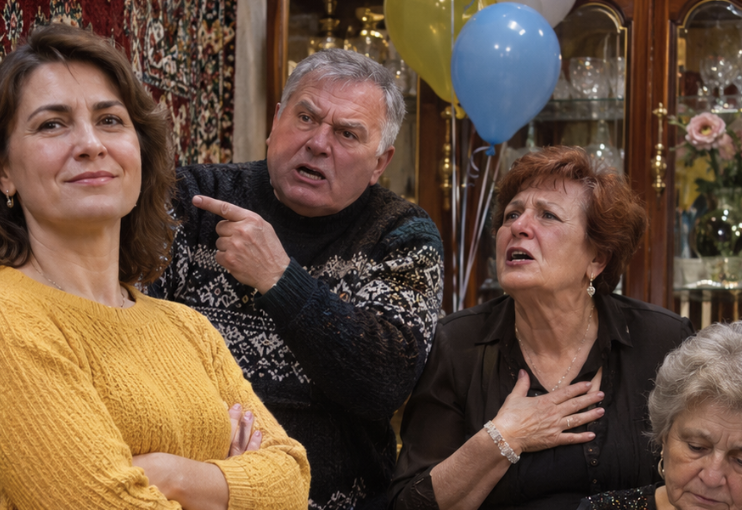
The family had gathered at their daughter’s home for Sonya’s ninth birthday. The children had run off to play, while the adults waited for the cake. Among the guests were their daughter’s in-laws, Kostya’s parents, Gennady’s sister Lydia—who still considered herself the authority on all family matters out of old habit—and Gennady himself, who hadn’t missed a single celebration at his daughter’s house since the divorce.
“Respectable women keep a low profile after a divorce, Nadya,” Gennady declared loudly enough for everyone to hear. “They don’t go gallivanting around hotels during the holidays. You’ll make a laughingstock of yourself.”
“Sixty years old and alone in a strange city,” Lydia chimed in, shaking her head. “At our age, we should be thinking about our grandchildren, not fireworks.”
Kostya’s mother looked down at her plate in embarrassment. His father cleared his throat. Irina turned red and began serving salad with exaggerated concentration.
“Gena, I kept quiet for thirty-four years,” Nadezhda replied calmly, passing the bread to Kostya’s mother. “I don’t feel like doing that anymore. I’ve decided to try being a little louder.”
“Well, well,” her ex-husband snorted. “We’ll see how long that lasts.”
Later, in the kitchen, while Nadezhda helped her daughter wash the dishes, Irina finally spoke up.
“Mom, seriously, why do you have to go there all by yourself?” She scrubbed a plate as though she were trying to wear a hole through it. “Why don’t you come to our place instead? Dad will come too. We can all sit together as a family, just like we used to.”
“I’ve had enough of sitting around like we used to,” Nadezhda said with a faint smile. “Ira, I’m sixty, not ninety. I want to decide for myself where I spend New Year’s.”
“Dad’s just worried about you,” her daughter sighed. “It’s hard for him without you. You can see that.”
Nadezhda could see it. But she had almost no pity left.
Two years earlier, she had left her husband. Not for another man. She had simply left him.
She had left his endless remarks: “What would you know about that? You don’t understand these things.” She had left the interrogations over every carton of kefir she bought. She had left the way he mocked every idea she had, only to present it as his own a month later.
The apartment where they’d spent their entire married life had been inherited by Gennady from his parents. Legally, it wasn’t marital property, and Nadezhda hadn’t tried to claim it.
She took half their joint savings, added the money from selling her parents’ old house in the village, and bought a one-room apartment in an aging five-story building on the outskirts of town.
She’d had to take out a loan for renovations. But for the first time in her life, she had a place of her own, where nobody told her she’d hung the curtains crooked.
Irina had taken her parents’ divorce badly and had somehow, almost without realizing it, sided with her father.
In her eyes, her mother was strong and could manage anything. But her poor father was alone. Her father was wasting away. Her father was eating dumplings straight from the package.
Nadezhda didn’t argue.
She knew perfectly well that Gennady only wasted away as long as there was someone nearby willing to rescue him.
Nadezhda worked as a senior sales assistant at a hardware store called Masterok. She could find any screw on the shelves with her eyes closed.
“Ma’am, I need one of those things that goes under the sink,” a man in an unzipped jacket explained one day, drawing a crooked shape in the air. “You know, that bent thing the water drains through.”
“A sink trap,” Nadezhda nodded. “Does your sink have an overflow or not? You don’t know? Take a picture and come back. Otherwise, you’ll end up making two trips.”
“How do you know all this?” the customer asked in surprise.
“For thirty years, I explained to my husband that he could replace a washer in a faucet himself,” she smiled. “He never believed me and always called a plumber. At least now I’m explaining it to you, and thank God, you believe me.”
Everything at home was in order too, except for one thing.
Back in early October, a lightbulb had burned out in the stairwell between the second and third floors. By evening, the staircase was so dark that residents had to use their phones as flashlights.
Nadezhda had called the property management company three times and submitted two complaints through its app. Both times, she received a notification saying the problem had been resolved.
But the lightbulb was still missing.
On her day off, she went to the management company’s office in person.
The young woman behind the counter, with long manicured nails and a name tag reading Kristina, listened without looking away from her screen.
“Ma’am, you probably submitted the request incorrectly,” she said. “Everything is recorded in our system.”
“I submitted it five times.” Nadezhda placed a sheet of paper on the counter. “Here are the reference numbers, dates, and replies from your app. Everything is recorded down to the last letter. Unfortunately, none of it has made the light come on.”
“Well, then it’s being processed,” Kristina said, finally looking up. She began speaking slowly, as though explaining something to a first-grader. “You have to understand, we only have one electrician for fourteen buildings. Maybe you should ask a younger relative to call us? Young people understand these things better.”
“Understand what? Lightbulbs?” Nadezhda asked incredulously. “Young lady, I sell lightbulbs. I can explain the difference between LED and energy-saving bulbs if you’d like.”
“I don’t need an explanation,” Kristina replied, pursing her lips. “The electrician will come according to schedule. Next!”
The next person in line was Nadezhda’s neighbor, seventy-four-year-old Rimma Arkadyevna.
A former deputy school principal, she was known behind her back throughout the building as the Prosecutor.
She was the one who posted notices on doors beginning, “Dear residents! Whoever leaves garbage bags on the landing…”
During Nadezhda’s very first week in the building, Rimma had informed her that drilling was only permitted until seven in the evening and that she couldn’t put a doormat outside her apartment because it got in the cleaner’s way.
She seemed to have disliked Nadezhda from the moment she moved in.
“You won’t accomplish anything like that,” Rimma Arkadyevna announced as Nadezhda put the paper back into her handbag. “You need to submit a written complaint, in duplicate, and get an official registration number. Instead, you’re complaining verbally as if you were in a shop.”
“Thank you, Rimma Arkadyevna,” Nadezhda replied dryly. “Perhaps I’ll make an appointment for a consultation with you sometime.”
“Do that,” the woman nodded calmly. “Just don’t put it off.”
But Nadezhda never got around to arranging that consultation.
In early November, she was returning home after work with two heavy shopping bags. Wet snow had been falling all day, and puddles from people’s shoes covered the stairs.
She climbed by memory, feeling for the edge of each step with her foot.
On the second-to-last step, where the edge was chipped, her foot slipped.
She fell forward and instinctively stretched out her right arm.
Something cracked in her wrist so loudly that, for a moment, she couldn’t even hear her own scream.
The bags scattered. Apples rolled down the staircase with dull thuds.
The door to apartment forty-two flew open, and a flashlight beam cut across the landing.
“Who’s there?” Rimma Arkadyevna demanded sternly. “Nadezhda? Are you lying on the floor?”
“Just having a rest,” Nadezhda replied through clenched teeth. “I think I’ve broken my arm.”
Her neighbor didn’t gasp or panic.
She ordered Nadezhda not to move, went back inside, called an ambulance, and returned with a sofa cushion, which she placed behind Nadezhda’s back.
Then, grumbling with effort, she gathered the apples from the steps.
“Give me your keys. And your handbag too,” she instructed when the paramedics’ voices could already be heard downstairs. “Things have a way of disappearing at hospitals. I’ll lock your apartment.”
“But I thought you couldn’t stand me,” Nadezhda said in surprise, handing over the keys.
“It’s your doormat I can’t stand,” Rimma Arkadyevna snapped. “So far, I haven’t found a reason to dislike you.”
Before the paramedics took Nadezhda downstairs, her neighbor slipped a folded note into her coat pocket.
At the hospital, the doctors discovered that her wrist was fractured and the bone had shifted out of place.
The next day, surgeons inserted a metal plate. By the third day, the doctor, a middle-aged man with a measured manner, was already discussing her discharge.
“The plate is positioned well. The bone should heal in about six weeks, and afterward you’ll need rehabilitation exercises,” he explained. “Keep the arm elevated, don’t lift anything heavier than a cup, and come to the outpatient clinic for a dressing change in a week.”
Nadezhda nodded, but all she could think about was how she was supposed to put on her coat with only her left hand.
The previous evening, she’d unfolded the note from her coat pocket.
In large, uneven letters, it read:
“Your keys and handbag are with me. R. A., Apt. 42.”
There was also a phone number.
For a former deputy principal, Rimma Arkadyevna’s handwriting was surprisingly clumsy, like that of a first-grader.
Nadezhda called her daughter first.
“Mom, how am I supposed to come?” Irina said, sounding distressed. “Tyoma has a runny nose again, so they won’t take him at kindergarten. Kostya’s away on business until Friday. Call a taxi. I’ll transfer you some money.”
“I have money,” Nadezhda replied. “What I need is a second hand.”
“Maybe we could ask Dad?” her daughter suggested hesitantly. “He’s off work today.”
“Don’t ask Dad,” Nadezhda said firmly. “I’ll manage.”
“Hang in there, Mom,” Irina replied, and Nadezhda thought she heard relief in her voice. “I’ll definitely come by this weekend.”
Getting dressed with one hand turned out to be an adventure.
It took her three attempts to pull a sweater over her head. The sleeve of her coat wouldn’t fit over her cast, so a nurse simply draped the coat over her shoulders.
“Ma’am, in your condition, you should call your relatives instead of trying to manage alone,” the nurse remarked disapprovingly. “You’ll fall on the hospital steps, and they’ll bring you straight back here.”
Nadezhda couldn’t tie her shoelaces, so she stuffed them inside her boots.
Then she dialed the number on the note.
“Rimma Arkadyevna, it’s Nadezhda from apartment forty-one,” she began. “They’re discharging me. I’m going to call a taxi. Would you mind bringing my keys out onto the landing when I arrive?”
“Which hospital?” her neighbor interrupted.
“City Hospital Number Two. Why?”
“Stay exactly where you are,” Rimma Arkadyevna ordered. “I need to go to the pharmacy anyway, and it’s near your hospital. I’ll be there in forty minutes.”
Forty minutes later, she appeared in the hospital lobby, wearing a curly-fur hat and carrying an enormous woolen shawl under her arm.
Without a word, she crouched down, untied Nadezhda’s boots, pulled out the laces, and tied them securely with double knots.
Then she wrapped the shawl around Nadezhda, over her coat, until only her nose was visible.
Finally, she picked up the bag of belongings.
“Young man, we’ve got a passenger with a broken arm,” she told the taxi driver as she got in. “I expect you to slow down at every bump as though there’s a traffic policeman standing there.”
Once they got home, Rimma Arkadyevna opened the refrigerator with the authority of its rightful owner and pursed her lips.
“Right. I see,” she said. “The kefir’s expired, the cheese has dried out, and your apples are at my place.”
Ten minutes later, she returned with a jar of chicken noodle soup and half a loaf of bread.
She sliced the bread, poured the soup into a bowl, and picked up the hospital discharge papers and a packet of pills from the table.
“Read what it says here, would you?” she asked, handing Nadezhda the medication. “I left my glasses at home.”
Nadezhda read the instructions.
The glasses, incidentally, were hanging from a chain around her neighbor’s neck.
But she chose not to mention it.
“Don’t lock the bottom lock,” Rimma Arkadyevna instructed as she put on her shoes. “I’ll come by in the morning.”
The next morning began with Nadezhda discovering she couldn’t squeeze toothpaste from the tube.
The tube kept slipping, and she couldn’t unscrew the cap. Eventually, she trapped it between her knees and somehow managed.
With one hand, the bread refused to stay still on the cutting board. She opened a carton of milk with her teeth and spilled half of it across the table.
Washing her hair was out of the question.
Then she sat down with a notebook and began calculating her expenses.
The numbers she wrote with her left hand came out crooked, just like the letters on Rimma Arkadyevna’s note.
“Nadezhda, we’ll pay for the first three days of your sick leave,” Lyudmila Pavlovna from human resources explained over the phone. “The Social Fund will pay the rest once your sick leave is officially closed. So for about a month and a half, you’ll have to rely on your pension.”
Nadezhda’s pension was 21,400 rubles.
The November utility bill, including heating, was 6,800.
Her monthly renovation loan payment was 11,000 rubles, and she still had another year of payments ahead.
That left 3,600 rubles for food, medication, and taxis to the clinic.
She called a home-care agency.
A polite young woman informed her that a visiting assistant cost 450 rubles an hour, with a minimum booking of three hours.
If she hired someone every day, it would cost around 40,000 rubles a month.
She also had 38,000 rubles saved for her trip to St. Petersburg—for museums, cafés, and presents for her grandchildren.
If she spent that money on an assistant, it would last about three weeks.
And then what?
Nadezhda stared at the figure in her notebook and closed it.
No matter how she calculated it, the numbers simply didn’t add up.
On Saturday, Irina arrived with two bags of groceries.
She began speaking in the brisk, businesslike tone she normally used with suppliers at work.
“Mom, I’ve figured everything out,” she announced, putting the groceries into the fridge. “You’re going to stay with Dad until your arm heals. He’s got three rooms, and he works twenty-four-hour shifts followed by three days off. He’ll be home most of the time and can look after you. Meanwhile, we’ll rent out your apartment for about seventeen thousand a month. That’ll cover your loan payment.”
“And what about me?” Nadezhda asked. “Are we renting me out too?”
“Mom, don’t exaggerate,” her daughter said, frowning. “Dad actually suggested it himself. He said that since things have turned out this way, you might as well come back. He said he doesn’t hold grudges.”
“How generous of him,” Nadezhda said with a dry smile. “Ira, have you thought about who’s going to cook for your father?”
“Well, he will, I suppose…”
“In thirty-four years, he never once fried an egg without me,” Nadezhda reminded her. “Within a week, I’ll be making meat patties for him with one hand while he explains that I’m holding the frying pan incorrectly. And within a month, he’ll be telling everyone I would have been helpless without him.”
“That’s unfair to Dad!” Irina exclaimed angrily. “He’s genuinely worried about you. And you’re sitting here alone like a hermit just because of your pride. You can’t even put your own tights on!”
“Then I’ll wear trousers,” Nadezhda shrugged. “Ira, I didn’t leave two years ago just to go back the moment I broke a bone.”
“Your pride matters more to you than your health,” her daughter said resentfully, zipping up her jacket. “Suit yourself. Just don’t say nobody offered to help.”
The door slammed behind her.
Nadezhda sat in the kitchen for a while, then decided she would at least open a jar of jam to have with her tea.
The lid wouldn’t budge.
She tried with her left hand. Then she wedged the jar between her knees.
Nothing.
She set it on the table and suddenly realized she was about to burst into tears over a stupid jar.
That realization made her feel even worse.
Someone knocked on the door.
Rimma Arkadyevna stood outside holding a stack of bills and a large magnifying glass.
“Nadezhda, would you mind reading something for me?” she asked without any introduction, placing the bills on the table.
Then she noticed the jam jar.
She picked it up, twisted the lid open in one effortless movement, and put it back.
“My eyesight is getting worse and worse,” she continued. “The letters swim around like fish in an aquarium. And the waiting list for surgery under the government quota doesn’t reach me until spring.”
“What about your glasses?” Nadezhda asked cautiously.
“Glasses don’t help anymore,” her neighbor admitted, lowering herself heavily onto a stool. “I lied to you about forgetting them that day.”
“Does your son know?”
“Vadim lives in Norilsk,” Rimma Arkadyevna sighed. “He keeps telling me, ‘Mom, don’t open the door to strangers, don’t sign anything, and don’t answer calls from unknown numbers.’ But now I can’t even make out familiar numbers on the screen. Last week, some supposed ‘bank employee’ called me, and I nearly gave him the verification code from a text message. Luckily, I couldn’t read the message.”
Nadezhda burst out laughing.
After a moment, her neighbor began laughing too.
The bills turned out to be more interesting than any detective novel.
For two and a half years, Rimma Arkadyevna had been paying twice for the building’s intercom service: once through her regular utility bill and again to the company that had originally installed the system.
“So you’ve been giving strangers 240 rubles every month,” Nadezhda calculated. “That’s more than seven thousand rubles. I’ll call them on Monday and demand a refund.”
“You?” her neighbor asked in surprise.
“Rimma Arkadyevna, I worked at a cash register for seven years before they made me senior sales assistant,” Nadezhda replied. “If I call them, they’ll be so desperate to get me off the phone that they’ll refund the money just to make me stop talking.”
Rimma Arkadyevna looked at the open jam jar, then at her magnifying glass, and finally at Nadezhda’s arm in its cast.
“Do you realize what this means?” she said slowly. “You’ve got the eyes, and I’ve got the hands. Between the two of us, we make one perfectly functioning person.”
From that evening onward, they developed a routine.
Every morning, Rimma Arkadyevna came over and helped Nadezhda wash her hair over the bathtub. She sliced bread, peeled potatoes, and fastened the buttons on her cardigan.
In return, Nadezhda sorted through her neighbor’s bills, read medication instructions and messages from her son aloud, and spoke to the company that had been charging her twice for the intercom.
She spoke to them in such a tone that, two weeks later, the money was refunded to Rimma Arkadyevna’s bank card.
One day, the faucet in her neighbor’s kitchen began to drip, and Nadezhda supervised the repair from a stool.
“Now take the adjustable wrench. It’s in my bottom drawer, with the red handle,” she instructed. “No, those are pliers. The red handle, Rimma Arkadyevna! Now unscrew it counterclockwise.”
“I am turning it, I am!” her neighbor puffed, gripping the nut.
“You’re tightening it. You’re looking at the faucet from underneath, so everything’s reversed,” Nadezhda explained patiently. “There, see the washer? Replace it with a new one, and you won’t have to think about it for another five years.”
The faucet stopped dripping.
Rimma Arkadyevna gazed at it triumphantly, as though she’d personally installed the building’s entire plumbing system.
In the evenings, Nadezhda read detective novels aloud to her, borrowing them from the local library.
Rimma Arkadyevna usually identified the murderer by the third chapter.
“Forty years working in schools, twenty of them as deputy principal,” she explained. “I can spot a lie a mile away, whether it’s coming from a schoolchild or an English butler.”
Together, they also dealt with the property management company.
Rimma Arkadyevna dictated a formal complaint, properly written in duplicate, while Nadezhda attached the reference numbers of all her previous requests and her hospital records.
Then, for good measure, she called the housing inspectorate.
“Submit your complaint with the reference numbers,” the woman at the inspectorate explained calmly. “We’re required to investigate. And you can claim reimbursement for your medical expenses from the management company if you’ve kept the receipts.”
The very next day, an electrician replaced the lightbulbs on every floor.
A day later, Kristina herself called.
“Nadezhda Sergeyevna, our director would like you to bring in the receipts for your medication and taxi fares,” she said so politely that Nadezhda barely recognized her voice. “We’re prepared to reimburse everything without going to court.”
“Well, imagine that,” Nadezhda replied in surprise. “So apparently I do understand these things after all?”
Kristina pretended not to hear.
Irina called a week later, sounding anxious.
“Mom, Dad says that neighbor of yours practically lives at your place,” she began. “He came by on Thursday to check on you, and she opened the door with her own key and wouldn’t let him in. She said you were sleeping. Does she really have your keys?”
“Of course,” Nadezhda confirmed. “I gave them to her myself. And I really was asleep, so she was right not to wake me.”
“Mom, have you lost your mind?” Irina exclaimed. “You hear so many stories these days! Lonely old ladies worm their way into people’s confidence, and the next thing you know, the apartment isn’t yours anymore. She can barely see, and she needs help, so she’s latched onto you.”
“Ira, she has her own two-room apartment and a son earning a good northern salary,” Nadezhda explained patiently. “If anyone has latched onto anyone, it’s me onto her. Besides, she makes excellent chicken noodle soup.”
“You think everything’s a joke,” her daughter said resentfully. “Dad’s worried.”
Dad appeared on Saturday.
He carried a bag of oranges and wore the expression of a man arriving to conduct an inspection.
He walked around the kitchen, looked into the room, and touched the radiator.
“Clean enough,” he admitted. “Does the old woman do the cleaning?”
“Rimma Arkadyevna and I do it together,” Nadezhda corrected him. “I give the orders, and she does the washing. Very convenient.”
“Nadya, stop fooling around,” Gennady said, sitting on a stool and placing the oranges on the table. “Pack your things. We’re going home. I’ve cleared out the small room for you, the one with the balcony.”
“Gena, that’s your home, not mine,” Nadezhda replied. “My home is here.”
“This?” He gestured around the kitchen. “Thirty square meters on the edge of town? You’re all alone here. If something happened to you, nobody would notice for a week.”
“Someone noticed within five minutes,” she replied. “Rimma Arkadyevna recognized the sound of me falling on the stairs. She knew it was me and not the neighbor’s cat.”
“Your precious Rimma has found herself a free servant!” Gennady raised his voice. “She can’t see, so she’s attached herself to you. Can’t you understand that?”
“Gena, why are you asking me to move in with you?” Nadezhda asked quietly. “Your eyesight is perfectly fine. But dinner doesn’t cook itself, and shirts don’t iron themselves.”
He opened his mouth to object.
Then suddenly, he fell silent.
He sat there for a while, turning an orange in his hands.
When he finally spoke, his voice was completely different.
It was a voice Nadezhda had never heard in thirty-four years of marriage.
“Sometimes I wake up at night, and the apartment is so quiet I can hear the refrigerator humming,” he said without looking at her. “I lie there thinking, if something happened to me, who would find me? Lydia calls once a month. Irina visits on weekends. That day at Sonya’s birthday, I said all those things because I was angry. I thought I’d scare you into coming to your senses.”
“You’re not asking me to come back because you need me, Gena,” Nadezhda sighed. “You’re afraid. I was afraid too, lying on those stairs. But I was lucky. The door across the landing opened.”
“So what am I supposed to do now?” he asked gloomily.
“Give a spare set of keys to one of your neighbors. Petrovich from the fifth floor, for example. You’ve been greeting each other outside the building for twenty years,” Nadezhda suggested. “Arrange to call each other every evening. There’s nothing shameful about that. What’s shameful is inviting someone to be your servant and calling it care.”
Gennady remained silent for a long time.
Then he stood up and headed toward the door.
At the threshold, he turned around.
“Peel the oranges,” he muttered, then immediately waved his hand in frustration. “Oh, right. Never mind. Ask your Rimma.”
At the end of November, Irina called at seven in the morning.
From the way she said “Mom,” Nadezhda immediately knew something had happened.
“Mom, Tyoma has a fever, so he can’t go to kindergarten,” her daughter said quickly, almost whispering. “I’ve got the annual audit at work today. If I don’t show up, they’ll tear me apart. Kostya’s in Novosibirsk, and his parents are at a health resort. I called Dad, but he says he has a shift and doesn’t know how to handle little children anyway. Mom, I know your arm is still…”
“Bring him here,” Nadezhda said immediately.
“Mom, but you’ve only got one hand…”
“I’ve got three now,” Nadezhda replied. “I’ll knock on Rimma Arkadyevna’s door.”
Rimma Arkadyevna received the news as though she’d been informed that an official inspection from the district education department was on its way.
“I worked in schools for forty years,” she said, tying on an apron. “I’m sure I can manage one five-year-old.”
At first, Tyoma was shy around the stern-looking stranger and hid behind Nadezhda.
But Rimma Arkadyevna quickly found a way to win him over.
She handed him a thermometer and told him to watch the time on the kitchen clock because she couldn’t see the hands properly.
Then Nadezhda brought out a box of samples from the hardware store, filled with screws, nuts, bolts, and wall plugs of different sizes.
Tyoma spent a whole hour happily sorting them into piles while Nadezhda explained the differences between them.
After lunch, Rimma Arkadyevna took a sheet of paper and a marker and wrote the word “TYOMA” in enormous letters that occupied half the page.
“That’s you,” she told the little boy. “Now write it yourself. I can’t see very well, so make your letters big. Otherwise, I won’t be able to check your work.”
When Irina arrived that evening to collect her son, Tyoma was asleep on the sofa, tucked beneath the woolen shawl.
Rimma Arkadyevna was slicing apples, and Nadezhda was reading another detective novel aloud.
On the table lay a sheet of paper.
In crooked but perfectly recognizable letters, it read:
“TYOMA GRANDMA NADYA.”
“Rimma Arkadyevna said ‘Grandma’ counts as a word too,” Nadezhda explained in a whisper. “He also learned how to write ‘NUT’ while we were waiting for you.”
Irina stood in the doorway for a moment.
Then she sat down on a stool and covered her face with her hands.
“Mom, forgive me,” she said in a muffled voice. “I kept trying to send you back to Dad, thinking I was taking care of you. But really, it was just more convenient for me. Then I wouldn’t have to worry or travel all the way across town to see you.”
“I know, Ira,” Nadezhda said, stroking her daughter’s head with her good hand. “It’s all right. These things happen.”
Irina turned to the neighbor.
“Thank you,” she said. “To be truthful, I thought badly of you.”
“The whole building thinks badly of me. I’m used to it,” Rimma Arkadyevna replied calmly, pushing a plate of apples toward her. “The important thing is that you think well of your mother.”
Later, in the hallway, as Irina fastened sleepy Tyoma’s jacket, she suddenly asked:
“Mom, what about St. Petersburg? Are you still going?”
“Not by myself with this arm, probably,” Nadezhda replied. “They’ll remove the cast by the twentieth, but I still won’t be able to manage a suitcase.”
“I haven’t left this city in twelve years,” Rimma Arkadyevna unexpectedly called from the kitchen. “I can’t read the departure boards at the station or make out the carriage numbers. Vadim’s invited me to visit him so many times, but I’m afraid I’ll get lost and board the wrong train.”
Nadezhda and Irina exchanged glances.
“Then we’ll go together,” Nadezhda decided. “You’ll handle the suitcase, and I’ll handle the departure board.”
On December thirtieth, the railway station was crowded and noisy, and the air smelled of tangerines.
Irina had come to see them off with the children.
Sonya held her grandmother by her good arm, while Tyoma carried a bag of sandwiches and proudly sounded out the words above the ticket counters, syllable by syllable.
Nadezhda’s cast had been removed a week earlier.
Her arm was still weak, and her fingers were reluctant to obey, but the doctor had given her permission to travel as long as she didn’t carry anything heavy.
She had changed her hotel reservation to a twin room in advance.
The previous evening, Gennady had called.
“I gave Petrovich a spare set of keys,” he announced without any introduction. “We agreed to call each other every evening at nine. Can you imagine? He was actually pleased. Turns out he’d been feeling uneasy living alone too. So… Happy New Year, I suppose.”
“Happy New Year to you too, Gena,” Nadezhda replied. “Take care of yourself.”
A damp wind swept across the platform.
Nadezhda tried to zip up her jacket, but her uncooperative fingers couldn’t grasp the little metal pull.
Without saying a word, Rimma Arkadyevna leaned over and zipped it all the way up to her chin.
Just as silently, Nadezhda raised her eyes to the departure board.
“Carriage eight,” she read. “Seats twenty-one and twenty-two. We need to go right, Rimma Arkadyevna, as far as that lamppost.”
Irina embraced her mother.
Then, after a moment’s hesitation, she embraced the neighbor too.
The train attendant checked their passports.
Rimma Arkadyevna climbed aboard first, hauling the suitcase behind her with the determined expression of someone storming the Winter Palace.
“Well then, Nadezhda,” she said, settling into her seat and opening the bag of sandwiches. “I suppose we’d better sit quietly, like respectable women.”
She paused.
“At least until we reach St. Petersburg. After that, we’ll see.