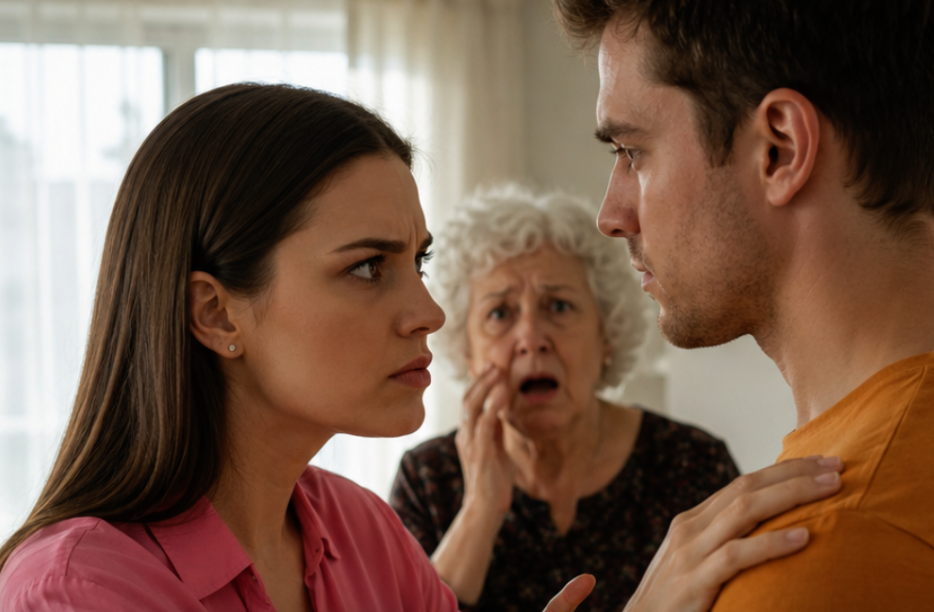
There are women who cry at the moment of their deepest humiliation. Rita Sokolova never cried. She thought.
That very quality saved her marriage—or rather, it did not save it, but changed it so much that even now her husband sometimes looks at her with caution, the way people look at an unfamiliar dog: it probably will not bite, but you never know.
It all began on an ordinary evening, while a drizzle tapped against the window and chicken with potatoes was slowly roasting in the oven.
The television was on. Out of the corner of her ear, Rita heard that Russian skier Anastasia Bagiyan had won her second gold medal for Russia at the Paralympics. For a moment, she even paused from what she was doing and smiled at the screen. Imagine that—a woman whose lack of sight had not stopped her from conquering the course in three minutes and winning!
And Rita could not even conquer her own husband’s stubbornness…
She was sitting at the kitchen table with her planner, carefully writing down estimates for the bathroom renovation. She had been saving for a long time. Putting money aside from every paycheck, denying herself unnecessary things. The renovation had become her obsession: cracked tiles, a rusty faucet, dull Soviet-era ceramic tiles the color of congealed semolina porridge—all of it irritated her so much it gave her goosebumps.
Valery came home around eight. Rita heard him fussing in the hallway for a long time—taking off his boots, hanging up his jacket—then he came into the kitchen, sniffed toward the oven, and said:
“Rit, we need to talk.”
She lifted her head from her notes. Something in his tone—not alarming, no, rather confident—lit a small warning signal inside her.
“Go ahead.”
Valery sat opposite her and folded his hands on the table. He was a large man, good-natured in appearance, the kind mothers call “a big boy” in childhood—and for some reason, that label sticks forever.
“Mom sold the house,” he said.
Rita said nothing. The warning light grew brighter.
“She’s alone, you understand? There’s practically no one left in the village, the neighbors have moved away, the shop closed. It’s hard for her.”
“Valera.”
“She’s an elderly person. She needs help, attention, she needs…”
“Valera,” Rita repeated more quietly. “What are you getting at?”
He looked into her eyes—and suddenly something in his face changed. The soft, pleading expression disappeared, replaced by the one she hated. Stubborn. Boyish. The same expression he used to wear when he once announced they were going to a barbecue with his friends, even though she had asked to spend the weekend at home.
“Mom is moving in with us,” he said. “This is not up for discussion.”
Nina Pavlovna appeared three weeks later—with two huge plaid bags, a box tied with rope, and the expression of a person who had finally received what she had long been counting on.
Rita greeted her mother-in-law politely. She knew how to be polite—which was also a quality that people sometimes mistook for weakness. A mistake.
“Ritulya,” Nina Pavlovna said, looking around the hallway with the air of a new owner, “it’s a bit dark in here. You should get a brighter bulb.”
“Good afternoon, Nina Pavlovna.”
“And the doormat by the door is completely worn out. I’ll choose a new one.”
Rita looked at Valery. He was smiling—broadly, with relief, like a man who had had a mountain lifted from his shoulders. Or rather, like a man who had successfully shifted that mountain onto someone else’s shoulders.
For the first few days, Rita observed and analyzed. The picture was bleak.
Nina Pavlovna woke up at six in the morning and immediately began clattering around in the kitchen. By the time Rita left for work, there was already a pot of soup, a pan of stew, and a tray of fresh bread. It all smelled delicious, to give her credit. But Rita quickly understood that the kitchen was no longer her territory. Her spices had been pushed into the far corner. In their place stood a whole battery of jars labeled “little pepper,” “little bay leaf,” “little dill”—everything in diminutives, as if Valera were five years old again.
In the evenings, Nina Pavlovna fed her son. Exactly that—fed him, the way one feeds a child: filling his plate, sitting across from him, and watching him eat with such an expression of happiness that Rita felt uneasy.
“Valerochka, another cutlet?”
“Mom, where would I put all that…”
“Eat, eat. You’re so thin.”
Valery weighed about ninety kilograms. “Thin” in Nina Pavlovna’s mouth meant “his wife doesn’t feed him.”
A week later, her mother-in-law took up cleaning. That turned out to be worse than the occupation of the kitchen. Nina Pavlovna cleaned with enthusiasm: throwing away whatever she considered junk, sticking all sorts of hooks and shelves from online marketplaces onto walls and doors…
“Nina Pavlovna, that was an important folder,” Rita said one day after discovering that a stack of documents had vanished from her desk.
“Oh, those were just some old papers. I threw them out. Don’t be upset. If something is important, you remember it.”
“Those were utility receipts for the entire year.”
“Well, you can print them again.” Nina Pavlovna was already heading back to the kitchen. “Valerochka, lunch is ready!”
Rita stood in the middle of the room, staring at the empty space on the desk.
One night—she could not sleep and lay there listening to Valery quietly snoring beside her—it finally came to her, completely and irrevocably.
Valery was not taking care of his mother. He was taking care of himself. That was the convenient wording that covered another, truer one: Valery wanted his mother nearby. To feed him cutlets. To call him “Valerochka.” To have someone look at him with unconditional adoration, something his wife had long since stopped wasting energy on because she had understood: unconditional adoration is not love. It is a parenting mistake.
And then there was one more detail Rita remembered late that night, and after that sleep disappeared completely.
Money.
The house had been sold. Nina Pavlovna had received a sum for it—not a huge one, but a very real one. And Rita suddenly remembered how, a few months earlier, Valery had been showing her photos of a motorcycle online. Red, shiny, with chrome details—he had looked at it with the same expression Nina Pavlovna wore when looking at cutlets on his plate.
“Let’s buy it,” he had said then.
“With what money, Valera? I’m saving for the bathroom renovation.”
“The renovation can wait. The riding season is starting soon.”
“No.”
Back then, he had sulked and walked around offended for several days. Then he stopped. And Rita, busy with work and her estimates, had not wondered why exactly he had stopped.
Now she did.
His mother had sold the house. His mother had moved in with them—to live, cook, and nanny her Valerochka. And the money… the money from the house could easily have settled into the family budget. Into that part of it that Valery controlled himself.
Rita lay in the darkness and thought. And when the picture came together fully, in all its clear and unpleasant beauty, she quietly got up, went to the kitchen, poured herself some water, and stared out the night window.
Something had to be done. But what, she did not yet know.
The answer came, as it often does, completely unexpectedly and from a completely unexpected source.
At work, Rita had a colleague—Zhenya Arkhipova, a lawyer in the department. A woman of about forty-five, dry, precise in her wording, with a habit of speaking slowly and weightily, like a judge announcing a verdict. They had never been especially close—sometimes coffee together, hallway conversations. But that day, when Rita came to work after her husband’s categorical announcement, they somehow got talking while discussing that same gold medal won by the skier. They shared their joy and the pride they had felt hearing about such a major victory. Since then, they had begun communicating more often and more warmly.
And now, after Rita’s sleepless night, with dark circles under her eyes, Zhenya looked at her attentively and asked:
“What happened?”
And Rita—without really understanding why—told her. About Nina Pavlovna, about the cutlets, about the thrown-away receipts, about the cleaning…
Zhenya listened silently, without interrupting. Then she set her coffee aside and said:
“Remember when we discussed Nastya Bagiyan’s victory?”
“Of course!”
“Then listen to me. We’re going to act like champions. We’ll move toward the goal confidently, without fear or hesitation.”
“What do you mean?”
“Exactly what I said. Is the apartment registered in your name?”
“In both our names. Joint property.”
“How long have you been married?”
“Nine years.”
Zhenya nodded—slowly, thoughtfully.
“There is one option,” she said. “If you want, I can come to your home. Officially, as a lawyer. We’ll explain it to them together.”
Rita looked at her. There was something in Zhenya’s face—calm, impenetrable, professionally cold—that for a moment Rita suddenly felt as if she were part of a strong, confident team. A team that agreed only to gold—nothing less.
“When can you?”
They came on Friday evening, when Valery was already home and Nina Pavlovna was clattering pots in the kitchen. Rita had called in advance and asked them both to be free—supposedly, there was an important matter to discuss.
Zhenya entered the apartment with her folder, greeted them briefly and professionally, and went into the living room as if she had not come as a guest, but to inspect a property.
“Who is that?” Valery quietly asked Rita.
“A lawyer. From work.”
“Why a lawyer?”
“We’ll explain now.”
Nina Pavlovna also came out of the kitchen—wiping her hands on her apron and glancing curiously at the unfamiliar woman.
They sat down. Zhenya opened her folder. Rita felt a tickle in her stomach—not fear, no. Excitement.
“So,” Rita said, her voice even, calm, and slightly dry, “I invited Evgenia Mikhailovna so we could officially formalize certain things. I want to allocate shares in the apartment.”
Valery blinked.
“Why?”
“Because it will make me feel calmer.”
“Rit, we’re husband and wife. Why divide shares? That’s…”
“Valera,” Rita interrupted softly, “let me finish.”
Zhenya picked up without a pause, in the same weighty tone:
“When shares are allocated, each spouse becomes an independent owner of their part of the property. This is a standard procedure. Nothing unusual.”
“And why do you need that?” Valery looked at Rita with growing anxiety.
“Because,” Rita said, “I want to sell my share.”
Silence. Nina Pavlovna stopped fiddling with her apron.
“Sell?” Valery repeated.
“Sell. I needed money for the renovation.” She said it evenly, without anger. “I’ve been saving for a long time, but as you understand, circumstances have changed. There will be no renovation in the foreseeable future. So I’ll sell my share and buy myself tiny but decent housing.”
“You…” Valery faltered. “You want to leave?”
“I want to live normally, Valera.”
Nina Pavlovna made a sound—something between indignation and astonishment.
“Rita, do you understand what it means to sell a share in an apartment? Who would buy it?”
Zhenya looked at the mother-in-law and said evenly:
“The market usually regulates that issue itself. A share in an apartment is a specific asset. Ordinary buyers avoid it. Most often, such properties are purchased by people who need registration or temporary accommodation. Migrants, for example. From neighboring countries. They have families, they need somewhere to live. Sometimes several people move into one apartment.”
A pause.
Nina Pavlovna turned pale.
Valery opened his mouth and closed it again.
Rita sat with a perfectly calm face and looked at her husband. He looked as if he had just been shown a bill he had not expected to pay.
“Rita,” he finally said, and there was something new in his voice. Something she had not heard in a long time. “Wait. Just wait a second.”
“I’m waiting.”
“This… you can’t just…”
“You can, Valera. Zhenya just explained it.”
Nina Pavlovna stood up, walked to the window, and stood there with her back to the room. Then she turned around—and on her face was the expression of a person whose ground was slipping out from under her feet.
“Are you serious?” she asked quietly.
“Absolutely,” Rita replied.
Zhenya left about fifteen minutes later. On her way out, she shook Rita’s hand—briefly, businesslike—and there was something in that handshake that resembled solidarity.
For the rest of the evening, the apartment was filled with a silence so thick it seemed you could cut it with a knife.
Valery did not eat. Another batch of cutlets cooled in the pan, Nina Pavlovna did not call him to “come eat,” and sat in her room with the door closed. Rita read a book—or pretended to. In reality, she was listening.
Closer to night, Valery came into the bedroom and sat on the edge of the bed.
“Rit.”
“Hm?”
“Would you really do it?”
She put the book aside and looked at him—attentively, without hurry.
“What do you think?”
He was silent for a while.
“You’re angry.”
“No,” Rita said. “I’m tired. Those are different things.”
He fell silent again. Then, heavily:
“What do you want?”
“I want a bathroom with proper tiles. I want to cook in my own kitchen when I need to. I want my documents not to be thrown away.” A pause. “I want to live in my own apartment.”
Valery stared at the floor.
“Mom…”
“Your mother needs her own housing, Valera. That’s normal. She is an adult. She had money from the sale of the house.”
“That money is already…”
He stopped short.
Rita looked at him. For a long time. Expressively.
“The motorcycle?” she asked quietly.
Valery turned red the way, perhaps, only people with a conscience do—or people who have been caught.
“I was going to tell you…”
“Of course you were,” Rita agreed. “Just like you were going to tell me about your mother moving in.”
He said nothing.
“Valera, I’m not your enemy. I’m your wife. But a wife has a limit too.” She leaned back on the pillow and picked up her book again. “Think about it.”
He did not think for long.
A few days later, Rita noticed him searching for something on his phone—long and focused, with the look of a man performing an unpleasant but necessary task. Then he went somewhere several times. He returned silent and a little guilty.
During those days, Nina Pavlovna behaved quietly. She did not seize the kitchen, did not hang pictures, and said “Valerochka, eat” under her breath, only when she thought Rita could not hear.
About two weeks later, Valery came home and said:
“I found Mom an apartment.”
Rita lifted her head from her notebook—she had returned to her estimates again.
“Where?”
“In Severny. Small, but separate. It costs about as much as…”
“As her house?”
He nodded. Without raising his eyes.
“Good,” Rita said.
“You’re… not against it?”
She thought for a second.
“I’m for it, Valera. Everyone needs their own space. That’s normal.”
He nodded again. He lingered by the door.
“And about the motorcycle…”
“Later,” Rita said. “First, the bathroom.”
He left. Rita watched him go and felt something that was difficult to call victory—the word was too cold. Rather, it was the feeling of restored balance. As if the scales that had long been tilted had finally settled as they should.
Nina Pavlovna moved out on Sunday. She packed her plaid bags in the same hallway where she had unpacked them a few weeks earlier—only now without the victorious gleam in her eyes. Rita helped her pack. Without gloating. Without demonstrative triumph.
“You’re not an easy woman,” Nina Pavlovna suddenly said, without looking at her.
“Probably,” Rita agreed.
“You keep my Valerochka under your thumb.”
“No,” Rita said. “I keep track of the balance. That’s different.”
Nina Pavlovna fell silent. Then, after a pause:
“Will he visit?”
“Of course. He’s your son.”
Her mother-in-law looked at her with a long, deep gaze in which there was resentment—and something else. Something resembling respect, though she probably had no intention of admitting it.
Valery drove his mother to her new apartment. He returned late, quiet and somewhat subdued. Rita pretended she was already asleep.
In the morning, he brought her coffee in bed. Silently, he placed it on the nightstand. She opened her eyes.
“Thank you.”
He sat on the edge of the bed—exactly as he had that night after Zhenya left. Only the expression on his face was different.
“I was wrong,” he said.
Rita took the coffee.
“Yes,” she agreed simply.
“I should have talked to you. Properly.”
“You should have.”
“Are you angry?”
“No.” She took a sip. “But next time you inform me of some new development, I’ll remind you about Zhenya Arkhipova and shared ownership.”
Valery was silent for a moment. Then, against his will, something resembling a smile twitched at the corners of his mouth.
“You’re cruel.”
“I get what I want,” Rita corrected him. “Those are different things.”
The renovation began at the end of November. Rita hired a crew, chose the tiles herself—white, clean, without bright accents—and every evening she came to admire the work that had been done. It was her space. Her decision. Her money, saved ruble by ruble, kopeck by kopeck.
Valery sometimes looked in after her—silent, watching, nodding. The motorcycle no longer came up in conversation. At least for now.
Nina Pavlovna called on Sundays—to Valery. Sometimes, at the end of the conversation, she sent greetings to Rita. Rita sent greetings back.
The balance had been restored.
The life that had tilted for several weeks and begun breathing to someone else’s rhythm had become her own again.
And that, Rita thought, looking at the new white tiles in the bathroom—that was victory. Not as powerful as the victory of the Russian athlete at the Paralympic Games, but very important for Rita herself.