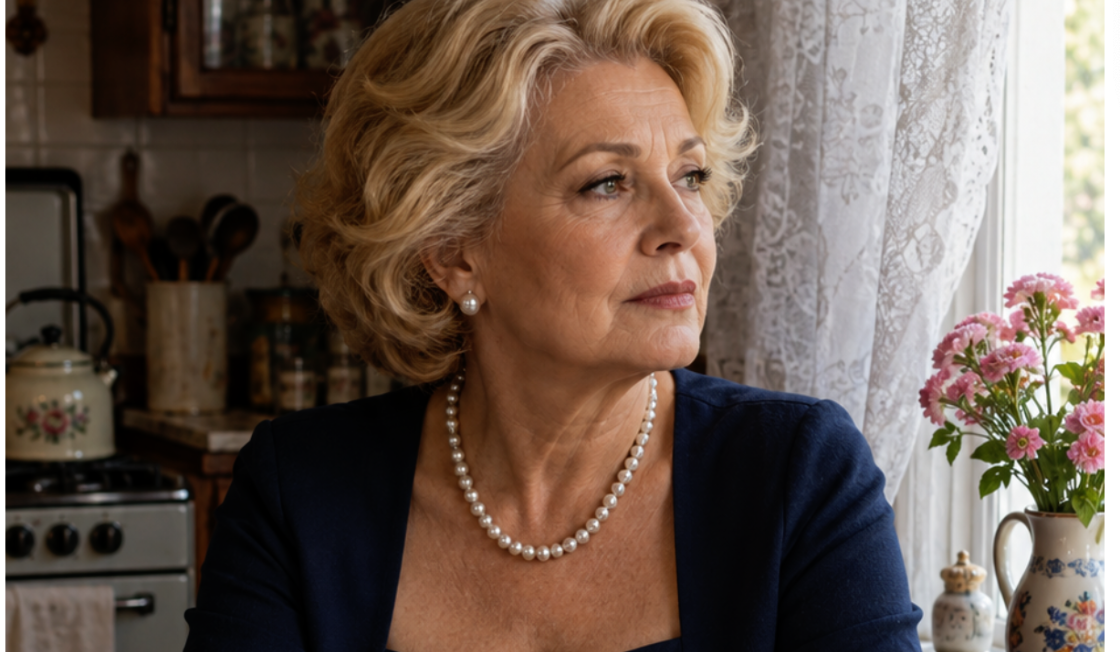
My Daughter Decided I Didn’t Belong at Her Anniversary Celebration: I Accepted Her Rules and Stopped Getting in the Way
I hung up and stared at the phone screen for another half a minute.
My daughter had called me in the middle of the day on Thursday. Usually, she just sent me short messages: “How are you?” or “How’s your blood pressure?” But this time she called, her voice cheerful and fast, the way it always was when her mind had already jumped ahead to ten other things.
“Mom, this is why I’m calling. My coworkers and I decided to celebrate my anniversary. We’re going to rent a room at a café, about twenty people. And I was thinking—you probably wouldn’t fit in anyway. The crowd is young and noisy, and it would be exhausting for you. Besides, we have our own work-related topics to talk about. You won’t be offended, will you?”
I told her no, I wouldn’t be offended. I said she shouldn’t worry and should celebrate however she wanted.
My voice was perfectly calm. I had spent years training myself to sound that way when I worked as a curriculum specialist at an educational center. That job taught you how to speak to parents in a way that kept them from immediately starting to shout.
My daughter repeated that she would call sometime during the week and hung up.
Only then did I sit down on a stool in the kitchen.
Right in the middle of the room, without reaching for tea or my phone.
I simply sat there and stared at the refrigerator door.
There was a photo magnet on it. My daughter was twenty-five in the picture. I was standing beside her, and she was laughing. I had bought that magnet from a little stand by the waterfront when the two of us went away together during the May holidays.
Fifteen years had passed since then.
The next day, I didn’t call her first.
I decided that if a person told me I didn’t fit in, then she could live without my questions.
Before that, I used to call every two or three days. I would ask what she was cooking, how work was going, whether she wanted me to bring over any of my homemade preserves.
Now I stopped.
Not because I was offended, I told myself, but because I respected her choice.
If I didn’t fit in, there was no reason for me to keep appearing in front of her.
My daughter called nine days later.
I was setting the table. It was Sunday, around seven in the evening, when my phone began vibrating on the windowsill.
“Mom, where have you disappeared to?” she asked immediately. “I keep calling you. You don’t even ask how I’m doing anymore.”
I was silent for a moment and then answered calmly.
“You said I didn’t fit in with your crowd. I don’t want to get in the way. So I don’t call. If you need me, you know my number.”
The line went quiet.
Then my daughter said something like, “Wow, Mom,” and added that something on her stove was boiling and she would call me back.
She didn’t call back that evening.
Or the next day.
I didn’t torment myself trying to guess what she was thinking. I didn’t want to turn an ordinary evening into a special occasion for suffering.
Better to turn on the television than dig through old photographs where nothing could be changed anyway.
Three weeks later, I went to a city fair. Some vendors had brought fabrics, and I had been looking for thick linen for summer curtains for a long time.
The weather was windy, and the rows of market stalls were humming with noise.
I found the fabric I wanted, paid for it, and was already walking toward the bus stop when my phone made a short sound.
A message from my daughter.
“Are you sure you’re not angry with me?”
I replied that I wasn’t.
I wrote one word and pressed send.
The next morning, she showed up at my apartment without warning.
I opened the door, and there she was.
She wasn’t wearing a coat even though it was chilly outside, just a sweater. Apparently, she had driven over from somewhere downtown and left her jacket in the car.
“Can I come in?” she asked.
Without waiting for an answer, she stepped into the hallway, unzipped her ankle boots, took them off, and placed them neatly side by side with their toes pointing toward the door.
I would have recognized that habit among a thousand others.
I put the kettle on.
It began to rumble and then clicked off.
I made chamomile tea for her in a large mug and black tea with bergamot for myself.
We sat down at the table.
My daughter turned her mug around in her hands for a long time before finally speaking.
“I didn’t want to hurt you. You understand that our group really is specific. Everyone is from my work, mostly thirty to thirty-five years old. They talk about their own things, make jokes you wouldn’t understand. You would have just sat there feeling bored.”
I took a sip of tea and said:
“You did the right thing. You were honest. That’s better than making someone sit in a corner feeling like they don’t belong.”
My daughter looked up.
“So that’s why you’re not calling me?”
“I’m not calling because I respect your decision,” I repeated. “You said I don’t fit in. I understood. Children grow up. That’s normal. You have your own life, your own circles. I have nothing to do with that. When you need me, I’m here. But I’m not going to impose myself on you.”
She pushed her mug away and began speaking faster, barely pausing between sentences.
She said I had twisted everything around.
That she had only meant that one evening and that one group of people.
That I shouldn’t have reacted like this.
That she hadn’t wanted to erase me from her life.
I listened without interrupting.
Then I answered:
“How was I supposed to react? Call you the next day and ask if you had changed your mind? Or get offended and make a scene? I chose a third option. It’s more convenient for you that way.”
She fell silent.
So did I.
The kitchen became quiet. Only the refrigerator hummed steadily.
Then my daughter left.
I washed the mugs and wiped down the table.
That evening, for the first time in a long while, I didn’t turn on the television.
I went to bed early and lay awake for a long time, simply listening to the occasional cars passing outside.
The next day, I went to a class at the neighborhood library.
Twice a month, a patchwork sewing group met there.
I didn’t attend because I had some great passion for needlework. I went because I didn’t want to get stuck inside four walls.
The women around the table were having their usual argument about seam allowances.
Someone had brought homemade cookies.
No one asked about my daughter.
I didn’t tell anyone about our conversation.
Five days later, she called again.
I was in the hallway putting on my coat, getting ready to go to the clinic to pick up some paperwork.
“Mom, I miss you,” she said.
Her voice sounded tired.
“Can you just talk to me? Not in this ‘I don’t want to bother you’ mode of yours. Just talk to me normally.”
I took off my coat and sat down on the little bench by the shoes.
“I miss you too,” I admitted. “I just don’t know how to talk to you now without ending up feeling unwanted again. You were the one who drew the boundary. I accepted it.”
“Oh God, Mom, what boundary?” she almost gasped. “I was inviting coworkers, not family. Who would you have talked to there? My department manager? The girls from work who talk about their own things? You would have been the first one to get tired.”
I didn’t answer immediately.
First, I straightened the shoes near me and put one pair into a box so I wouldn’t have to keep looking at them.
“You see,” I began, “you are my only family. I don’t have anyone else besides you. Your father moved to another city before you even started first grade. Your grandparents have been gone for a long time. I didn’t make you the center of my entire life. I have work, friends, and my own interests. But when you tell me I don’t fit in, what I hear is, ‘You don’t fit into my life.’ Not just into a café. Into your life in general.”
For a long time, all I could hear was her breathing on the other end of the line.
Then she quietly said:
“That’s not what I meant.”
“I believe you. But the words have already been said. And I can’t undo the fact that I heard them.”
We ended the conversation calmly.
I still went to the clinic, picked up the paperwork, and bought some vitamins at the pharmacy.
That evening, I sent my daughter a message telling her I was home and everything was fine.
She replied with a heart.
That was all.
Another two weeks passed.
One Friday evening, I decided to make a pot of soup that would last several days.
I took out a saucepan, filled it with water, and put it on the stove.
Then the doorbell rang.
I wasn’t expecting anyone, but I thought it might be the downstairs neighbor. The light in the building hallway often went out near her apartment, and she sometimes asked me to come look at the electrical panel.
I opened the door.
It was my daughter again.
She was holding a large paper bag with cutout handles.
“Here,” she said, holding it out to me. “It’s a cake. And don’t tell me you don’t eat sweets. There was a similar one at my anniversary party, and I immediately thought of you.”
I took the bag and invited her in.
She took off her shoes, walked into the kitchen, and sat down at the same table.
I opened the bag.
Inside was a cardboard box with a transparent lid.
Underneath it was a cake decorated with berries.
“It’s beautiful,” I said. “I’ll make some tea.”
She shook her head.
“I’m not hungry. I just wanted to bring it over. And ask you something.”
I sat down across from her.
She looked at me carefully, just as she had when she was a child and was about to ask for something important.
“Mom, are you always going to hold yourself back now?” she asked. “I want you to call me the way you used to. Ask about my life. Come over whenever you want, without needing a reason. I feel like there’s some kind of wall between us, and I don’t know how to get rid of it.”
I folded my arms on the table.
“The wall isn’t between us,” I replied. “It’s inside me. Now, every time I think about saying or doing something, I wonder whether I might do something wrong and you’ll push me away again. I’d rather be less present in your life than lose you completely.”
“Mom, you’re not going to lose me,” she said firmly. “You’re my mother. How could I lose you?”
“Adult children don’t lose their parents only when their parents die,” I replied. “You can be nearby and still be unnecessary. That’s the most frightening thing—not being needed by your own child.”
She covered her face with her hands.
She stayed like that for several seconds, then lowered them and looked at me.
Her eyes were dry, but red patches had appeared on her cheeks.
“I need you,” she said. “I just don’t always know how to show it. I live fast. Work, coworkers, plans. I thought you knew you were my foundation. It turns out you didn’t know.”
“Now I know,” I said. “But knowing isn’t the same as feeling. I can’t feel it yet. The wound is still too fresh.”
She left late that evening.
I walked her to the elevator.
Before stepping inside, she turned around and said:
“I’ll call tomorrow. Just answer the phone.”
I promised I would.
I closed the door and returned to the kitchen.
The cake was still sitting in its box.
I didn’t try it that evening.
I put it in the refrigerator, even though I knew it would take up the entire top shelf.
The pot of soup was still on the stove.
I turned the burner back on and calmly finished cooking it, without rushing, then divided it into containers for the next two days.
The next day, she really did call.
I answered.
We talked for about fifteen minutes about ordinary things.
I didn’t ask how her anniversary celebration had gone.
She started telling me about it herself.
The café had been noisy, her coworkers had given her a gift certificate to a beauty salon, but what had touched her most was a speech made by one of her colleagues.
I listened.
I didn’t ask unnecessary questions.
I simply listened.
A week later, I decided it was time for something to change—not in her, but in me.
I stopped waiting for her to call first.
I made myself a rule: once every four or five days, I would call her, ask about her health and work, and not keep her on the phone for long if she was busy.
It turned out to be easier that way.
She answered willingly, and sometimes she was the one who kept the conversation going.
She would tell me about her neighbor, or about how their office had moved to another floor and now her access card wasn’t working.
A month passed.
One day, I went into the neighborhood store and bought kefir, bread, and a package of rice.
Near the checkout, I noticed an anniversary card with gold numbers on it.
I didn’t buy it.
But I thought that maybe someday I would be able to think about what had happened more calmly.
Not as a rejection.
Just as one episode in our lives.
That evening, I received a message from my daughter:
“I signed up for a financial literacy course. You said you were interested in that too. Let’s take it together online. You can be my classmate.”
I replied:
“Let’s do it.”
For the first time in a long while, I smiled as I looked at the screen.
She called me that same evening, cheerful like a young girl, and we spent half an hour discussing which days the classes would be held.
I said Tuesday and Friday worked best for me.
She said those days worked best for her too.
There was nothing particularly meaningful about it.
It was simply a coincidence.
But I felt lighter.
As though we had begun building something again, starting with something small and understandable to both of us.
There is still one question I haven’t been able to answer:
Did I do the right thing when I pulled away?
Or should I have immediately told her how deeply her rejection had hurt me instead of shutting down in silence?
Sometimes I think I preserved my dignity.
And sometimes I think the two of us lost two months that we could have lived differently.
What would you have done?
Would you immediately tell someone how much their rejection hurt you, or would you give yourself time and show them that you, too, know how to live without their phone calls?