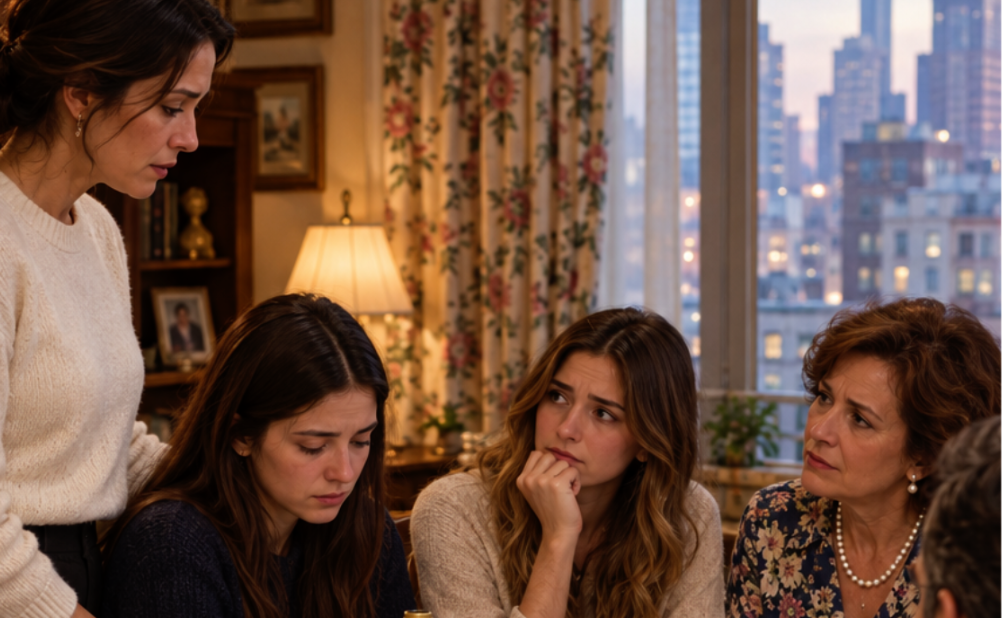
The notary took off his glasses, carefully set them on top of a stack of papers, and asked quietly:
“Irina Sergeyevna, did you know that yesterday your mother-in-law made an appointment for you here on Friday? For signing a deed of gift. For half of your apartment. To your husband.”
Irina didn’t immediately grasp what those words meant.
She sat on a hard chair in the small office with blinds, staring at Boris Yefimovich as if he was speaking a foreign language.
“What deed of gift?” she repeated. “Pasha told me that on Friday we were supposed to sign some loan papers. For the car. I came early to find out which documents I need to bring.”
Boris Yefimovich sighed. He had known Irina since she was a child. He was the one who had handled the deed when her grandmother, Antonina Grigoryevna, gifted her the two-room apartment on Sadovaya.
“A notary isn’t needed for a car loan, Irina,” he said gently. “Lyudmila Arkadyevna was here yesterday. A very polite woman. She asked everything—how much it costs to process the documents, whether your personal presence is needed, if that share can later be transferred to a third party.”
“To a third party?” Her voice faltered.
“To her daughter, as I understood. She mentioned that her daughter is getting divorced and has nowhere to live.”
Irina slowly got to her feet.
Her head was buzzing. Tamara. Her sister-in-law. The very one who, at the wedding, had loudly told her friend: “Well, our Pasha really landed on his feet—he even got an apartment out of it.”
“Thank you, Boris Yefimovich,” she managed to say.
“Irina,” he rose as she did. “I haven’t told you anything. But your grandmother really wanted you to have your own place. Your own. Do you understand?”
She understood.
She stepped outside, and the October wind struck her face. Irina stood on the steps of the notary office, struggling to remember how to breathe.
Five years of marriage.
For five years, Lyudmila Arkadyevna would come over on Saturdays with pies—cabbage, apple, cherry. She’d sit in the kitchen, pour herself tea in Irina’s favorite cup, and begin:
“Irina, sweetheart, don’t take this the wrong way. I mean well. You should get some different curtains; these are kind of dull. And move the sofa—it’s hard for Pasha to watch TV.”
Irina would smile, nod, and rearrange the sofa.
Her mother-in-law never raised her voice. Never slammed a door. She acted differently—gently, with a smile and a quiet sigh.
“Well, if that’s how you want it,” she would say. “I’m just a mother. What do I know.”
And then Pavel would spend the whole evening sulking. The next day he would say:
“Ir, you could’ve been a bit nicer to Mom. She was upset.”
Irina always thought: that’s just how she is. Caring. A little overbearing, but kind. Every daughter-in-law goes through this.
Only once did the mask slip.
Last spring, Irina was bringing some homemade jam to her mother-in-law’s place. The door was ajar, and in the kitchen sat the neighbor, Aunt Valya. Irina heard Lyudmila Arkadyevna’s voice—completely different. Hard, mocking.
“What grandkids, Valya? It’s been five years—nothing. She’s a barren flower. Pretty, but barren. I told Pasha right away—why do you need someone like that? But he insisted. Well, at least there’s the apartment, that’s something.”
Irina quietly set the jar down by the door and left.
She didn’t tell Pavel. Why would she? He wouldn’t have believed her. Or worse—he would have believed, but just said, “Well, Mom didn’t mean any harm.”
She carried that word with her for a long time. Deadhead. It scratched at her from the inside, like a splinter you just can’t pull out.
Irina reached the bus stop and sat down on the cold bench.
Did Pavel know?
No. That can’t be. He wouldn’t do that. He talked about the car, about the loan, about needing her signature as the homeowner—for the bank, for security.
She took out her phone and dialed her husband.
“Pasha, hi.”
“Oh, Irka!” His voice was cheerful, upbeat. “Where are you?”
“Just out doing some things. Hey, what time are we going to the notary on Friday?”
There was a brief pause. Just a second, so short someone else might not have noticed.
“Notary? No, the bank. I told you—it’s at the bank.”
“Oh. Right. The bank. Got mixed up.”
“Are you tired? Want me to order pizza for tonight?”
“Sure.”
She hung up and stared at the screen for a long time.
He lied. Calmly, easily, without a second thought.
Once home, Irina went straight to the room. Pavel was still at work. On the shelf was his old tablet—he hadn’t used it in ages except to watch football now and then. Irina knew the messenger app was open there. Pavel never logged out of his accounts.
She picked up the tablet. Her fingers were trembling.
She had never read someone else’s messages before in her life. She considered it beneath her dignity. Respect, trust, personal boundaries—she truly believed in those values.
But now, it was about her home.
The chat was called “Family.” Three participants: Lyudmila Arkadyevna, Pavel, and Tamara.
Irina scrolled up.
“Pasha, the main thing is that she signs on Friday. Tell her it’s for the bank. She doesn’t understand these documents anyway.”
“Mom, she’s an accountant, actually.”
“So what? You trust her, she trusts you. Tell her the bank’s lawyer checked everything. Don’t read anything to her out loud, just show her where to sign.”
“Fine. I’ll talk her into it.”
Tamara: “Pashul, thank you so much! I really have nowhere to go with Dimka. Once your share is transferred to you, you’ll sign it over to me, and I’ll move in little by little. She won’t say a word—what else can she do?”
Lyudmila Arkadyevna: “Don’t rush, Toma. Let her sign first. Then we’ll figure it out. Family should stick together, and right now, she’s not really family. Blood is blood. A daughter-in-law is here today, gone tomorrow.”
Pavel: “Mom, don’t say that.”
Lyudmila Arkadyevna: “Why not? No kids, it’s been five years. You never know. This way at least half the apartment stays in the family.”
And Pavel replied. Just one word.
“Ok.”
Irina put the tablet back exactly where it was.
Then she went to the kitchen, filled a glass of water, and drank it standing up, in small sips.
She didn’t cry. There was something else—cold, ringing, like thin ice underfoot.
“Ok.”
Five years. Five years she made him breakfasts. Ironed his shirts. Went with him to his mother’s for holidays. Stayed silent when her mother-in-law rearranged her things. Stayed silent when her sister-in-law borrowed her boots without asking and returned them six months later, heels worn down.
And he wrote ‘ok.’
In the evening, Pavel came home, cheerful, carrying pizza.
“Irka, I got pepperoni and four cheeses! Your favorites!”
He gave her a peck on the cheek. Irina smiled. She was surprised at how easy it was for her to do this.
“Pasha, what’s the name of the bank? Which one is it?”
“Does it matter? It’s just a regular bank.”
“I’d like to know. I’m the one signing.”
“Ir, I already checked everything, don’t worry. The lawyer looked at it too. You just need to sign, that’s all.”
“Just sign,” she repeated.
“Yep. Oh, by the way, Mom wants to come over on Friday evening. She’ll bring Tamara. They want to hang out and celebrate.”
“Celebrate what?”
Pavel hesitated.
“Well… the car. The purchase.”
“The car we haven’t even bought yet.”
“Well, the future one. Ir, why are you nitpicking?”
She wasn’t nitpicking. She looked at her husband and, for the first time, truly saw him. His soft, confused face. His darting eyes. A man who had never made a decision on his own in his life.
That night, Irina couldn’t sleep. She lay beside him, listened to his even breathing, and thought.
She could make a scene right now. Shake him awake, throw the tablet, shout at him.
But she already knew what would happen next. Pavel would run to his mom. His mom would say Irina made it all up, misunderstood, took things out of context. And Pavel would believe his mom. As always.
No. She needed to do things differently.
In the morning, she called her grandmother.
Antonina Grigoryevna lived in a village near Tver, in an old house with a front garden. She was eighty-two, but still tended her own garden beds and kept chickens.
“Irochka! My sunshine! Why are you calling so early?”
“Grandma, I need your advice.”
Irina told her everything. About the notary, the group chat, the simple ‘ok’.
Her grandmother was quiet for a long time. Then she said:
“Irina, I didn’t give you that apartment just so you could feel like a guest there. I lived there for forty years. I waited for your grandfather to come home from the North in that place. I raised your mother there. I know every nail in that place. And now to give it to some strange woman who calls you a weed?”
“How do you know about the weed comment?” Irina gasped.
“Did you think Valya never called me? We’ve been neighbors for forty years. She told me everything back then. I didn’t mention it—I was waiting for you to see things for yourself.”
Irina laughed through her tears.
“Grandma, what should I do?”
“Nothing special. Let them come on Friday. Let them bring their paperwork. And you tell them exactly what you think. Calmly. No shouting. Shouting is for the weak. You’re strong. You take after me.”
On Friday, Pavel was nervous all morning. He was making calls, stepping out onto the balcony, whispering.
“Ir, listen,” he finally said. “Here’s the thing. The bank rescheduled the meeting. Their lawyer is coming to our place. This evening. With Mom.”
“The bank’s lawyer is coming to our home? With your mom?”
“Yeah. It’s just easier this way. Mom knows him.”
Irina nodded.
“Alright.”
By seven o’clock, everyone had arrived.
Lyudmila Arkadyevna showed up in an elegant blouse, as always bringing pies. Tamara came with her son Dima, a lively ten-year-old who immediately ran to Irina’s computer. And there was a short man in a gray suit, carrying a leather folder.
“Irochka, sunshine!” her mother-in-law greeted her with kisses on both cheeks. “You look beautiful today. Here, meet Gennady Olegovich. He’s helping us with the documents.”
“The bank’s lawyer?” Irina clarified.
Gennady Olegovich cleared his throat.
“Well, actually, I’m an independent consultant.”
“I see.”
We sat down at the table. Lyudmila Arkadyevna poured the tea, praised her pies, and started asking Irina about her job. Meanwhile, Tamara picked at her salad with a fork, looking all around the room with the sharp eye of a real homeowner. Irina noticed how her sister-in-law’s gaze lingered on the second room, Irina’s work office.
“She’s already figuring out where to put the bed,” Irina realized.
“Alright then,” Lyudmila Arkadyevna clapped her hands. “Let’s get down to business. Gennady Olegovich, please show Irochka where to sign.”
The consultant opened his folder and placed several papers in front of Irina. On top was a sheet with a blank line and a penciled check mark.
“Right here, Irina Sergeyevna. And here, too. Just standard procedure.”
Pavel didn’t look at her. He stared into his cup.
Irina picked up the papers. Slowly, she turned over the first page. Then the second.
“Deed of gift,” she read aloud. “Donor: Kovalyova Irina Sergeyevna. Recipient: Kovalyov Pavel Andreevich. The subject of the agreement: one half share of the ownership of the apartment at Sadovaya street…”
The room fell silent. Even Dimka stopped clicking his mouse.
“That’s an interesting loan for a car,” Irina said. “Pasha, care to explain?”
Pavel blushed.
“Ir, well…uh… Mom will explain later.”
“Irochka, sweetheart,” Lyudmila Arkadyevna leaned forward, her voice as sweet as her pies. “Why are you taking it this way? It’s just a formality. For the family’s security. You’re husband and wife! Does it really matter whose name is on the apartment? It’s all shared anyway.”
“If it’s all shared, then why change the ownership?”
Her mother-in-law hesitated for a second.
“Well… you never know. Life is long. Pasha is a man, the head of the family. He should have his own space.”
“He does have his own space. In your apartment. That’s his official address.”
“Irochka!”
“Lyudmila Arkadyevna,” Irina placed the papers on the table. “I visited Boris Efimovich. On Thursday. He told me everything. How you went to see him. How you asked if it’s possible to later transfer the share to a third party.”
Her mother-in-law turned pale. Tamara dropped her fork.
“Who’s Boris Efimovich?” Tamara squeaked.
“The notary. The very same who handled my grandmother’s deed of gift. Small world, Tamara.”
Lyudmila Arkadyevna quickly pulled herself together. Her face went back to looking soft, now with a hint of hurt.
“Irochka, you misunderstood everything. I was just asking. For general knowledge. Pasha, tell her!”
Pavel opened his mouth. Closed it again.
“Pasha won’t say anything,” Irina said softly. “Because Pasha already wrote ‘ok.’”
She pulled out her phone from her pocket. Back on Wednesday, she had photographed the entire conversation.
“‘The main thing is she signs on Friday. Tell her it’s for the bank,’” Irina read in a calm voice. “‘A daughter-in-law is here today, gone tomorrow.’ ‘She won’t say a word about it, where can she go?’ And my husband’s reply: ‘Ok.’”
The silence in the room was as heavy as a soaked blanket.
Gennady Olegovich started hurriedly gathering the paperwork back into his folder.
“I think I’ll be going. This seems to be a family matter.”
“Sit down!” the mother-in-law barked.
The mask was gone. Completely. For the first time, Irina saw her face without the smile—hard, angry, lips pressed tightly together.
“So, you went snooping through your husband’s phone, didn’t you?” Lyudmila Arkadyevna’s voice rang out. “You have no conscience! No manners! I knew it! I told Pasha for five years—you’re not one of us. You’re an outsider. An empty blossom is what you are. No kids, and not a shred of respect for your elders!”
Irina flinched. But she didn’t look away.
“Well, you finally said it out loud,” she replied calmly. “Thank you. I’ve spent five years wondering what you really thought of me.”
“Mom,” Pavel mumbled. “Mom, please, don’t…”
“Quiet!” his mother snapped, turning to her son. “Are you a man or what? Your wife is embarrassing you in front of your own family, and you just sit there! Tell her! Tell her your sister and her child are out on the street! That family is supposed to help!”
Pavel looked up at Irina. His eyes were full of fear, confusion, and pleading.
“Ira… really. Tamara has nowhere to go. Maybe we can work something out? Not half, but at least a room… Just for a while…”
And that’s when Irina stood up.
“My grandmother gave this apartment to me, not to your son,” she said, looking straight at her mother-in-law. “To me. And not a single inch of it will go to your family. Not half, not a room, not even a corner in the hallway.”
“How dare you…” Tamara started.
“Tamara, you have your mother. She has a three-room apartment. Move in there. This is my home.”
She turned to her husband.
“Pasha. Right now, you can go with them. Or you can stay. But if you stay, it’s as my husband—not as your mother’s spy. Choose.”
Pavel sat with his head down. Then he looked at his mother.
Lyudmila Arkadyevna stared at him in silence. She just looked at him—that same look she’d been giving him since kindergarten, through school, through college.
And Pavel stood up.
“Ira, I… I need to think. I’ll stay at Mom’s. For a while.”
Irina nodded. Inside, something quietly broke, but she kept her face composed.
“Alright. Pack your things tomorrow, I’ll be at work. Leave the keys on the nightstand.”
Ten minutes later, the apartment was empty.
His mother-in-law was the last to leave. She lingered in the hallway, putting on her coat, then hissed:
“You’ll regret this. Alone. Who will want you—with no kids, no husband?”
“I’ll want me,” Irina said. “I need myself, Lyudmila Arkadyevna. All the best.”
The door closed.
Irina leaned against it and slowly slid down to the floor.
That’s when the tears finally came. Long, quiet tears. She wasn’t crying for Pavel. She cried for those five years when she smiled, nodded, moved the sofa around. When she stayed quiet just to avoid hurting anyone. When she believed that being a good enough daughter-in-law would make them love her at last.
But they only put up with her. For the apartment.
Her phone rang at half past ten.
“Well, granddaughter?” Her grandma’s voice was cheerful as always. “Did they come by?”
“They came, Grandma.”
“And?”
“They left. And Pasha went with them.”
Grandma was silent for a moment.
“Well, that’s alright. I guess he wasn’t your person. Are you crying?”
“I’m crying.”
“Go ahead and cry. That’s the right thing to do. Just don’t cry too long. Tomorrow, get up, make yourself some coffee, open the windows and air everything out. So not a trace of them is left.”
Irina laughed.
“Grandma, I love you.”
“And I love you, my sunshine. You’re amazing. I’m proud of you.”
A month went by.
The first days were the hardest. Irina kept waking up at six out of habit and putting the kettle on for two. Then she’d remember. And pour out the extra water.
Pavel didn’t call. He only texted once: “How are you?” She replied, “I’m fine.” That was the end of their conversation.
But then Aunt Valya, her grandmother’s old neighbor, called.
“Irina, you won’t believe what’s happening at Lyudka’s place!”
“What is it, Aunt Valya?”
“Tamara moved in with her! With Dima! And Pasha, too! Four of them in a three-room apartment! Tamara took the biggest room, made Lyudka sleep in the kitchen—she says she’s up early anyway. Pasha’s on a cot in the hallway. At night, Dima’s playing computer games and keeping everyone awake. Tamara’s even wearing Lyudka’s fur coats now and says the apartment should be put in her name—she’s a single mom, so she needs it more.”
Irina listened, not sure whether to laugh or feel sorry.
“And what about Lyudmila Arkadyevna?”
“What’s Lyudka doing? Just complaining. Yesterday she sat with me on the bench for half an hour telling me how ungrateful her daughter is. I told her, ‘Lyuda, remember how you split someone else’s apartment?’ She turned green. Left without even saying goodbye.”
Irina hung up and sat by the window for a long time.
She didn’t feel any schadenfreude. Just a quiet understanding: life had put everything in its place. Lyudmila Arkadyevna wanted to take someone else’s home—and ended up losing her own.
Two weeks later, the doorbell rang.
Pavel was on the doorstep. He looked thinner, unshaven, wearing a wrinkled jacket.
“Irina. Can I come in?”
She was silent for a moment. Then she stepped aside.
He went into the kitchen and sat in his old spot. He looked around. There were now three pots of geraniums on the windowsill—Irina had bought them last week. A new shelf with books hung on the wall. The curtains were different now—bright, sunny, yellow. The very ones Lyudmila Arkadyevna once would have called “tasteless.”
“It looks nice here,” he said.
“Thank you.”
“Irina… I get it now. Really. My mom… she went too far. Tamara’s completely lost it. I can’t live there. Can I come back?”
Irina poured him some tea. She sat down across from him.
“Pasha. Be honest. Did you come on your own?”
He hesitated. That telltale pause.
“Well… Mom said that if I came back, maybe things would get better. That you’ve cooled off by now. And maybe later, about Tamara’s room…”
Irina slowly set her cup on the table.
There it was. Even now. Even after everything.
“Pasha,” she said gently. “You’re a good person. Really. Kind. But you can’t take a single step without your mother. You’re not here for me. You’re here on your mom’s orders. Again.”
“Irina, that’s not true…”
“It is true. And you know it yourself.”
He hung his head. Stayed silent for a long time.
“So what happens now?”
“Now I’ll file for divorce. Calmly, without any drama. We have nothing to split—the apartment is mine by deed, it can’t be divided. We don’t have a car.” She smiled faintly. “So it’s simple.”
“What if I change?”
Irina looked at him with tenderness. That special tenderness you show someone you once loved, but have already let go.
“If you change—I’ll truly be happy for you. But you won’t be changing next to me. I waited five years for you to grow up. I can’t do it anymore.”
Pavel left after half an hour. At the door, he turned back.
“Ira… I’m sorry. For that ‘ok.'”
“Already forgiven, Pasha. Go on.”
In the spring, Irina got a promotion—she was appointed chief accountant at the firm where she’d worked for six years. The very first thing she did was buy her grandmother a new fridge and a trip to a sanatorium near Kislovodsk.
“Are you out of your mind!” Antonina Grigorievna grumbled on the phone. “Running out of places to spend money?”
“I always know where to spend it, Grandma. On you.”
In May, Grandma came to visit. She walked through the apartment, touched the new curtains, smelled the geraniums. She stopped in the former study, which Irina had turned into a bright guest room.
“It’s good,” she said. “It feels alive. Before, it was like everyone was tiptoeing around here. Now—it breathes.”
“You noticed right, Grandma. I used to live on tiptoe myself. Always afraid of hurting someone.”
“And now?”
Irina thought for a moment.
“Now I know where my boundaries are. And respect—it’s not about pleasing everyone. It’s when people aren’t afraid to listen to you, but they wouldn’t dare cross the line either.”
Grandma stroked her cheek with her rough fingers.
“You’ve grown up, my Irochka.”
In the evening, they sat on the balcony, drank mint tea, and watched the sun set over the rooftops. Downstairs, the courtyard buzzed, kids kicked a ball around, and the air smelled of lilacs.
Irina got a message. An unknown number.
“Irina, good evening. This is Gennady Olegovich, the consultant. Sorry to bother you. I wanted to say—I stopped working with Lyudmila Arkadyevna after that night. And one more thing: you behaved with such dignity. I often remember it. All the best to you.”
Irina smiled and showed it to her grandmother.
“See, Grandma? Even a stranger understood.”
“The truth is always obvious, granddaughter,” Antonina Grigorievna replied. “No matter how you try to hide it behind pies—it always comes out.”
Irina laughed and leaned back in her wicker chair.
She was no longer the daughter-in-law tolerated only because of a share of the apartment. She was no longer just a wallflower. No longer someone convenient.
Now, she was the mistress of her home. And of her own life.
And for the first time in five years, she could finally breathe easy.