Valentina Petrovna placed the IOU on the table as carefully as if it were a family heirloom, not just a piece of paper that could leave Svetlana and her daughter homeless.
“Here you go,” her mother-in-law said, smoothing the sheet with her palm. “Nine hundred thousand. I gave you and Igor the money for the down payment. It was a loan, Svetochka. Not a gift—a loan. And here’s your signature.”
Svetlana stared at the paper, not recognizing a single line. Sure enough, there was a signature at the bottom. It looked like hers. Very much like hers. But she had never signed anything like that in her life.
Her ex-husband sat beside his mother, tracing the pattern on the tablecloth. After eighteen years of marriage, Svetlana knew this habit well. If Igor wouldn’t meet her gaze, it meant the decision had been made without her.
“I never borrowed anything from you, Valentina Petrovna,” she said quietly. “And I never signed anything.”
“Of course,” her mother-in-law sighed, as if talking to a stubborn child. “It’s been nine years. You forgot. But I remember. I remember everything.”
Svetlana remembered too. Only it was something entirely different.
She and Igor bought the apartment in the spring of 2016. A two-bedroom on the fifth floor, with windows overlooking a courtyard lined with old lindens. They took out a fifteen-year mortgage. Daria was six years old then, running through the empty rooms, deciding where her bed would go.
They scraped together the down payment in bits and pieces. Svetlana sold her car from before the marriage—a small one, but reliable. Igor withdrew his savings. And Valentina Petrovna really did pitch in. She came to their housewarming with a cake and, dabbing at her eyes with a handkerchief, said it was her gift to her children for their new nest.
A gift. That was the word Svetlana remembered.
Four years ago Igor left. No drama, no slammed doors—just ordinary. He packed everything into two bags, said he’d met another woman, and that it was the honest thing to do. He kept up the mortgage payments for about three months. Then he stopped.
Since then, Svetlana paid every month on her own. She worked as the chief accountant for a small bakery company and knew the value of every ruble. She took on side jobs, managed the books for two small firms in the evenings, never took vacations. Daria never once heard her mother say, “We can’t afford it.” Svetlana could stretch a budget the way a good cook stretches dough.
And now, with just over five years left on the mortgage, her ex-husband suddenly remembered that the apartment was jointly owned.
It all started a month ago. Igor called on a Sunday and asked to meet. Svetlana thought he might want to talk about Daria. Their daughter was about to turn seventeen, getting ready for exams, and her father hadn’t attended a single parent meeting in four years.
But he wanted to talk about something else entirely.
“Things didn’t work out with Marina,” he said, stirring his coffee in a little café by the metro. “I’m renting a room. You know, living like that at forty-eight isn’t respectable. And by the way, I own half the apartment.”
“Half?” Svetlana was startled. “Igor, you haven’t paid a ruble in four years.”
“So what? We bought the apartment in marriage. By law, it’s split fifty-fifty. I checked with a lawyer.”
That evening, Svetlana left the table before finishing her tea. She spent the entire night at the kitchen table, calculator in hand, going over the numbers again and again. All her calculations showed that Igor did have a share in the apartment, but it was much less than half. She’d been paying the mortgage on her own for four years, keeping every receipt safe in her blue folder. Her accountant’s habit turned out to be her saving grace.
A week later, Igor sent her a message. It was brief and businesslike. He suggested they sell the apartment and split the money equally. Svetlana replied with a firm refusal.
And then her mother-in-law called.
“Svetochka, why are you doing this,” Valentina Petrovna began in that sweet, syrupy voice that over the years of marriage always made Svetlana tense up inside. “My boy’s left without a place to live. You’re smart, good with money, you’ll make more. But where is he supposed to go?”
“Valentina Petrovna, Igor has the right to a part of the apartment. I’m not denying that. But only to the part he actually paid for.”
“Oh, how calculating you’ve become,” her mother-in-law sighed. “You used to be softer before. That’s why he left you. You have everything by the book, everything by the numbers.”
For the first time in eighteen years, Svetlana was the one to end the call.
And now Valentina Petrovna was sitting in her kitchen—the same kitchen where Svetlana used to bake her pies for birthdays—spreading out a fake piece of paper on the table.
“Here’s how it is,” her mother-in-law folded her hands in front of her. “You owe me nine hundred thousand. With prices going up, that’s a lot more money now. But I’m not heartless. I’m willing to forgive the debt if you and Igor sell the apartment and split it equally. That’s only fair.”
“Fair,” Svetlana echoed.
“And if not,” her mother-in-law’s voice grew harsher, “I’ll go to court with this IOU. Then you’ll have to pay both me and Igor. And you and Dasha will end up renting some place on the edge of town.”
Igor finally looked up.
“Svet, seriously. Let’s work this out. Mom’s right.”
Svetlana stared at him for a long, silent moment. Once, she loved this man—she ironed his shirts, waited for him to come home from work, believed they’d grow old together in this very apartment. Now, here he was, a stranger, bringing his mother to take away his daughter’s home.
“I’m not selling the apartment,” she said. “And there’s no debt. You can take it to court.”
Valentina Petrovna stood up and carefully put the IOU back in her purse.
“Well, you’ve been warned, Svetochka.”
After they left, Svetlana stood in the hallway for a long time. She wanted to cry, but the tears wouldn’t come. Inside, she felt empty and quiet, like an apartment after everyone moves out.
Darya came out of her room. Of course she’d heard everything—the walls in their panel building were thin.
“Mom,” her daughter asked, “did Grandma really lend you money?”
“No, Dasha. She gave it to us. I remember that day.”
“But what about the signature?”
“That’s not my signature.”
Darya was silent for a moment, then walked over and hugged her mother, tightly and like an adult.
“Then we won’t give in,” she said. “This is our home.”
Svetlana pressed her cheek against her daughter’s hair. Sixteen years old. Almost grown up. And already she understands what justice means better than her own father.
The next day, Svetlana took a day off work and went to see the lawyer. Vera Nikolaevna, a lean woman around fifty-five with a short haircut and a sharp, attentive look, listened to her without interrupting. Then she asked for all of Svetlana’s documents.
Svetlana placed a blue folder on the desk. Inside were the mortgage agreement, bank statements for all the years, receipts sorted by month, and checks for repairs, new plumbing, and the windows Svetlana had replaced two years ago.
“Do you always keep your paperwork this organized?” Vera Nikolaevna asked, clearly impressed.
“I’m an accountant,” Svetlana smiled. “It’s just my professional habit.”
“Excellent. Then the mortgage is straightforward. Your ex-husband’s share will be calculated based on the actual payments made while you lived together. The rest you paid by yourself, and we can easily prove that. The court takes this into account. Plus, you have a minor daughter and the apartment is her only place to live.”
“And what about the IOU?”
Vera Nikolaevna frowned.
“Now, the IOU is trickier. If the court decides it’s genuine, your mother-in-law can demand the money back. You need to remember everything: how the money was given, who was present, what was said—every little detail.”
That evening, Svetlana sat in the kitchen again. Spread out before her were old photos from their housewarming party. There was Valentina Petrovna with a cake. There was Igor hanging a chandelier. There was little Dasha with bows in her hair, sitting on a box of dishes.
Svetlana tried to remember how her mother-in-law gave the money. Was it in cash? No. It must have been a bank transfer. Yes, that’s it—a transfer. She remembered being surprised at the time, since Valentina Petrovna didn’t trust bank cards and used to keep everything in an envelope in her closet. But for some reason, this time, she went to the bank in person and made the transfer.
A transfer. That means there should be a record somewhere.
Svetlana opened her laptop. The bank where she had kept her account had since changed its name, but her online banking still worked. She scrolled through transaction history for a long time, until she reached March of 2016.
And she found it.
A transfer of 900,000 rubles. The sender was Valentina Petrovna. And in the payment description field, the mother-in-law, in her own hand and through the bank teller, wrote something she probably completely forgot about.
“A gift to the children for their new home. For their nest.”
Svetlana read that line three times. Then she saved the record, printed it out, and placed it in the blue folder. Her hands were shaking from nerves.
She called Vera Nikolaevna, even though it was already ten at night.
“This is great,” the lawyer said after listening. “This is almost a win. But let’s not show this statement too soon. Let them file the lawsuit first. Let them attach the IOU to the case officially.”
The lawsuit arrived three weeks later. Actually, there were two lawsuits. Igor demanded half the apartment, and Valentina Petrovna wanted the loan repaid according to the IOU. Svetlana could now calmly examine the copy of the IOU, without her mother-in-law’s piercing stare.
She was sitting over the paperwork in the evening when Darya peeked over her shoulder—well, stood beside her and leaned in to look at the table.
“Mom, what are those numbers at the bottom?”
“Passport details. Mine.”
“But why does the series begin differently than in my birth certificate…”
“What does your testimony have to do with anything?” Svetlana waved her off—then suddenly froze.
Passport details.
On the receipt, dated March of 2016, were the series and number of her passport—her current passport. The very same one she received five years ago, when she turned forty-five and had to renew the old one.
That passport simply didn’t exist in 2016.
Svetlana slowly stood up, took the document out of her bag, and opened it to the page with the issue date. November, 2021.
“Dasha,” she said in a strange, unfamiliar voice, “you’re a genius.”
“Me?” her daughter replied, surprised. “But I didn’t do anything.”
“You asked the right question.”
There was still one more question that had tormented Svetlana all night: How did her mother-in-law get the information from her new passport? Valentina Petrovna had only seen her at most three times in the last four years and had never held the passport in her hands.
Then Svetlana remembered. Three years ago, Darya went on a school trip to Minsk. For the trip, they needed her father’s consent, and Igor had asked Svetlana to send him a photo of her passport. She’d sent it without a second thought.
So, Igor was the one who provided the information for the forged document.
That realization was bitter. She had hoped until the end that it was all her mother-in-law’s doing, and that her ex-husband was just going along, as usual. But no. He knew. He helped.
The first hearing was scheduled for the end of October. Svetlana arrived in a sharp gray suit she’d bought just for the occasion, thinking it would help her feel more confident. Vera Nikolaevna remained calm, even a bit bored, as if it was any ordinary workday ahead.
Igor showed up with his lawyer—a young man in an expensive jacket. Valentina Petrovna sat next to her son, straight-backed and solemn, in a festive blouse with a brooch. She glanced at her daughter-in-law quickly, her look almost pitying, as if she already knew how things would end.
First, they addressed the apartment. Igor’s lawyer spoke at length about jointly acquired property, equal shares, and that his client was fully entitled to half. Vera Nikolaevna silently placed a blue folder before the judge.
“Here are all the mortgage payments for the last ten years,” she said, “broken down by month. For the past four years, the loan has been paid solely from my client’s account. I’m also submitting receipts for repairs and window replacements, all paid for by Svetlana Alexandrovna after the divorce. Plus, a minor child lives in the apartment, and this is her only home.”
The judge, an older woman with a tired face, flipped through the folder and nodded. Igor’s lawyer visibly deflated.
Then they moved on to the receipt.
Valentina Petrovna stood up when given the floor. She spoke well and with emotion, telling how she’d saved that money her whole life, how she sold her late—well, she said “her husband’s garage”—and gave everything to her son and daughter-in-law, and now her daughter-in-law refuses to give it back. Her voice trembled, and she had a handkerchief ready.
“I treated them like my own children,” she finished. “And she… she didn’t even say thank you.”
The courtroom fell silent. Svetlana felt her cheeks flush—not from shame, but from realizing how easily someone can lie right to your face.
“Your side,” the judge addressed Vera Nikolaevna.
The attorney stood up slowly and deliberately.
“We have two documents, Your Honor. The first is a bank statement from March 2016. It shows a transfer from Valentina Petrovna to my client’s account. I’d like to draw attention to the payment details.”
She handed the paper to the judge, who read it and then looked up at the mother-in-law.
“‘A gift to the children for their new home. For the nest,'” the judge read aloud. “Valentina Petrovna, did you write this payment description?”
Valentina Petrovna opened her mouth and then closed it again. The brooch on her blouse trembled slightly.
“I… the bank clerk must have written that. I don’t remember.”
“The second document,” Vera Nikolaevna continued in the same calm voice, “is my client’s passport. Please compare the series and number with those on the receipt.”
The judge took the passport and placed it next to the receipt. She studied it for a long time. Then she turned the page and read the date of issue.
“The passport was issued in November 2021,” she said slowly. “But the receipt is dated March 2016. Valentina Petrovna, please explain to the court how a 2016 document could contain details from a passport that wasn’t issued until five and a half years later?”
It became so quiet in the courtroom that you could hear a trolleybus passing outside.
Valentina Petrovna slowly turned to her son. And Svetlana saw something on her face she’d never seen before—genuine confusion, no hint of pretense.
“Igor,” she said in a near whisper, “you told me this was her passport. You sent me the photo yourself.”
Igor turned pale. His lawyer leaned toward him and started whispering urgently. But it was too late. Everyone had heard those words.
The judge called for a recess.
In the hallway, Svetlana stood by the window, looking at the wet yellow leaves in the courthouse yard. Vera Nikolaevna brought her a cup of water from the cooler.
“Well,” the lawyer said, “the court won’t accept the receipt. In fact, if you want, you can file a claim for forgery. You have a very strong case.”
Svetlana stayed silent for a long while.
She imagined herself writing that claim. Imagined Valentina Petrovna, a seventy-year-old woman with a brooch on her blouse, being called in for questioning. Imagined Igor, the father of her daughter, being investigated. Imagined Darya finding out that her grandmother and father were in court. And how all of this would drag on for months, poisoning everyone’s lives.
A month ago, she probably would’ve wanted them to face the consequences. To feel as awful as she had reading that piece of paper. But now, standing at the window, she suddenly realized she didn’t want that at all. Not even a little.
All she wanted was her home. And peace. And for Darya to prepare for exams undisturbed.
Igor approached them. Alone, without his lawyer or his mother. He looked lost, like a student caught with a cheat sheet.
“Svet,” he croaked, “can we talk?”
Vera Nikolaevna tactfully stepped away.
“Go ahead.”
“It… it was Mom’s idea. She said you wouldn’t be able to prove anything, that too many years had passed. I didn’t want to do it. I really didn’t want to.”
“But you still sent her my passport.”
Igor lowered his head.
“I did.”
Svetlana looked at him and felt only tiredness. No anger, no resentment. Just exhaustion, as if she had traveled a long road.
“Igor,” she said calmly, “I’m not going to file a complaint. Not against you, not against your mother.”
He looked up, not believing her words.
“But only on one condition. You withdraw your lawsuit to split the apartment in half. We’ll divide it fairly, based on the payments you actually made. I’ll pay you your share—not all at once, but in installments, and I promise you’ll get it. And your mother must withdraw her case as well and never call Dasha again to talk about how her mother mistreats her father.”
“Svet…”
“And one more thing.” She looked him straight in the eyes. “You will tell Dasha the truth yourself. Not me. You. She’s grown now and will understand anyway. It’s better if she hears it from you.”
Igor was silent for a long time. Then he nodded.
“Okay. I agree.”
After the break, Igor’s lawyer announced that his client was ready to settle amicably. Valentina Petrovna withdrew her lawsuit without looking at anyone. The judge glanced at Svetlana over her glasses, and there was something like approval in her eyes.
The settlement was signed two weeks later. Vera Nikolaevna recalculated Igor’s share according to all the statements. It turned out to be less than a quarter of the apartment. Svetlana agreed to pay this amount over three years, every month, along with the mortgage. It was going to be tough, she knew that. But it was an honest price. A fair one.
When the bakery manager heard her story, he unexpectedly offered to raise her salary. He said he’d been meaning to for a while, and now he finally had a reason. Svetlana thanked him and, for the first time in years, allowed herself to accept without pride getting in the way.
Igor kept his word. A month later, he called Darya and asked to meet. They sat in the same coffee shop near the metro where he once told Svetlana he wanted half the apartment. Darya came home late, quiet and deep in thought.
“So, how did it go?” Svetlana asked gently.
“He apologized,” her daughter replied, taking off her jacket. “He admitted what he did was wrong. He said Grandma talked him into it, but he’s an adult and it’s his fault.”
“And what did you say to him?”
Darya shrugged—a small motion, just like she always did when she didn’t know how to answer.
“I told him I’d think about it. That I can forgive, but not right away. He said he’d wait.”
Svetlana hugged her daughter. She felt a bit sorry for Igor. But she was truly happy for Darya. Her girl had grown up smart and honest, and could set her own boundaries better than Svetlana ever could at her age.
Valentina Petrovna didn’t call for almost six months. Then, at the end of April, on Darya’s birthday, a message arrived. Short, no emojis, none of her usual “Svetochka” or “dear.”
“Congratulations to my granddaughter. Please wish her well from me. And forgive me, if you can.”
Svetlana stared at the screen for a long time. Then she replied: “I will. Thank you.” And that was all. She didn’t know if she could ever truly forgive. But she also didn’t want to carry that weight in her heart forever.
Daria passed her exams with flying colors—even better than she expected! She got accepted into the Faculty of Economics. She said she wanted to follow in her mom’s footsteps, but not as an accountant—she’s set her sights on becoming a financial analyst.
“So no one can ever trick me with paperwork!” she laughed.
That evening, when the university results came in, she and her daughter sat together in the kitchen, having tea with cake. It was that same Napoleon cake Svetlana always baked for special occasions. Outside, the old linden trees rustled, just as they did ten years ago when they moved into this apartment.
A blue folder full of documents stood on the shelf. Svetlana glanced at it and smiled. So many times over the past months she’d thought all her efforts were pointless. That she’d never be able to stand up against her mother-in-law and her connections, or her ex-husband with his expensive lawyer. But she had made it through—not with shouting, scandals, or revenge, but with receipts, statements, and the truth.
“Mom,” Daria suddenly asked, “do you ever regret not filing that complaint? After all, they tried to take everything from us.”
Svetlana paused in thought.
“You know, Dashulya,” she finally replied, “I’ve realized something. Self-respect isn’t about punishing others. It’s about defending what’s yours and staying true to yourself. I protected our home. And as for the rest, I’ll leave it to their conscience.”
Daria nodded and reached for a second slice of cake.
Svetlana planned to pay off the mortgage in five years. She would pay Igor his share in three. There was still a lot of work ahead and a lot of challenges. But for the first time in a long while, she knew for certain that no one would ever show up in her kitchen with forged papers again to tell her she didn’t belong there.
Because this was her home. Honestly earned. Honestly defended.
What would you have done in Svetlana’s place? Would you have shown mercy to your mother-in-law and ex-husband like she did, or would you have taken it all the way and made them answer for their forgery? Continued in the comments.
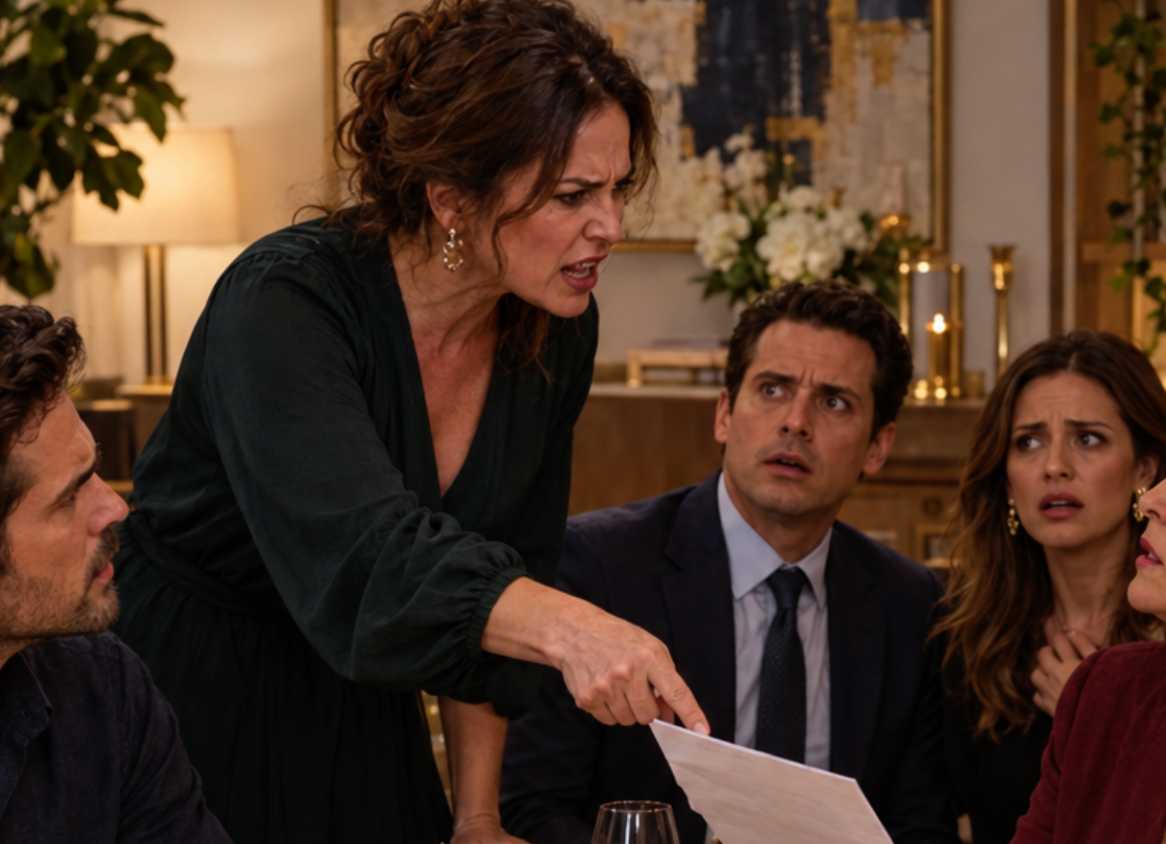
“You didn’t give me any money, Valentina Petrovna,” Svetlana replied when her mother-in-law placed the receipt on the table.
Don’t forget to hit the SHARE BUTTON to share this video on Facebook with your friends and family.