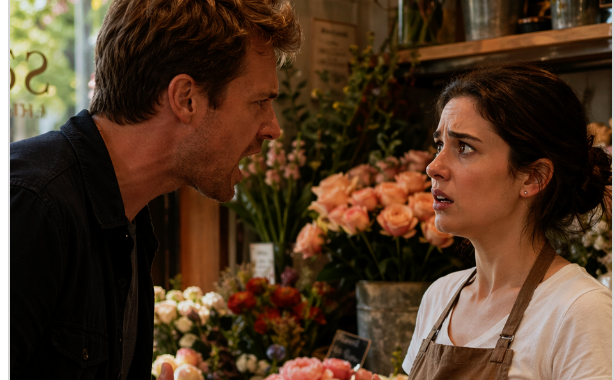
“We’ll sell your shop and buy an apartment for my sister.” Her husband had no idea what storm he’d called down with that one sentence.
Anna wiped her hands on a towel and admired the bouquet of white roses she’d just finished for a loyal customer. Outside, a thin October drizzle stitched silver lines across the street, while inside the air was saturated with that layered, living perfume of cut stems and damp leaves—the scent she always called “freshness and life.” Three years ago, she would never have believed she could talk about varieties by name, which blooms keep longest, which sulk at the wrong water or temperature.
The bell over the door chimed—another customer, she thought—but it was Mikhail. He rarely came by; he preferred to manage everything over the phone.
“Hi. How’s it going?” He kissed her cheek, his voice stretched tight.
“Good. I’ve already sold the fifth bouquet today. And Mrs. Kovaleva ordered another centerpiece—she swears only our flowers last more than a week.”
Mikhail nodded, distracted, listening and not listening. Anna knew that look. Twelve years of marriage had taught her to read the micro-signals: the tight press of his lips, the little furrow in his brow, the way he couldn’t quite meet her eyes when something unpleasant was loading in his throat.
“Anya, we have to talk.” He sat on the stool by the counter. “About the shop.”
Her heart stuttered. She put the scissors down and faced him fully.
“What about the shop?”
“It’s… not exactly in the red, but it isn’t bringing in real profit either. We’ve kept it afloat for three years and it still hasn’t broken even.”
“Misha, what are you trying to say?” Her voice thinned.
He sighed and let his gaze drift toward the display window.
“Katia’s in trouble. She divorced Igor. The apartment stays with him, and she has nowhere to live. She’s at a friend’s place for now, but that can’t last.” He paused, bracing himself. “We’ll sell your shop and buy my sister an apartment.”
The floor tilted under Anna. He’d said it so casually, as if he were suggesting picking up a loaf of bread on the way home.
“What?!” She blinked, stunned. “What do you mean—sell my shop?”
“Anya, be reasonable. We’ve been pouring money into it for three years with no return. Katia needs help—she’s my sister.”
“And what about me?” Her voice cracked. “Am I not your wife? This is my work—my life!”
“But it doesn’t make money.”
“It didn’t. Now it does.” She nodded toward the register. “You can see it—more customers, more orders. I’m finally finding my footing.”
Mikhail stood, his movements newly decisive, and that frightened her.
“Anna, I’m not asking. I’m telling you. The shop has to go.”
“No.” Her fist landed on the counter; a few rose petals trembled loose and fell. “I won’t allow it. This is my shop.”
“The one I helped you open—with my money.”
The words slapped harder than a hand. Heat and hurt cinched tight inside her.
“So what am I to you? A hired hand you can dismiss whenever it suits?”
“Don’t be absurd. But family matters more than your flowers. Katia needs us.”
“And I don’t?” Her eyes burned as she held back tears. “Don’t I need support? Don’t I need my husband to believe in me?”
“I believed for three years,” he said, spreading his hands. “Isn’t that enough?”
She turned toward the window; rain thickened, beads sliding down the glass like the tears she refused to show.
“Go,” she whispered. “Just go.”
“Anya…”
“Go!” The steel in her voice made him flinch.
He hesitated, then left without another word. The bell over the door tolled like a small, sad verdict.
Anna sank into a chair and let the tears come. Each drop was steeped in pain and bewilderment. How could he? How could he wipe away three years of work, of hope, of dreaming, with a single sentence?
She thought of how it began. Mikhail had supported the idea then—cautiously. “Try,” he’d said. “If it doesn’t work out, don’t be upset.” And she did try. She studied the flower trade, met suppliers, learned to build bouquets, worked fourteen-hour days.
That first year was brutal. Blooms wilted, customers were scarce, she stored the wrong stems the wrong way. But she didn’t quit. Slowly, the rhythm revealed itself. Regulars appeared. She learned to feel what the flowers wanted, to listen with her hands.
And now, just as growth was finally visible, he wanted to level it—for Katia.
Anna had never warmed to her husband’s sister. Not open hostility, just that faint, constant chill. Katia was striking and magnetic; attention followed her like a train. “Oh, Annushka, you’re so lucky,” she’d purr. “Such a caring husband, a beautiful house—and now your own business!” The words were sweet, but Anna heard the grit in the sugar, the envy and insincerity beneath the gloss.
That evening at home, the fight resumed. Mikhail came back from work with a thundercloud face.
“Did you think about what I said?” he asked, skipping hello.
“I did. My answer is still no.”
“Anna, you’re being selfish.”
“Selfish?” She turned from the stove, the pan hissing softly. “I’ve poured my soul into that shop for three years, and I’m selfish because I don’t want to sell it?”
“Katia has nowhere to live!”
“And why is that my responsibility? Let her work and rent a place like everyone else—…”
Continued in the comments.
Anna dried her hands on a towel and stepped back to admire the bouquet of white roses she’d just finished for a loyal client. Outside, a thin October drizzle polished the street to a gray shine; inside, the air was crisp and alive—the complicated perfume of greens and petals she always called “the scent of life.” Three years ago she couldn’t have named half these varieties, let alone predict which stems drank greedily and which sulked at the wrong temperature. Now she could read them at a glance.
The bell over the door chimed. Not a customer—Mikhail. He rarely came in person; phone calls were his style.
“Hi. How are you?” He kissed her cheek, voice tight around the edges.
“Good. Fifth bouquet sold already. And Mrs. Kovalyova ordered another table arrangement—says only our flowers last more than a week.”
Mikhail nodded, distracted, eyes slipping past her work to nowhere. She knew that look. In twelve years she’d learned the small signs: the pressed lips, the shallow frown, the way he avoided her gaze when he was bracing for something unpleasant.
“Anya, we need to talk,” he said, lowering himself onto the chair near the counter. “About the shop.”
Her heart snagged. She set the scissors down, turned to face him. “What about the shop?”
“It’s not… unprofitable, exactly. But it isn’t making much either. Three years, and it still hasn’t broken even.”
“Misha, what are you saying?” Her voice wavered.
He exhaled and stared through the display glass at the rain. “Katya has problems. She divorced Igor, the apartment stays with him. She has nowhere to live. She’s with a friend for now, but that’s temporary.” A beat. “We’ll sell your shop and buy her an apartment.”
The floor seemed to tilt. He’d said it like he was asking her to pick up bread on the way home.
“What?” She stared at him. “How can you say we’ll sell my shop?”
“Anya, be reasonable. We’ve poured money in for three years with no real return. Katya needs help; she’s my sister.”
“And what about me?” The words tore out. “Am I not your wife? This is my work—my life.”
“But it doesn’t bring in money.”
“It didn’t. Now it does.” She gestured at the register. “Look around—more customers, more orders. I’m finally getting the hang of this.”
He rose, jaw set in a way that frightened her. “I’m not asking your permission. I’m informing you. The shop must be sold.”
“No.” Her fist struck the counter. A few white petals shook loose and fell. “I won’t allow it. It’s my shop.”
“The one I helped you open. With my money.”
That landed harder than a slap. Heat and hurt tightened through her chest. “So I’m just an employee you can fire when it suits you?”
“Don’t be ridiculous. But family matters more than flowers. Katya needs us.”
“And I don’t?” Her voice trembled with unshed tears. “I don’t need my husband to believe in me?”
He lifted a shoulder. “I believed for three years. Isn’t that enough?”
She turned away, to the window where the rain threaded down the glass like invisible tears. “Leave,” she whispered. “Just… leave.”
“Anya—”
“Leave!” The force in her voice startled them both.
He hesitated, then went. The bell gave a mournful little ring. Anna sank onto the chair and cried—hot, helpless tears that tasted of confusion and disbelief. How could he sweep away three years of study, failure, persistence—of finally getting it right?
She remembered the beginning. He had supported her—warily. “Try,” he’d said. “And if it doesn’t work, don’t be upset.” She had tried. She’d read until midnight about conditioning water, spoke to growers, practiced spiral hand-ties until her fingers cramped. The first year was a disaster—flowers spoiled, customers didn’t come, she stored peonies like tulips and paid for it—but she kept going. Regulars trickled in. She learned to hear what the stems were saying.
And now, when the tide was finally turning, he wanted to smash it to pieces. For Katya.
She’d never warmed to his sister. Not open hostility, just a persistent undertone. Katya was glamorous, magnetic, always center-stage. “Annushka, you’re so lucky,” she’d purr. “Such a caring husband, gorgeous home—and now your own business!” Compliments that left a metallic aftertaste.
That evening at home Mikhail came in storm-cloud dark. “Have you thought about what I said?”
“I have. The answer is still no.”
“Anna, you’re being selfish.”
“Selfish?” She turned from the stove. “I poured my soul into this shop for three years, and I’m selfish for not wanting to sell it?”
“Katya has nowhere to go.”
“Why is that my problem? She can work, rent like everyone else.”
“She’s my sister.”
“And I’m your wife.” She caught herself. “Or was—”
He froze. The pan hissed.
“What do you mean by that?”
“I mean a husband supports his wife. He doesn’t burn down her dream to satisfy his sister’s whims.”
“This isn’t whimsy. She has real problems.”
“So do I.” Anna shut off the flame and faced him. “My husband wants to take away the work of my life.”
“The work of your life?” He smirked. “You’ve sold flowers for three years. Don’t exaggerate.”
Something snapped. “Get out of the kitchen,” she said, calm and final. He understood and left.
Days slid into a cold war—bare necessities spoken, separate rooms, eyes that found other things to look at. She felt the hairline fractures running through their twelve-year marriage and had no idea how to seal them.
At the shop, she buried herself in stems and ribbon. Flowers don’t lie, don’t choose sides, don’t trade your future for someone else’s catastrophe. They live as they can and give what beauty they have.
On Thursday, Marina from the beauty salon next door stopped by for coffee. “Anya, you look wrung out.”
“Family mess,” Anna sighed.
“Want to talk?”
She hesitated, then nodded. “Misha wants to sell the shop.”
“What?” Marina’s eyebrows shot up. “Why?”
“To buy his sister an apartment. Divorce, no place to live.”
Marina shook her head. “And she can’t earn like everyone else?”
“Apparently it’s easier to lean on her brother.”
Marina leaned in, voice low. “Anya, doesn’t something feel off? Remember I told you I saw Mikhail with a woman at a café?”
Anna stiffened. “You did. And?”
“What if it wasn’t random? What if he and Katya are… strategizing? Dividing things in case of a divorce.”
“Marina, please—”
“Just think. Why your shop? You two have a dacha. A second car. Other assets.”
“We do.”
“Exactly. Why the one thing that is yours?”
Anna’s thoughts snagged. Why, indeed? The dacha outside Moscow they never used. The second car gathering dust. Why her business?
“Maybe Katya’s whispering in his ear,” Marina went on. “Maybe telling him you don’t appreciate him.”
“Why would she—”
“Envy is a poison.” Marina lifted a shoulder. “Maybe she can’t stand that you have a loving husband and a business.”
That night Anna couldn’t sleep. Marina’s words circled like birds around a spire. What if Katya was sharpening knives behind the scenes?
The next day she called Lena, a friend to both families. “Lena, hi. Quick question—has Katya said anything about me lately?”
A pause. “Did something happen?”
“Just curious.”
“Anya… better to ask her.”
“Please. It’s important.”
A sigh. “All right, but don’t spiral. She said you don’t value Mikhail. That you live at the shop and neglect the family.”
“And?”
“And she hinted—” another pause “—that you might have someone. That you’ve been staying late, going out evenings.”
“What?” Anna felt her pulse drum in her temples. “That’s a lie. Shop and home—that’s it.”
“I know. I told her so. She insisted. Said she wanted to open Misha’s eyes.”
“Open his eyes?”
“To the idea that you’re lying. That he should divorce you before you take everything.”
Anna closed her eyes and sank into the chair. There it was. Katya had drawn the blueprint: isolate, smear, strip.
“Thanks, Lena.”
“Just… be careful.”
That evening, when Mikhail came home, Anna met him in the hall. “We need to talk.”
“About the shop? Did you come to your senses?”
“No. About your sister.”
His face hardened. “What about her?”
“What she told you about me isn’t true.”
“How do you know what—”
“It doesn’t matter how. What matters is that it’s a lie. All of it. The ‘affair,’ the ‘ungrateful wife,’ the ‘bad partner.’”
He blinked, thrown. “Katya wouldn’t lie.”
“Katya is jealous,” Anna said evenly. “She sees a husband who loves me and a business I’m building, and she can’t stand it. She wants to wreck it.”
“You’re being absurd.”
“Then explain why you chose my shop to sell. We have a dacha. A second car. Your investments. Why my livelihood?”
He opened his mouth and found nothing to put there.
“Because she wants me stripped of everything,” Anna said softly. “If you divorce me after that, I’m nobody. And the apartment? Hers.”
“That’s—”
“True. And somewhere in you, you know it.”
Silence thickened. Doubt flickered across his face.
“Even if you’re right,” he said finally, “Katya still needs help.”
“Then help her some other way. Sell the dacha. Lend her money. But don’t touch my shop.”
“It isn’t profitable.”
“It is.” She pulled a notebook from her bag. “Last three months: net profit two hundred thousand. Climbing each month.”
He turned pages, eyes narrowing. “Where did these figures come from?”
“From me finally running this properly. Regulars. Corporate orders. I’m even eyeing a second location.”
“A second?”
“There’s a space opening on Sovetskaya Street. Better foot traffic. We could grow.”
He closed the notebook, slower this time. “Why didn’t you show me this earlier?”
“Because you’d stopped listening. You decided the shop was a failure and turned off the sound.”
He sighed. “Maybe you’re right.”
“Not maybe,” she said. “You know it.”
The next day he went to see Katya. When he returned his face was gray and tight. He sat opposite her. “You were right. She fed me garbage.”
“And?”
“I told her I’m done bankrolling her. She’ll have to sort her own life out.”
Relief washed through Anna, trailed by a steady throb of anger. “And the shop?”
“It’s yours. I’m sorry.”
“Sorry isn’t enough. You almost ruined me.”
“I know.” He swallowed. “Let me make it right. I’ll help with the second shop—if you still want it.”
For the first time in days, Anna’s mouth remembered how to smile. “I do. Very much.”
A month later the new shop on Sovetskaya Street opened its doors. Mornings there, afternoons at the original store—she moved between the two like a current. Business was better than she’d dared hope. Mikhail helped for real this time—sending clients from his network, giving level-headed advice on margins and cash flow.
Katya stopped calling. Word had it she’d found a job and rented a place. Fine. Let everyone carry their own weight.
One evening, as Anna closed up, she lingered at the front window. White chrysanthemums and yellow roses glowed together—a pocket of sunlight on a dull day. Three years ago she couldn’t have told a chrysanthemum from an aster. Now she was sketching a chain.
Mikhail stepped in behind her and kissed her cheek. “How’s today?”
“Great. I sold more arrangements than all last week.”
“Perfect. I think I’ve found a spot for a third shop.”
“A third?” She laughed, startled. “I’m still learning to juggle two.”
“I’m already thinking franchising,” he said, grinning.
She actually laughed then—freely, for the first time in too long. “Let’s master two. Then we talk.”
“As you say, boss.”
They stepped outside. The rain had given up; a pale sun slid through the clouds. And Anna thought that life, like flowers, needs patience and faith. You keep tending, even when everything looks lost. Sometimes the fiercest storms precede the most beautiful bloom.