“You’re Left Without Money, Natasha! I Transferred One and a Half Million to My Account,” Her Husband Smirked
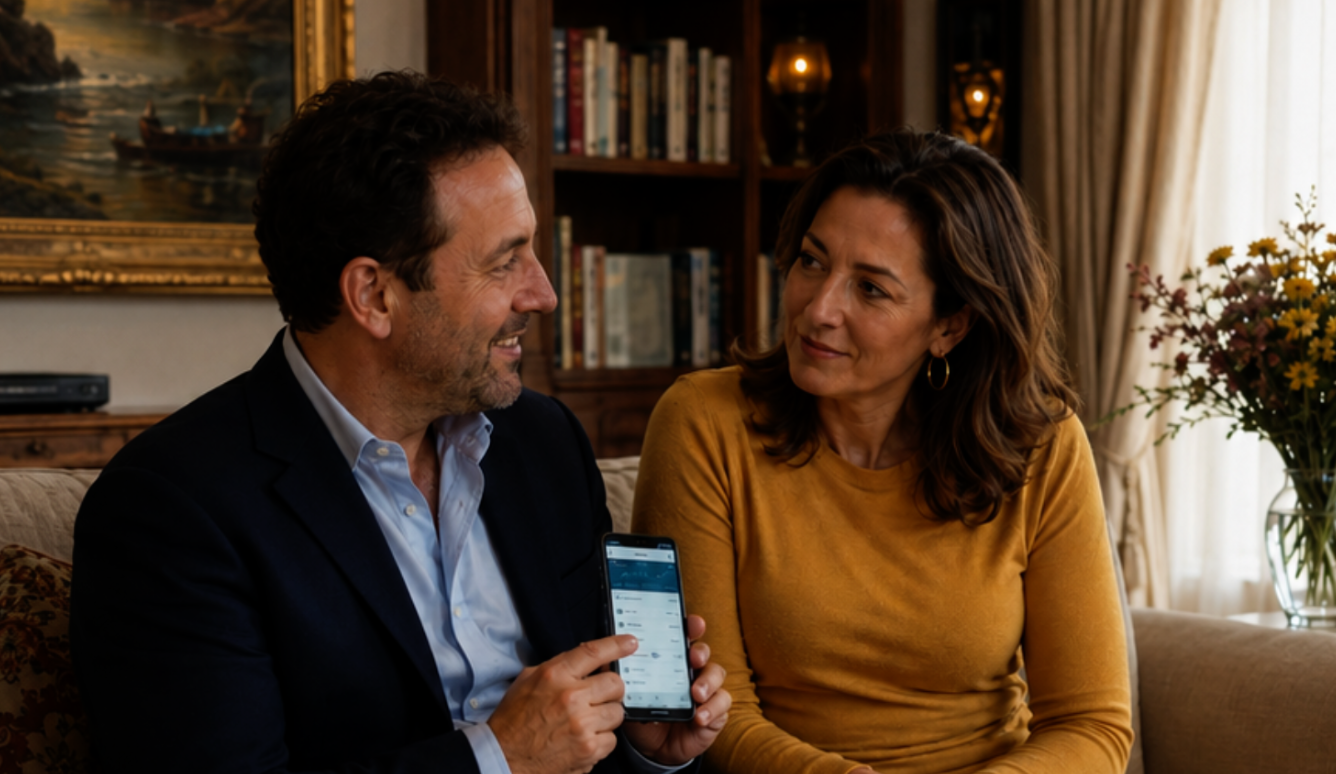
— You’re left without money, Natasha, — Vladimir smirked, turning his phone screen toward his wife. — First come, first served!
Natalia stared at the glowing notification and did not immediately understand what she was seeing. Then the numbers registered — almost one and a half million rubles. The money they had been saving for years had disappeared from their savings account in a matter of minutes.
— Now we’ll see how quickly you agree to my divorce terms. People become much more cooperative when they don’t have any money, — he said with a smirk and reached for his car keys.
He said it casually, as though he were commenting on tomorrow’s weather. There was no anger, no regret — only the faint, almost bored confidence of a man who had already made every decision.
The door closed.
Natalia remained standing in the middle of the kitchen. Outside the window, the city hummed, and somewhere below, a car door slammed.
He was certain he had won.
Fifteen years is a long time. Long enough to forget what the two of them had been like in the beginning.
They had met at a corporate training seminar: she was a young accountant with a notebook and a habit of writing everything down; he was a sales manager, loud, charming, and capable of walking into any room as if everyone there had been waiting for him.
— You’re always calculating something, — he had said back then, nodding at her notebook.
— Someone has to, — she replied.
He laughed. She liked his laugh.
Then came rented apartments, their first joint loan for a used car, a mortgaged apartment, a bathroom renovation that dragged on for six months, and a chronic shortage of money that they eventually learned to ignore. Natalia kept track of their expenses in a notebook before moving everything to her phone. She knew how to manage the budget so that at least something remained at the end of every month.
It was Natalia who found a profitable savings account, and Natalia who suggested setting aside a fixed amount every month. Their savings grew slowly, but they grew.
— You’re basically the family’s chief financial officer, — Vladimir used to say, with a hint of teasing in his voice, though back then it was good-natured.
She never objected. She simply kept calculating.
Even before the wedding, three years before they officially registered their marriage, Natalia had managed to buy a small apartment. Her parents helped with the down payment, while she took out a mortgage for the rest and paid it off herself. After getting married, she rented the apartment out, and when property prices rose significantly, she sold it for a good price.
— Maybe we should buy a decent car? — Vladimir suggested at the time.
— No, — Natalia replied calmly. — I earned that money myself, before there was an “us.” I’m going to keep it separate.
He frowned but did not argue. Later, however, he returned to the subject.
— So what did you do with the money? — he asked one evening over dinner, as though it were merely casual conversation.
— Invested it, — Natalia replied.
— Where exactly?
— Somewhere safe.
He didn’t like answers like that. He brought up the subject several more times — a week later, a month later, and then again. What irritated him was not so much that he didn’t know the exact amount, but that Natalia had a financial reserve that had nothing to do with him.
Natalia had never concealed the fact that she had sold the apartment. But she considered the money hers — earned before the marriage, with the mortgage paid entirely by herself — and saw no reason why that should change.
During the last year, something between them had begun to shift. Vladimir came home late, placed his phone face down, and answered her questions curtly and irritably. Natalia noticed, but remained silent, hoping it would pass.
It didn’t.
One day, a friend cautiously told her what Natalia had already begun to suspect: her husband was seeing another woman, a younger employee from his department.
The shock did not come immediately.
Natalia remained in the kitchen for several minutes after the front door slammed, simply staring out the window. Then she lowered herself into a chair.
The divorce itself did not break her — she had already considered that possibility for some time. But understanding something intellectually was one thing. Seeing the smirk on the face of the man who had just emptied their joint account and clearly enjoyed doing it was something else entirely.
Her friend called that evening.
— How are you?
— I don’t know, — Natalia answered truthfully. — It feels strange. Like I’m looking at everything through glass.
— Are you crying?
— No. That’s the strange part. I’m not.
She barely slept that first night. She lay staring at the shelf filled with photographs. In them, they were younger, laughing and embracing against a backdrop of the sea. In one picture, Vladimir was holding her hand and squinting into the sunlight.
Natalia tried to remember exactly when that man had become a stranger.
She couldn’t pinpoint the moment.
It had happened gradually, like water wearing away stone — quietly and relentlessly.
In the morning, she got up, washed her face, and walked over to the built-in wardrobe in the hallway. She opened a small safe that Vladimir believed was empty.
Inside were folders.
Natalia took them out, spread them across the table, and looked at the stack of documents.
She had no intention of crying anymore.
From that moment on, everything would be settled with numbers and paperwork — and she knew how to work with those better than almost anyone.
After leaving the family, Vladimir proceeded through a lawyer — methodically and, as far as he was concerned, from a position of strength.
He was convinced that the money from the sale of Natalia’s apartment was sitting somewhere in a bank account and that sooner or later she would be forced to disclose it. Especially now that their joint account had been emptied.
A few days later, a courier delivered an envelope from Vladimir’s lawyer.
Natalia opened it at the kitchen table, poured herself a cup of tea, and began reading.
The proposed property settlement agreement had been written confidently, almost triumphantly. Vladimir claimed half of all the family’s accumulated savings and specifically stated that he also expected a share of the funds his wife, according to him, had deliberately concealed from the family budget. The letter demanded that she provide information about all her savings and investments.
Natalia finished reading, placed the letter in a folder, and called her own attorney.
— Come in tomorrow, — he said. — Bring everything you have.
The following day, she laid a complete set of documents in front of him.
The purchase agreement for the apartment she had acquired before marriage.
The bank statement showing the proceeds from its sale being deposited into her personal account.
The agreement for the investment account she had opened that same month.
Every transaction — complete with dates, amounts, and signatures.
The attorney silently examined the papers, making notes from time to time.
— So the apartment was purchased before the marriage, — he finally said, without taking his eyes off the contract.
— Three years before the wedding. With my money, without any contribution from him.
— And the proceeds from the sale were deposited into your personal account?
— Yes. I never transferred them into our joint account. Here are the statements, the investment account agreement, and every transaction listed by date.
The attorney carefully arranged the documents — the sale agreement, bank statements, and transfer confirmations — and nodded.
— Was he expecting to get access to this money?
— Apparently, — Natalia said.
— Then he’s in for a major disappointment, — the attorney said, closing the folder. — Legally, this is your separate property. It is not considered jointly acquired marital property.
Vladimir arrived at the negotiations looking composed — dark blazer, folder of documents, and the confident expression of a man who believed he had a plan.
He had assumed that withdrawing the money from their joint account would put Natalia under pressure. He expected her to start talking about her savings herself — to disclose the amounts, suggest a compromise, and want to get everything over with as quickly as possible.
That was precisely why he had shown her the transfer notification on his phone that night.
But the opposite happened.
The more persistent his demands became, the more documents appeared on the table across from him.
Every question he asked received a precise, legally supported answer.
When Natalia’s attorney calmly explained that the investment account had been funded exclusively with proceeds from the sale of property she had owned before the marriage and therefore was not subject to division, Vladimir visibly turned pale.
— So I have absolutely no claim to it? — he asked again.
— That is correct, — the lawyer replied without changing his tone.
Vladimir fell silent.
Then he looked at Natalia.
She did not gloat. She did not smile. She simply looked at him calmly, the way someone looks at a problem that has finally been solved.
— I think we should settle this like decent human beings, — he began, avoiding Natalia’s eyes. — We’re not strangers, after all. We spent fifteen years together.
Natalia did not answer immediately.
She looked at him calmly, without anger — and that calmness seemed to affect him more strongly than any accusation could have.
— Do you remember that evening? — she finally asked. — When you took out your phone and showed me the transfer notification?
Vladimir shifted the papers slightly.
— I remember.
— You said, “First come, first served.” And you were smiling, — she paused. — And now you’re talking about decency.
The conference room became completely silent.
The lawyers exchanged glances but said nothing.
Vladimir lowered his eyes to the table.
Something in his posture changed. His shoulders sagged slightly, and whatever confidence remained finally left him.
He had expected her to be confused and frightened.
He had counted on her weakness.
For the first time since everything began, he was the one in the weaker position.
The court proceedings passed without dramatic scenes.
The jointly acquired marital property was divided according to the law — methodically, with no concessions made for hurt feelings or personal expectations.
The money Vladimir had withdrawn from their joint account that night was taken into consideration during the division of assets. Since he had transferred the funds unilaterally, their value was deducted from his share.
He received no rights whatsoever to Natalia’s investment savings.
— This isn’t fair, — he told his lawyer after the hearing as they stood in the courthouse corridor.
— It’s the law, — the lawyer replied briefly and began putting the documents back into his folder.
Vladimir walked outside and stood by the courthouse entrance for a long time, squinting into the autumn sunlight.
By then, the young employee for whom the entire breakup had begun had already distanced herself from him. She was an intelligent woman and quickly realized that the beautiful life she had been promised was unlikely to materialize.
Their relationship quietly faded away, almost unnoticed — much the same way it had begun.
A few months later, Vladimir was renting a one-bedroom apartment in a residential district and occasionally telling acquaintances how unfairly he had been treated.
They nodded.
They simply felt too uncomfortable to argue with him.
Natalia, meanwhile, returned to her familiar rhythm.
Work.
Evening walks.
Phone calls with her friend.
Little by little, life became steady again.
A year later, Natalia was cleaning out a drawer in the kitchen table — something she had been meaning to do for a long time but kept postponing.
Among a stack of old papers, she found that very notification.
It was a printed screenshot she had made on the night everything happened — the amount, the date, the exact time of the transfer.
She held the sheet of paper in her hands for a moment.
Back then, it had felt like a devastating blow.
Now it looked like nothing more than a piece of paper.
Natalia smiled faintly and fed it into the shredder.
The machine began to hum softly.
Until the very end, Vladimir had been convinced that the most important thing was to be the first to take the money.
He believed that whoever had the larger balance in their account was the winner.
But there was one thing he never understood:
Real capital isn’t kept in a bank.
It is built from the habit of thinking ahead, from the ability not to panic when everything is falling apart, and from documents carefully organized in folders and safely stored away.
Natalia finished her coffee, closed the drawer, and opened her laptop.
There was an ordinary day ahead of her.
A good day.