“No,” she replied calmly.
Under the desk, her hands were trembling noticeably, although her voice remained steady.
“I don’t understand. Explain exactly what you mean.”
Igor Stepanovich turned red.
“Well… there are rumors that you… In short, that you’re pregnant.”
“And?”
“What do you mean, ‘and’?” The principal was clearly confused. “Well… who is the father?”
Vera Pavlovna slowly rose to her feet.
The chair scraped loudly across the floor.
The principal flinched involuntarily.
“Igor Stepanovich, I am not required to report the details of my private life to you. But since you are apparently so concerned about it, I will tell you directly. No, I am not pregnant. There is no ‘father.’ I have health problems. I am undergoing examinations and waiting for the doctors’ conclusions. Does that answer satisfy you?”
“Of course, of course…” the principal nodded hurriedly. “That’s what I assumed myself. Forgive me. It’s just that the parents…”
Vera Pavlovna said nothing more and left the office.
She walked down the school corridor and entered the teachers’ lounge.
The room suddenly fell quiet.
Some of her colleagues buried themselves in grade books. Others looked at their phones. Still others stared intently at the papers lying on their desks.
Only Alla Dmitrievna came over to her and said quietly:
“Vera, don’t pay attention to them. People can be fools. You know that yourself.”
“I know,” Vera Pavlovna answered. “It just doesn’t seem to make it any easier.”
That evening, she sat by the window for a long time.
Outside, the bird cherry tree growing along the fence was still in bloom.
And suddenly the unfairness of everything hurt so much that tears rose to her eyes.
She had given twenty-five years of her life to the school.
How many students had she helped understand themselves?
How many had she managed to push all the way to graduation?
How many young people, partly because of her strictness, had later chosen a decent path in life?
And now one filthy rumor had turned her, in the eyes of everyone around her, into almost a disgrace to the school?
Suddenly, the phone rang.
Her son.
“Hi, Mom. How are you doing?”
“I’m fine, Sasha. Everything’s all right.”
“Are you sure? Your voice sounds strange…”
“I’m just tired. It’s the end of the school year. Exams are coming soon.”
“Take care of yourself. Maybe I should come visit?”
“No need. You have work. I can manage on my own.”
After ending the call, Vera Pavlovna placed the phone on the table.
Should she tell her son everything?
No.
Better not.
He would only start worrying.
Her health was already unstable enough. She did not need extra stress.
Somehow, she would get through it.
But the very next day, something happened that changed everything…
To be continued.
The neighbor spread a rumor about the teacher. A month later, when the real truth came out, she deeply regretted her words.
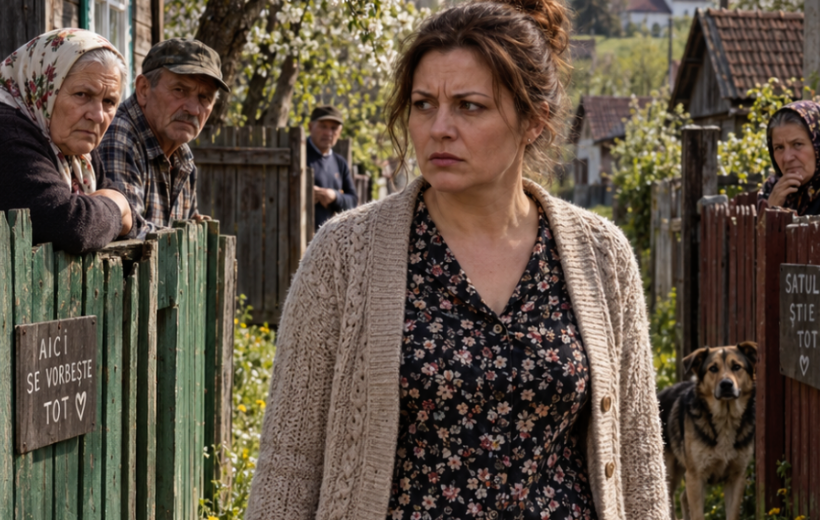
Vera Pavlovna walked slowly along the village street, holding her handbag close to her side. It was early May, and the evening should have felt peaceful. Bird cherry trees were blooming behind wooden fences, the air smelled of damp soil and distant smoke, and somewhere nearby someone was burning last year’s dry grass.
Everything seemed ordinary.
Except for the way people were looking at her.
Neighbors greeted her, but their eyes followed her after she passed. Some whispered to each other. Others suddenly fell silent when she approached.
Vera Pavlovna had taught chemistry and biology at the local school for twenty-five years. Nearly everyone in the village knew her. Some had been her students; others were parents of children she had taught.
She was strict but fair, respected for her honesty and dedication.
That was why the sudden coldness hurt so much.
When she reached her house, she noticed her neighbor, Raisa Fyodorovna, standing near the fence with two women.
They had been talking animatedly.
The moment Raisa saw Vera, she stopped.
The others turned too.
An awkward silence followed.
“Good evening,” Vera said calmly.
“Evening…” Raisa muttered before quickly disappearing into her yard.
Vera went inside, placed her bag on the kitchen table, and sat down.
She was forty-eight years old and had lived alone for ten years. Her husband had died, and her son had moved away after finding work as a programmer.
She had adjusted to solitude.
There was the school, her books, her garden.
But lately something else occupied her thoughts.
Her health.
It had started with weakness. Then came nausea. She gained almost seven kilograms despite eating less than usual.
Most troubling of all, her abdomen began to grow.
It was firm and uncomfortable, protruding forward in a way that almost made her look pregnant.
The thought seemed absurd.
She was forty-eight.
And there was no man in her life.
Doctors had been examining her for weeks, ordering tests and procedures.
“We need to wait for the results,” they kept telling her.
While Vera waited, the village invented its own diagnosis.
Raisa Fyodorovna was the first to notice Vera’s changing appearance.
Raisa also lived alone. Her husband had left long ago, and her children had moved away. She spent much of her time by the window or sitting near the gate, watching village life unfold.
Who came.
Who left.
Who visited whom.
It was not necessarily cruelty. Other people’s lives had simply become more interesting than her own.
One afternoon, she saw Vera hanging laundry.
Raisa studied her carefully.
The fuller figure.
The slower movements.
The growing abdomen.
“Well…” she whispered to herself. “She certainly looks pregnant.”
That evening, Raisa visited Galina, who worked at the local shop.
Over tea, she casually asked:
“Haven’t you noticed anything strange about Vera?”
“What?”
“She’s gotten round. Especially around the stomach.”
“Maybe she gained weight.”
“That’s not ordinary weight gain,” Raisa whispered. “Look carefully next time. She looks pregnant. And she keeps going to doctors.”
Galina stared at her.
“She’s nearly fifty!”
“Exactly. Makes you wonder, doesn’t it?”
That was enough.
The next day, Galina told two women at work.
They told their husbands.
The husbands laughed and added their own guesses.
Within days, the entire village was discussing Vera Pavlovna.
Some claimed she had met a man during her hospital visits.
Others insisted the father was someone local.
Someone even invented a married man from a neighboring district.
The rumor grew with every retelling.
Soon Vera began feeling the consequences.
People avoided her.
Conversations stopped when she entered a room.
At a parent meeting, one woman suddenly said:
“Maybe the children should have another teacher. Someone who sets a proper example.”
Vera did not immediately understand.
Then she did.
The humiliation burned.
A few days later, the school principal called her into his office.
He shifted nervously in his chair.
“Vera Pavlovna… parents have started asking questions. Some are even making complaints about the moral character of a teacher.”
“I don’t understand,” Vera replied.
The principal reddened.
“There are rumors that you are… expecting a child.”
“And?”
“Well…” He hesitated. “Who is the father?”
Vera slowly stood.
Her hands were shaking, but her voice remained calm.
“I am not pregnant. There is no father. I have health problems and I am undergoing medical examinations. Is that clear enough?”
The principal immediately apologized.
But when Vera entered the teachers’ room afterward, everyone became silent.
Only her colleague Alla approached her.
“Don’t pay attention to them,” she said softly. “People can be stupid.”
“I know,” Vera replied. “But knowing that doesn’t make it hurt less.”
That evening, she cried alone by the window.
Twenty-five years of work.
Twenty-five years of helping children.
And one rumor had nearly destroyed her reputation.
The next day, however, everything changed.
Vera returned from the regional hospital carrying a folder of medical documents.
For once, she did not care about the whispers behind her.
Inside that folder was the truth.
She had a tumor.
Fortunately, it was benign.
But it was very large.
Doctors told her surgery could not be delayed.
At home, Vera sat at the kitchen table and cried silently.
She decided to tell her son and the school principal.
Nobody else.
Let the village think whatever it wanted.
Three days later, Vera’s sister Lyudmila arrived.
Lyudmila was a gynecologist and had taken time off to support her sister before surgery.
When Vera told her about the rumors, Lyudmila was furious.
“They said you were pregnant?” she exclaimed. “You have a tumor weighing almost three kilograms, and they were gossiping about you?”
“Lyuda, leave it.”
“No. You’ve been patient your whole life. I haven’t.”
Lyudmila went straight through the village.
To the administration.
To the school.
To the shop.
Everywhere she repeated:
“My sister has a tumor. A tumor. She is having surgery next week. And while she was waiting for a diagnosis, you were inventing stories about her pregnancy.”
The truth spread faster than the rumor had.
By Sunday, nearly everyone knew.
The village fell quiet.
Some women cried.
Some men avoided eye contact.
The loudest gossipers stayed inside.
Raisa was among the last to hear.
Galina ran to her house.
“Raya, it wasn’t pregnancy. Vera has a tumor. Nearly three kilograms.”
The sunflower seeds slipped from Raisa’s hand.
“A tumor?”
“Yes.”
Raisa’s face went pale.
“So… I started all this.”
The next morning, Raisa appeared at Vera’s gate carrying a jar of raspberry jam.
Vera was sitting on the porch.
Raisa entered slowly and placed the jar beside her.
“I’m guilty,” she whispered. “I was the first one to say it.”
Then she began crying.
“I saw you, invented everything in my own head, and told others. I didn’t know.”
Vera listened silently.
Finally, she said:
“For an entire month, you turned my life into humiliation. Parents wanted me removed from school. Children pointed at me. Meanwhile, I was going to doctors terrified of what they might find.”
Raisa sobbed.
“I know. I’m a fool. I’m lonely, Vera. When I tell people things, they listen to me. For a moment, I feel important.”
Vera sighed.
“What happened cannot be undone.”
“Do you forgive me?”
Vera looked at her.
“I don’t know yet.”
Two days later, the village held a public meeting.
About fifty people gathered to discuss road repairs.
Near the end, Raisa suddenly entered.
She walked to the center of the room.
“I need to say something.”
Everyone became silent.
“I was the one who started the rumor about Vera Pavlovna. I invented it. None of it was true. She is seriously ill and will have surgery in three days.”
Her voice cracked.
“I lied, and you believed me. I want to apologize to all of you. But most of all, to Vera.”
Then everyone noticed Vera standing by the door.
Raisa walked toward her.
And suddenly, in front of the entire village, she dropped to her knees.
“Forgive me!”
Vera slowly approached.
“Stand up.”
“Not until you forgive me.”
Vera looked at her for a long moment.
Then she said quietly:
“I forgive you. Now stand up.”
Raisa rose.
The two women embraced.
Someone began clapping.
Then another.
Soon the whole room joined in.
The head of the village administration stood.
“We nearly destroyed the reputation of a woman who has served this village for twenty-five years. Instead of supporting her when she was ill, we judged her.”
He suggested collecting money for Vera’s treatment and recovery.
People immediately began contributing.
Within an hour, they had raised nearly eighty thousand rubles.
The surgery was successful.
The tumor, weighing more than three kilograms, was completely removed.
Vera spent several weeks recovering.
During that time, villagers came constantly.
They brought food.
They offered help.
Even the parents who had once demanded her dismissal came to apologize.
Vera blamed no one.
“The important thing is that I’m alive,” she told them.
By the beginning of the new school year, she returned to teaching.
When she entered her first classroom, the students stood.
Then one student began applauding.
Another joined.
Within seconds, the whole class was clapping.
“Vera Pavlovna,” one girl called out, “we were so worried about you!”
For the first time in weeks, Vera smiled without forcing herself.
Raisa changed too.
Whenever someone approached her and whispered:
“Have you heard…?”
She immediately stopped them.
“No. I don’t want to hear gossip anymore. My tongue has already caused enough trouble.”
Surprisingly, people began respecting her more.
Not because she knew everyone’s secrets.
But because she had found the courage to admit publicly that she was wrong.
Over time, Vera and Raisa became good neighbors.
Not close friends, but something gentler.
They drank tea.
Shared food.
Talked about the weather and everyday life.
One November evening, Vera said:
“I’m not angry with you anymore.”
Raisa looked stunned.
“Really?”
“Yes. You made a terrible mistake. But you were also the first person brave enough to say, ‘I was wrong.’ Not everyone can do that.”
Years passed.
Vera remained healthy and continued teaching.
And whenever someone in the village began a conversation with:
“I heard that…”
Someone else inevitably replied:
“Remember Vera Pavlovna? Better watch your tongue.”
Every spring, the bird cherry tree near Vera’s fence continued blooming.
White.
Quiet.
Beautiful.
Completely indifferent to gossip.
It simply bloomed.
And perhaps that was the simplest truth of all.