“Andrei Is My Husband, Not the Owner,” Marina Told Her Mother-in-Law After Discovering Her Registration in the Apartment
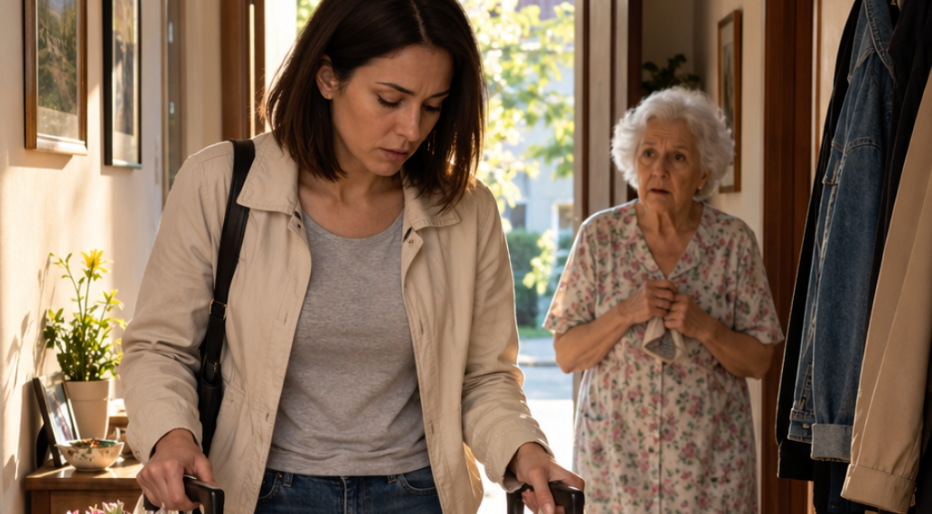
Marina’s mother-in-law opened the door to Marina’s own apartment.
Tamara Petrovna stood there in an apron, a wooden ladle in one hand, smiling as though she had finally returned to a home she had missed for years.
“Marinochka! We weren’t expecting you until seven. The borscht is almost ready. Another twenty minutes and we’ll eat.”
Marina remained on the landing, grocery bags hanging from both hands.
“Tamara Petrovna… what are you doing here?”
“Andryusha didn’t tell you?” the older woman exclaimed. “Typical. Come in. I arrived this morning. I’ve been traveling since three.”
Marina stepped inside—and froze.
Three large suitcases filled the hallway. Beside them stood two sealed cardboard boxes, a huge plaid bag, and several clothes hangers.
“You’re staying long?”
“Well… a couple of weeks. The neighbors upstairs are renovating. Constant noise. Andryusha said I could stay here until things settle down.”
A couple of weeks.
With three suitcases, boxes, and half a household.
Marina took out her phone. Andrei’s last message from the previous evening simply asked her to buy bread. Not one word about his mother moving in.
She called him.
No answer.
“He’s probably in a meeting,” Tamara Petrovna said. “Don’t disturb him. Come eat.”
Marina followed her into the kitchen and immediately felt as though she had entered someone else’s home.
Her favorite cast-iron pot was full of Tamara Petrovna’s borscht. An unfamiliar plaid tablecloth covered the table. A framed photograph of a young man stood near the window.
“That’s my father,” Tamara Petrovna explained. “I always keep his picture with me.”
Marina stared at the photograph.
“When did Andrei give you keys?”
“Oh, ages ago. When you moved here. Just in case.”
Marina said nothing.
The apartment had belonged to her long before she met Andrei. She had inherited it from her grandmother and renovated it with her own savings. When she and Andrei moved in together, the decision had been obvious: he rented a small apartment, while she owned this one.
Now his mother was behaving as though she had every right to rearrange it.
Marina opened the storage closet.
Her ironing board and vacuum cleaner had been shoved into one corner.
A small washing machine stood in their place.
Tamara Petrovna had even brought her own washing machine.
“For two weeks,” Marina muttered.
From the kitchen came a cheerful voice.
“Marinochka, I cleared some space in the big room! I moved your books higher up and put my documents on the desk.”
Marina went into the room.
Her work desk had been completely rearranged.
There were brown envelopes, thick folders, and a green binder marked “Apartment Documents.”
A passport lay on top.
Marina hadn’t intended to look through it, but part of a page was visible.
She saw a fresh registration stamp.
Her stomach tightened.
She opened the passport.
Tamara Petrovna was officially registered at Marina’s address.
Since last Wednesday.
Marina sat down slowly.
Last Wednesday she had been away on a business trip.
Andrei had picked her up from the station the following evening, hugged her, told her how much he had missed her.
And yet, while Marina was away, something had happened behind her back.
But registration required the property owner’s consent.
And Marina was the owner.
She looked through the green folder.
Then she found another document.
A deed transferring half the apartment to Andrei.
At the bottom was Marina’s signature.
Her hands went cold.
Three months earlier Andrei had asked her to sign what he claimed was paperwork required for balcony repairs.
Marina had been exhausted after a terrible week at work.
She had trusted her husband.
So she had signed without carefully reading.
And now that signature appeared on a document transferring half her apartment to him.
Marina closed the folder.
She went back to the kitchen.
Tamara Petrovna placed a bowl of borscht in front of her.
“Eat before it gets cold.”
Marina picked up the spoon and set it down again.
“Did you sell your apartment?”
Tamara Petrovna hesitated.
“No, of course not. I rented it out.”
“For how long?”
“Why are you interrogating me?”
“Because you’re registered in my apartment.”
The older woman’s expression hardened.
“You always behave like a stranger in this family. Andryusha is my only son. I raised him alone. When he married you, I thought I was gaining a daughter—not losing my son.”
“I’m not trying to take your son away. I simply don’t accept people making decisions about my home without asking me.”
“You’ll have to get used to it. Family means everything is shared.”
“This apartment is not shared. It came from my grandmother.”
“Andrei is your husband. He has the same rights you do.”
“Andrei is my husband,” Marina said calmly. “Not the owner.”
Tamara Petrovna smirked.
“Are you sure?”
Marina understood exactly what she meant.
She called Andrei again.
This time he answered.
“When were you planning to tell me your mother was registered here?”
Silence.
Then his voice changed.
“Let’s talk when I get home.”
“And bring yourself straight home. We’re all going to talk.”
Forty minutes later, Andrei entered carrying flowers.
Marina didn’t touch them.
“Sit down.”
He sat beside his mother.
“When were you planning to tell me about the registration and the deed?”
Andrei glanced at Tamara Petrovna.
“Marish, don’t get angry. I wanted to explain gradually.”
“Explain what?”
“That Mom can’t live alone anymore. That she should live with us. And that the apartment should be ours, not just yours.”
“Ours? By tricking me into signing away half?”
“You signed it yourself,” Andrei replied defensively. “You should have read it.”
Marina nodded.
“You’re right. I should have. That was my mistake. Now I’m going to correct it.”
She took out her phone and photographed the deed, Tamara Petrovna’s passport, and the luggage in the hallway.
“What are you doing?” Andrei asked.
“Collecting evidence for my lawyer.”
“Lawyer? We’re family!”
“Family discusses important decisions. Family doesn’t deceive someone into signing documents.”
Marina turned toward her mother-in-law.
“You sold your apartment, didn’t you?”
Tamara Petrovna said nothing.
Marina looked at Andrei.
“Did she?”
He hesitated.
“It’s her business.”
“Not when she’s moving into my home.”
Tamara Petrovna suddenly began crying.
“Andryusha, she’s throwing me onto the street! Where am I supposed to go?”
Marina waited until she stopped.
“I’m not throwing you onto the street. I’m saying you will not live here. You sold your apartment. You can rent somewhere or buy something smaller.”
“We can’t,” Andrei said quietly.
“Why?”
“We invested the money.”
“In what?”
“A friend’s business.”
Marina stared at him.
They had sold Tamara Petrovna’s apartment, invested the money somewhere, secretly registered her in Marina’s home, and tricked Marina into signing away half her property.
And now they expected sympathy.
Instead, Marina suddenly felt completely calm.
“Fine,” she said. “Tomorrow I’m seeing a lawyer. I’ll challenge the deed and the registration. It may take time, but I will do it.”
Andrei stood.
“You can’t throw me out! I’m your husband!”
“You deceived me. That changes things.”
“And Mom?”
“She leaves too.”
Tamara Petrovna stared at her.
“Where are we supposed to go?”
“A hotel. Friends. Relatives. Wherever you choose. Selling your apartment was your decision. Its consequences are yours too.”
Andrei stepped closer.
“You’re destroying our family.”
“No,” Marina said. “The person who secretly took half his wife’s apartment destroyed it.”
“If I leave now, I won’t come back.”
“I know.”
He stared at her.
Marina continued.
“And I’m not asking you to.”
For the next hour, they packed in angry silence.
Suitcases scraped across the floor. Drawers slammed. Tamara Petrovna whispered furiously to her son.
Finally a taxi arrived.
They left.
Afterward, the apartment smelled of borscht and unfamiliar laundry detergent.
The framed photograph of Tamara Petrovna’s father remained on the windowsill.
Marina put it into one of the empty boxes and left the box beside the door.
Then she sat down on the hallway floor.
She didn’t cry.
She simply sat there, letting the silence return.
The next morning, Marina called Natalia, an old university friend who had become a family lawyer.
“I need a divorce,” Marina said. “And I need to challenge a property transfer.”
“I’ll take the case,” Natalia answered. “Send me everything you have.”
That same day Marina changed the locks.
One month later, the deed was successfully challenged in court after the circumstances surrounding Marina’s signature were examined.
Three months later, the divorce was finalized.
Tamara Petrovna’s failed investment had taken almost all the money from her apartment sale. She eventually moved in with distant relatives.
Andrei rented a room elsewhere and found another job.
Marina stopped following his life.
She had her own.
She worked, came home, cooked in her own kitchen, read her grandmother’s books, and drank tea on the balcony in the evenings.
One day, a neighbor asked:
“Aren’t you frightened living alone?”
Marina smiled.
“Living with people who deceive you is frightening. Living alone isn’t. It’s peaceful.”
That evening she closed the door, turned the new key, and checked the handle.
Locked.
For the first time in a long while, that lock meant exactly what it should.
Inside were only Marina and the people she chose to invite.
No unexpected suitcases.
No secret documents.
No strangers taking over her home.
Only her rooms.
Her silence. And the freedom her grandmother had once told her never to give away.